Behold the Works of the Lord

Psalm 111 calls us to behold the works of the Lord:

His works are great
His works are full of splendor and majesty
His works are righteous
His works are wondrous
His works are gracious and merciful
His works are powerful
His works are faithful and just

His work of provision
His work of revelation
His work of redemption

Delight in these works
Study these works
Give thanks for these works
Individually and with God’s people
Today and forevermore
Amen.

Submitting to Authority

RuleOfLoveOne of American’s defining characteristics is its rugged individualism. Autonomous individuals often recoil at the thought of submitting to authority. Yet such individualism, or self-rule, is at odds with a prominent teaching of Scripture to submit to the authority of God and the authorities whom he appoints. Submitting to authority is the primary focus of the fifth commandment.

– J. V. Fesko in The Rule of Love

Sermon Songs: Isaiah 34-35

MusicNotes

Our God will judge all of the lost
Who lived in rebellion
And for their sins they’ll pay the cost
Apart from salvation

Our Lord he died upon the cross
Our perfect sacrifice
That we may never suffer loss
But enter paradise

Our Lord will give joyful new life
Our Savior we will see
No more sorrow, sickness, or strife
From sin we will be free

So let us now this gift receive
With humble gratefulness
And go that others might believe
And know true joyfulness

– From a sermon on Isaiah 34-35
(To the tune of the “Am I Soldier of the Cross?”)

Six Joyful Blessings for the Future

In Isaiah 35, God gives us six joyful blessings for the future:

  • New Life (v1-2, 5-7) – He paints a picture of new life spring up all over the new earth. The wilderness and desert are blossoming. Abundant water is flowing. And even better there is new life for his people. Here today we grow old: our eyes dim, our hearing goes. We need help walking. At the end we may not be able to speak. But one day we will experience new life: v5-6 We will throw away our glasses and hearing aids and walkers. We will experience new life on a new earth springing up with new life.
  • New Sight (v2) – We will see the glory and majesty of our God. Think of the most glorious majestic sight in creation you have ever seen. Maybe a sunset over a lake, stars ablaze in the sky, a forest of trees in all their Fall splendor, or some particular place of beauty. That is just a glimpse of the majesty and glory of our Creator. One day we will see him. We will see our Savior who suffered and died for us, who rose from the dead and ascended into heaven where he reigns at the right hand of the Father. We will have a new sight.
  • New Salvation (v4) – God will save us from all that comes against us: the trials that we face today, the struggles that seem to never end, the persecution many of our brothers and sisters in Christ around the world face. God will save us from our final enemy death, and all the sickness and disease that goes with it. We will have a new salvation.
  • New Way (v8) – There will be a new way – a way of holiness. We will walk rightly before God, never to sin again. Those who are unclean – lost in their sins – will not be there, but only those clothed in the righteousness of Christ. There will be a new way.
  • New Safety (v9) – There will be no wild animals on this way to harm us. Indeed, there will be nothing to harm us ever again. Nothing. There will be no more valleys of the shadow of death to walk through. Today the road is often difficult. Dangers lurk all around. But one day we will enjoy a new safety.
  • New Joy (v1, 2, 6, 10) – Joy is a repeated theme throughout the chapter that reaches its crescendo in verse 10: v10 Today we may know sorrows and sighing, but one day sorrow and sighing will flee away. Everlasting joy will chase sorrow away forever. And we will sing, celebrating our glorious God and gracious Savior. There will be a new joy forever.

And how should we respond to these joyful future blessing?

We should be strong (v3-4). Looking at these joyful blessings should give us strength for today. These blessings should strengthen our weak hands, make firm our feeble knees, and give courage to our anxious hearts. In the midst of all of our struggles, there is a light at the end of the tunnel. Our path may take us through dark valleys, but it leads to a joyful end. So be strong.

We should be saved (v8-10). The unclean will not experience these blessings (v8). Only the redeemed, the ransomed of the Lord will know this glorious future (v9-10). So let us embrace the redemption that is found in Jesus. On the cross he paid the debt of our sins; he bore the judgment we deserve for our sins. Instead of judgment, we can know these joyful blessings if we simply look to Jesus. So be saved.

We should share with others. How could we keep these blessings to ourselves? Let’s encourage one another with this glorious hope that we have. And let’s tell others about Jesus and his promises that they too might receive Jesus and one day experience these blessings too.

Declaring the Glory

Family11 181

Manistee River in northwest Michigan

The heavens declare the glory of God,
and the sky above proclaims his handiwork.
– Psalm 19:1

For his invisible attributes, namely, his eternal power and divine nature,
have been clearly perceived, ever since the creation of the world,
in the things that have been made. So they are without excuse.
– Romans 1:20

Passion Points

Here are some good posts for your weekend reading:

God’s School of Waiting – Jeff Robinson (TGC)

You Might Be An Idolater If… – Stephen Altrogge (Crossway)

7 Marks of a Deeply Deadly Sin – Tim Challies (from John Owen)

20 Ways to be Refreshing in the Local Church – Jason Helopoulos

Hope you have a great Lord’s Day with your local church!

All Our Time Is A Gift

GrowChristWe must honor God not only by our loyalty (first commandment) and thought-life (second commandment) and words (third commandment), but also by our use of time, in a rhythm of toil and rest; six days for work crowned by one day for worship. God’s claim on our Sabbaths reminds us that all our time is his gift, to be given back to him and used for him.

– J. I. Packer in Growing in Christ

The Blessing of the Sabbath

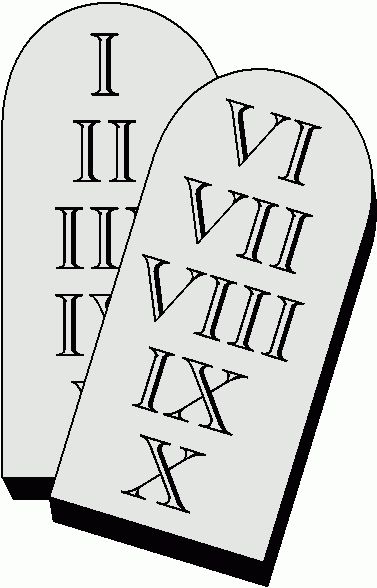
TenCommandsIn Exodus 20, the fourth commandment required Israel to take a Sabbath rest on the seventh day of each week. This pattern was established by God as he rested on the seventh day from his work of creation. And so while the command is indeed part of the Mosaic Covenant, it is also a pattern built into the very framework of creation.

In Deuteronomy 5, a different reason was given for keeping the Sabbath. God reminded them that they were slaves in Egypt, but God had saved them out of their slavery. And so everyone (even the animals!) ought to enjoy and celebrate this new freedom by resting on the Sabbath. Here was a great blessing for everyone to enjoy!

And yet, by Jesus’ day, the Sabbath had become a burden with a myriad of man-made rules attached to it. And so Jesus teaches us further about the Sabbath in Matthew 12:5-14. He makes clear that acts of ministry (like priests offering sacrifices) can be part of the Sabbath. He demonstrates that acts of mercy (like Jesus healing people) can be part of observing the Sabbath. And acts of necessity (like getting a sheep out of a pit) are also acceptable on the Sabbath.  In other words, while it is a day of rest and worship, we can do good things for other people (and animals) on this day. Again it was to be a day of blessing!

Many Christians these day have lost sight of the Sabbath, and so have lost out on a great blessing.  Some Christians argue that this command is only for Israel, and has no place today. Some claim that since this command is not repeated in the New Testament, that it is not applicable to us. But here in Matthew 12, and indeed scattered throughout the gospels, we find Jesus teaching about the Sabbath. Apparently the gospel writers believed Christians needed to be instructed on the Sabbath. If it does not apply to us, why include it in the gospels when there is so much Jesus must have said and did that we know nothing about?

And in Matthew 12, we are told that Jesus is the lord of the Sabbath. The Lord we follow is lord of the Sabbath, which strongly suggests we ought to follow him in keeping it. And in Mark 2:27, we are told that the Sabbath was made for man – again it is a blessing designed for people!

While the Sabbath command remains, its application changes under the New Covenant. Because Jesus rose from the dead on the first day of the week, the church quickly started meeting for worship on that day (Acts 20:7, I Corinthians 16:2) instead of the seventh day. Instead of remembering creation and salvation from Egypt, now we remember Jesus’ work of re-creation and salvation from sins through the cross and resurrection. And so the early church celebrated our salvation through the Lord’s Supper (Acts 20:7), did acts of ministry like teaching (Acts 20:7), and also acts of mercy like giving (I Corinthians 16:2) – all on the first day of the week.

My purpose here is not only to encourage you to rethink the fourth commandment’s application for today, but even more to encourage you to consider what a blessing it would be for all of us to follow it whether it is required or not.

  • What a blessing to step out of the commercial rat race one day a week.
  • What a blessing to rest from the busyness and constant running of the rest of the week.
  • What a blessing to get a break from our jobs and school work once a week.
  • What a blessing to have a day set aside for corporate and private worship.
  • What a blessing to have a day to spend extra time in the Word and prayer, growing in our relationship with the Lord.
  • What a blessing to spend time with God’s people doing ministry and acts of mercy.
  • What a blessing to have time free to spend with family and friends.

The Sabbath is a command, but it is also a gift. A day of worship and rest. A day of delight and joy.

A day of blessing.

In the Image of a Working and Resting God

WrittenInStoneWhat does the fourth commandment mean for the Christian?  Like the Israelites, we are made in the image of a working, resting God.  We still need to work, we still need to rest, and we can still receive the creation blessing of God’s holy day.

– Philip Graham Ryken in Written in Stone