Quotes To Ponder

Selfishness seeks its own private happiness at the expense of others.
Love seeks its happiness in the happiness of the beloved.
– John Piper

Self is the most treacherous enemy, and the most insinuating deceiver in the world.
Of all other vices, it is both the hardest to find out, and the hardest to cure. 
– Richard Baxter

Men have dreamed of finding the fairy pleasure in the dark forest of sin. 
Carnal joys have danced before their eyes as temptingly as the mirage in the desert,
and they have pursued the phantom forms to their misery in this world,
and to their eternal ruin in the next.
– Charles Spurgeon

Declaring the Glory

Manistee River in Michigan

The heavens declare the glory of God,
and the sky above proclaims his handiwork.
– Psalm 19:1

For his invisible attributes, namely, his eternal power and divine nature,
have been clearly perceived, ever since the creation of the world,
in the things that have been made. So they are without excuse.
– Romans 1:20

Acts Articles – Witnes 02-3

Throughout the book of Acts, we see the early church proclaiming the gospel.  But what is the gospel?  One probable reason for the many evangelistic sermons recorded in Acts is to help us better understand the gospel and so better share the gospel.  John Stott in his commentary on Acts gives four categories of the content of the evangelistic messages, and so four categories we must include when sharing the gospel.  His four categories are: gospel events, gospel witnesses, gospel promises, and gospel conditions.  Here I want to apply his categories to the messages in Acts 2 and 3, and then to the message we share:

  • Gospel Events:  We must tell others about what Jesus has done that our salvation is based on.  In Acts 2, Peter speaks of Jesus’ life, death, resurrection, and ascension.  In Acts 3, Peter focuses on Jesus’ death, resurrection, and ascension.  We too must tell others what Jesus has done to save us – especially his death and resurrection.
  • Gospel Witnesses: In both Acts 2 and 3, Peter gives two witnesses to what Jesus has done.  First, he appeals to Scripture, quoting numerous Old Testament passages that point to Jesus doing exactly what he did.  Second, he appeals to his own witness of Jesus’ resurrection.  This was an essential part of being an apostle – that they had seen the risen Christ.  And the apostles have recorded their witness for us in the New Testament.  So when we share the gospel, we should use the Bible.  The prophecies and eye-witness accounts point to the truth of our message.
  • Gospel Promises: In Acts 2, Peter focuses on forgiveness of sins and the gift of the Spirit.  In Acts 3, Peter rewords them as the blotting out of sin and times of refreshing (a reference to the Holy Spirit?), and then adds another: the return of Jesus for the restoration of all things.  And of course there are many more gospel promises we could mention: reconciliation, justification, new life, adoption, sanctification, and on the list goes.  When we share the gospel, we should include some of the gospel promises that would attract that person or group of people to Jesus.
  • Gospel Conditions: Finally, we need to tell people how they can receive these gospel promises made possible by the gospel events as given to us by the gospel witnesses.  In Acts 2 and 3, Peter calls the people to repent, to turn from their rejection of Jesus, and as such to believe in Jesus as their Messiah and Savior and King.  We too must call people to turn from their sin to Jesus, to repent and believe.

Gospel events, witnesses, promises, and conditions.  This is the gospel presented in Acts that we present to others.

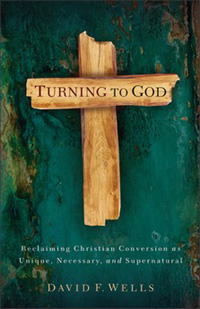
Conversion Does Not Stand Alone

Conversion does not stand alone; it is the beginning of a lifelong journey of growing in Christ and being conformed to his image.  Discipleship must follow on conversion as living and breathing follow on birth.

The goal of conversion is nothing less than loving God with all one’s will, emotions, and thinking, whereas previously all of these faculties were engaged in self-love.

– David Wells in Turning to God

Acts Articles – Service 03

In Acts 3, Peter and John come across a lame man whom they serve by healing in Jesus’ name.  The result is praise to God and an opportunity to share the gospel.  Their example suggests several principles for us as we seek to serve others:

  • We should serve others using the opportunities God gives us.  Peter and John were on their way to a prayer meeting.  They could have been too pre-occupied to notice the lame man.  They could have been tired and not felt like helping.  But they stopped.  They used the opportunity God gave them.  Are we watchful for opportunities to serve?  Or are we too pre-occupied with our own agendas?  Are we too tied to our feelings?
  • We should serve others using what God has given to us.  Peter and John tell the man they have no money to give him.  But God has given them the power to heal the man, and so they do.  They used what God gave them.  We may not have money to help someone.  We probably can’t heal anyone.  But we shouldn’t worry about what we can’t do.  Rather we should focus on what we can do, serving in the ways God enables us.
  • We should serve others as representatives of Jesus.  Peter heals the man in Jesus’ name – according to his power and authority.  Peter is just a representative of Jesus.  As the crowds gather, Peter asks the crowds why they stare at him as if he had made the man well.  Instead, he points the crowds to Jesus.  Here is an important point.  In serving others we point to Jesus not ourselves.  This means our actions require explanation.  Without explanation, the crowds would have been impressed with Peter, so Peter points them to Jesus.  In serving others, it is possible for people to become impressed with us, and so we need to point them to Jesus.  Our service is not about us, but about Jesus working through us, so we must point to Jesus.  Lifestyle evangelism requires words to explain our good deeds, or we witness simply to our own goodness.
  • We should serve others so that God may be praised.  The lame man who is healed begins leaping and praising God.  The crowds too begin to praise God (4:21).  Certainly one goal in our serving others is to help them – because we love them.  But our ultimate goal should be that God would be praised – because we love him.  People are to see our good works and glorify God.  But if we don’t point them to Jesus, who gets the glory?  Often we do.  People praise us.  They are impressed with us.  And we rob God of his glory.  This is a serious matter.  We need to be careful when we serve that we point people to Jesus so they praise God and not us.
  • We should serve others with the hope of sharing the good news of Jesus.  Peter’s service led to an opportunity to share the gospel.  That should be our hope – that our service would open doors to share the gospel.  Their greatest need is Jesus, so our greatest service is to tell them about Jesus.  May our service bring many such opportunities.

Acts Articles – Church 02C

In Acts 2:42, the early church devoted themselves to prayer.  The context is the church.  They were devoted to praying together.  What about us?  Are we devoted to meeting together for prayer?  Do we love God and his people so much that we want to gather together before the throne?  What is our attitude?  Are we devoted?  How might we grow in our devotion to praying together?

Church Quotes To Ponder

Only if you are part of a community of believers seeking to resemble, serve,
and love Jesus will you ever get to know him and grow into his likeness.
– Tim Keller

Be united with other Christians. A wall with loose bricks is not good.
The bricks must be cemented together. 
– Corrie Ten Boom

When people leave a church because they do not fit the program,
it communicates a deadly message: that our commitment is to the work
and not to the person, that our unity is primarily in the work
and not in Christ and the gospel.
– Ajith Fernando

When you choose a church you are choosing the people
you want to have around you when you die.
– Arthur Holmes


Acts Articles – Church 02B

In Acts 2:42, the early church devoted themselves to the breaking of bread.  There is some debate as to whether this refers to simply eating meals together (part of their devotion to fellowship) or to the Lord’s Supper.  As the Lord’s Supper was often connected to eating together (see I Corinthians 11), the answer might be both.  As we already addressed their devotion to fellowship, let’s consider briefly their devotion to the Lord’s Supper.

As Jesus commanded, they were devoted to coming together to celebrate the Lord’s Supper.  They came together to remember Christ’s death for them.  We too need this devotion.  We too need to regularly remember what Christ has done for us.  Indeed Christ’s sacrifice for us is a large part of our motivation for the other three devotions, and all of our devotion. 

He died for me.  In amazement and gratitude, I’ll live for him.

Ministry Moments

Here are some good posts for pastors:

It’s A Strange Thing Being A Pastor – Julian Freeman
Ultimately we labour and long for results that we can never achieve. Being a pastor is a lifelong journey to a place of utter dependence.  This is strange work, being a pastor. But I wouldn’t trade it for the world.

7 Ways I Want To Improve As A Pastor – Ron Edmondson
Pray more fervently – I believe in prayer. I want to be a person of prayer.

People Want A Pastor – Interview by Colllin Hansen
What are the costs of bigger and better church programs for every stage of life? What is the pastor’s role in relation to the members?

3 Reflections on Leading Your Family Well – Dustin Neeley
At our house, we call them “Monday Funday.” It is the day we play outside, eat Chinese food at a mall, and don’t talk about the church. Our church knows about “Monday Funday” because I mention it in sermons, tweet about it, schedule around it, and unless someone is bleeding out in their kitchen, I do my best not to violate it.