Acts Article – Word 01

Jesus ascended into heaven where he still acts and still speaks through his followers, through his church.  But how do we know what he wants us to do?  How do we know what he wants us to say?  In part, the answer is through his Word.

In Acts 1:15-26, Peter recognizes that Judas abandoned his role as an apostle, as was predicted in Psalm 69:25.  He then finds guidance in the Word.  Psalm 109:8 instructs them to replace Judas. 

The main point I want to make is that they found guidance in the Word.  The Word told them what Jesus wanted them to do.  And so the Word tells us what Jesus wants us to do. 

As we gather together as local churches to study the Word together, Jesus is speaking to us, telling us what he wants us to do and say.  As we hear the Word taught and preached, Jesus is giving us our marching orders.  And as we faithfully respond to what his Word tells us, Jesus is acting and speaking through us. 

As we gather together around the Word, let us then be careful to listen attentively and respond appropriately so that we might be the hands and tongue of Jesus.

Ministry Moments

Here are some good posts for a pastor’s personal life:

Why Church Leaders Should Always Be Full To Overflowing – Trevin Wax
Too many of us settle for the “teaching” aspect of ministry without having passed through the “study” and “obey” parts.

Lost the Awe – Paul Tripp (via Gospel Coalition)
Sins robs that sense of divine wonder meant to shape every person’s life and every pastor’s ministry.

How To Pull Out of the Burnout Spiral – Collin Hansen interviewing Bob Osborne (via Gospel Coalition)
When I find myself heading for burnout, more often than not I’ve lost the rhythms of rest and repentance and start to chase my idols. I take my sights off of Christ and become self-focused—simply put, I try to take God’s place on the throne.

In an effort to get the work of the Lord done,
we often lose contact with the Lord of the work.
— A.W. Tozer

Declaring the Glory

On Mackinac Island, Michigan

The heavens declare the glory of God,
and the sky above proclaims his handiwork.
– Psalm 19:1

For his invisible attributes, namely, his eternal power and divine nature,
have been clearly perceived, ever since the creation of the world,
in the things that have been made. So they are without excuse.
– Romans 1:20

Passion Points

Well, it has been a busy week, and I didn’t have anything prepared ahead of time, so blogging has been a bit light.  Should be better next week.  In the meantime, here are some good posts to consider for your weekend reading:

Is “Communion with God” a Small Thing for Today’s Evangelicals? – J. I. Packer (via Justin Taylor)
We do not spend much time, alone or together, in dwelling on the wonder of the fact that God and sinners have communion at all; no, we just take that for granted, and give our minds to other matters.

The Price of a Feel-Good Faith – Thomas E. Bergler (via Kevin DeYoung)
If we believe that a mature faith involves more than good feelings, vague beliefs, and living however we want, we must conclude that juvenilization has revitalized American Christianity at the cost of leaving many individuals mired in spiritual immaturity.

The One Indispensible Rule for Using Social Media – Kevin DeYoung
You represent Christ in a real way even if it is in the virtual world. Most people will know that you go to church, what church you go to, and that you claim to be a Christian. So let’s all think before we post. If we go by the name of “little Christ” we ought to be careful to show a little more Christ.

Hope you have a great Lord’s Day with God’s people worshipping our great King!

Growing Dim?

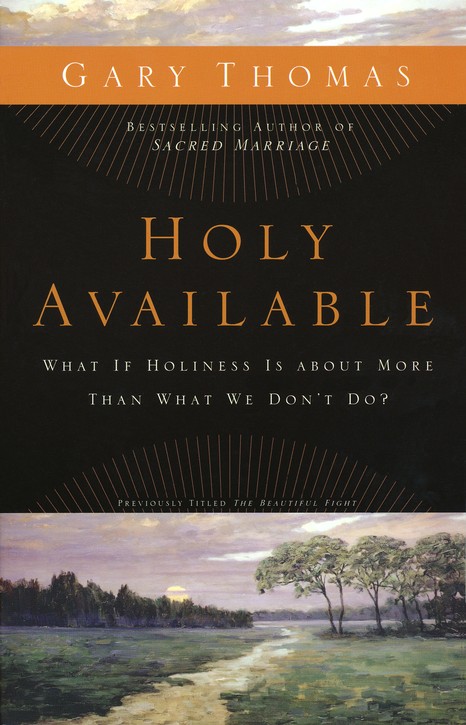
Will you pause for just a moment and consider where your eyesight may be growing dim?  Are you blinded to God’s daily blessings because you’re too focused on financial concerns, health issues, or frustrated relationships?  Have you stopped seeing people as important and instead stare persistently at possessions, power, and pleasure?  Are your eyes so preoccupied by your comfort that they have grown too tired to look at your life and your circumstances from God’s perspective?
– Gary Thomas in Holy Available

Ministry Moments

Here are some encouraging posts for pastors of smaller churches:

The Kingdom of God in the Middle of Nowhere – Trevin Wax

Thank God for Smaller Churches and Their Leaders – Thom Rainer

Rural Ministry Is Not Second Rate – Jared Wilson

I’d love for more young guys to nail Starbucks and the corner pub and shopping malls and public transportation to the cross and go plant and pastor where you’re more likely to hear a cow moo than a car honk. Country folk are real folk.
And they need the gospel too.

– Jared Wilson

Declaring the Glory

On Mackinac Island, Michigan

The heavens declare the glory of God,
and the sky above proclaims his handiwork.
– Psalm 19:1

For his invisible attributes, namely, his eternal power and divine nature,
have been clearly perceived, ever since the creation of the world,
in the things that have been made. So they are without excuse.
– Romans 1:20

Passion Points

Here are some good posts for your weekend reading:

4 Results of Christ’s Ascension – R. C. Sproul (via Tim Challies)
Goes well with our focus in Acts this week!

Theological Primers: The Attributes of Scripture – Kevin DeYoung
Four important characteristics of Scripture for our lives.

What Christians Do When They Believe and Feel about the Word of God Rightly – Kevin DeYoung
Seven responses to the Word according to the Psalms.

A Quiet Place, A Quiet Hour, A Quiet Heart – David McIntyre (via Tim Challies)
Three essentials for a powerful prayer life.

Hope you have a great Lord’s Day praising our ascended Lord, responding to His Word, and seeking Him in prayer!

Acts Articles – Prayer 01A

Yesterday I suggested two applications from the example of 120 disciples who devoted themselves to praying in one accord for the Spirit to empower them as witnesses.  But are we supposed to follow their example?  Is this recorded for us to imitate or is it recorded simply to tell us what happened?

Alan Thompson in his book, The Acts of the Risen Lord Jesus, suggests one helpful way forward.  He suggests that something mentioned once is probably to be taken as merely descriptive.  But if Luke mentions something repeatedly, that it is probably to be taken as prescriptive; that is, it is a pattern in the early church that should be a pattern for the church today (see p25-27).

So then, the 120 disciples were devoted to praying together for 10 days.  Do we need to devote ourselves to praying together for 10 days?  Probably not since this is the only occasion that we read of a 10 day period.  And indeed this ten day period between the Ascension and Pentecost (these two great works in salvation history) is unrepeatable.  That is not to say, we couldn’t commit to pray together for 10 days – it may be a great thing to do.  But it is not prescribed for us to do it.

But what about devoting ourselves to praying together apart from the 10 day length?  Is devoting ourselves to praying together merely descriptive, or should we take it as prescriptive.  Three patterns suggest that we should take this as prescriptive.

First, there is a pattern throughout Acts of Christians devoting themselves to prayer together.  It is clearly a regular practice for them.  Why would we think it shouldn’t be a regular practice for us?  And remember that Acts does not give us an exhaustive view of the early church.  Luke merely hits some of the highlights, and apparently Luke thought praying together was important enough to highlight, probably at least in part because he thought we should imitate their devotion to praying together.

Second, if you compare the gospels, the Gospel of Luke has the greatest emphasis on prayer.  Luke clearly wanted his readers to be instructed in prayer, and so it is reasonable that he would continue that instruction into his second volume – the Book of Acts.  Luke is instructing us in how we are to pray by recording for us the practice and teaching of Jesus and the practice of the early church.

Third, there is a perceptible pattern in Acts of the people praying together, the Spirit powerfully working, and the word going forth.  We see it in Acts 1-2 as the 120 pray, the Spirit comes in power, and the word is preached with 3000 people getting saved.  We see it again in Acts 4, as the church prays, the Spirit comes in power, and the people boldly proclaim the gospel.  In Acts 13, the church is praying, the Spirit calls Paul and Barnabas, and thousands will be saved through his missionary work. 

Perhaps we see few people saved today in many of our churches, because we aren’t devoting ourselves to praying together for the Spirit to powerfully work.  Not that we can force the Spirit’s hand, as if he has to act if we pray.  But if we don’t care enough to ask, why would we expect him to act?  If we try to do the ministry on our own without prayer, why would we expect God to bless our ministries?

These three patterns in Luke-Acts makes clear that devoting ourselves to praying together is prescriptive for us.  We are to follow the early church’s example.  What are we waiting for?

Birthed in a Prayer Meeting

What does it say about our churches today
that God birthed the church in a prayer meeting,
and prayer meetings today are almost extinct?
– Jim Cymbala

The apostles had this instinct:  When in trouble, pray. 
When intimidated, pray.  When challenged, pray. 
When persecuted, pray.
– Jim Cymbala

From Fresh Wind, Fresh Fire