Book Look: A Holy Ambition

A Holy Ambition is a collection of sermons by John Piper (and one article by David Mathis) on the topic of missions.  After a sermon and the article introducing missions, the book is divided into three parts: a Biblical theology of gospel-centered missions, the mandate of world missions, and the costs and blessings of mission.  It closes with a final sermon, plus two appendices: one arguing against prosperity preaching and the other declaring 14 driving convictions behind missions. 

Overall the book was challenging.  I’m sure different sermons will hit hard on different people, but I was especially challenged by three.  The first sermon which introduced the book calls us to a holy ambition to reach those who have never heard.  The sixth sermon was based on John 10:16 and ended with four reasons we can do missions confidently.  And the tenth sermon calls us to be willing to suffer to accomplish the mission. 

Recommended to fuel your desire for missions whether God calls you to go or simply grow in prayer and giving.

Missions and Worship

Missions is about the worship of Jesus.  The goal of missions is the global worship of Jesus by his redeemed people from every tribe, tongue, and nation.  The outcome of missions is all peoples delighting to praise Jesus.  And the motivation for missions is the enjoyment that his people have in him.  Missions aims at, brings about, and is fueled by the worship of Jesus.

– David Mathis in A Holy Ambition

RHMA Take Home Thoughts, Part 3

At the RHMA conference, D. A. Carson gave a two part seminar on “How To Think Wisely about Suffering and Evil.”  I wish you could have heard the entire thing.  What follows doesn’t begin to give the topic or seminar justice, but are simply some points that stood out to me:

  • We all sin, so we all deserve to suffer.
  • Suffering is short compared to eternity (at least for those in Christ).
  • We can’t grasp God’s plan; we need to trust him.
  • Our suffering may be God’s providential discipline (Hebrews 12:3-11).
  • God brings good things out of bad things (think Joseph in Egypt).
  • When you doubt God’s goodness, go back to the manger and the cross and see his love.
  • Christians have been granted to believe and suffer (Philippians 1:29).

Declaring the Glory

It has been awhile since I featured pictures of creation that declare God’s glory.  This week I want to feature some pictures of trilliums which are in full bloom in May.  I’m not much of a flower person, but I like trilliums.  These flowers are apparently rare, but they happen to flourish in and around my yard.

The heavens declare the glory of God,
and the sky above proclaims his handiwork.
– Psalm 19:1

For his invisible attributes, namely, his eternal power and divine nature,
have been clearly perceived, ever since the creation of the world,
in the things that have been made. So they are without excuse.
– Romans 1:20

Passion Points

Here are some good posts for your weekend:

Don’t worry…
Eight Reasons Why My Anxiety is Pointless and Foolish – Justin Taylor
Exactly what the title says!

…be happy
The Road to Happiness Part One and Part Two – Paul Tautges
Jesus defines the path to happiness very differently than the world does.

Hope you have a great Lord’s Day rejoicing in the Lord with his people!

Book Look: A God Entranced Vision Of All Things

As I continue to read about Jonathan Edwards, I enjoyed the collection of essays found in the book, A God Entranced Vision of All Things edited by John Piper and Justin Taylor.  The essays are based on several addresses from a conference focused on the contributions of Jonathan Edwards.  The book begins with three chapters addressing his legacy, his life, and his wife’s life.  Part Two shares lessons we can learn from his life and teachings on revival, spiritual disciple, and church life.  The final chapter in part two addresses the issue of Edwards owning slaves.  Part Three explores some of his most important works on sin, the will, and religious affections.  All in all, the book makes a good introduction to his life and teachings, and provides plenty of challenges for our lives today.

RHMA Take-Home Thoughts Part 2

Another main speaker at the RHMA conference was Duane Litfin.  A few reflections from his two main sessions:

  • How do you picture Jesus?  He is no longer a simple carpenter or a tortured sacrifice on a cross.  He is the risen and ascended Lord and King.  When John sees him in Revelation 1, he falls down at his feet as though dead.  As we picture him in all his glory, it should have positive affects on our worship, our obedience, and our confidence.
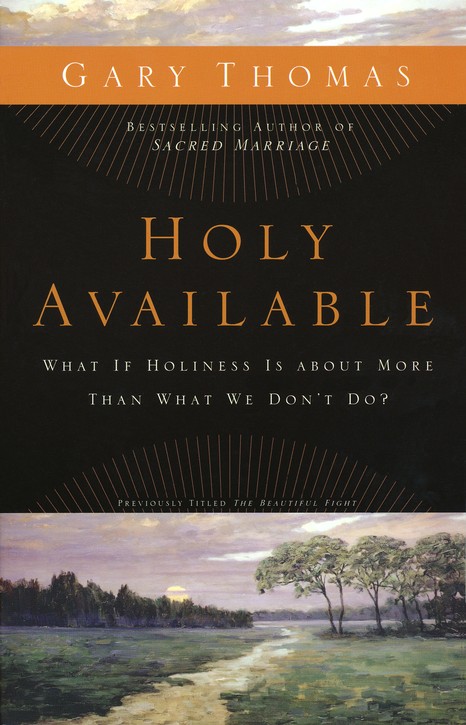
  • In Matthew 21, Jesus chose a humble donkey to ride into Jerusalem.  Jesus has a habit of choosing to use the humble – people like us.  God chooses us not because we are wonderful, but because he is.
  • The disciples untied the donkey and brought it to Jesus.  Jesus used the donkey because it was available.  Are we available?  How do we use our time, our money, our hands, our tongues, our minds, our hearts?  Are we available or are we tied up with other things?

RHMA Take-Home Thoughts, Part 1

Over a week ago I promised to share some highlights from the RHMA conference I attended.  The conference is for pastors/wives of small town and country churches.  One of the main speakers this year was D. A. Carson.  A few thoughts from his two main sessions for reflection:

  • Jesus was not held to the cross by the nails but because he desired to do God’s will.  Likewise, we must not sin because we desire to do God’s will.
  • Jesus cried out, “My God, my God, why have you forsaken me?” so we would never have to make that cry.  He was forsaken in our place.
  • Though least in the kingdom, we are greater than John because we can better point others to Jesus, especially to his death and resurrection that brings salvation.  In other words, the Christian criteria for greatness are radically tied to proclamation and witness.  What makes us great is that we can point others to Jesus.

Book Look: Humility and Humility

I have been sharing quotes from two books on humility for the last few weeks.  Both are excellent books that I want to commend to you.

Humility: The Forgotten Virtue is by Wayne A. Mack (with Joshua Mack).  The Macks explore our humility before God based on both God’s superiority to us and God’s purity compared to our sin.  They then explore humility toward each other, and the follies of sin.  They close with two chapters on how to grow in humility.  As I was reading, I thought perhaps I was reading Jerry Bridges – which is to say that the entire book is a wonderful exploration of the Biblical passages that deal with the issue, organized as I have outlined above.  As such, the book could be used as a rich Bible study.  Indeed, each chapter ends with application and discussion exercises.

Humility: True Greatness by C. J. Mahaney explores humility in three parts.  First, he defines humility and pride.  Mahaney focuses on our humility before God based on God’s purity compared to our sin.  Second, he looks at Jesus, who humbles himself to save us from our sins.  Third, he takes well over half of the book to suggest practical ways to grow in humility.  This section alone is worth the price of the book.

I would recommend both books together.  Read the Macks as they dig deep into a Biblical exploration of humility, and then turn to Mahaney for the practical applications.  Both books deal with both issues, but the Macks just dig deeper and Mahaney applies further. 

Humility vs pride is an issue for all of us.  And so these are two excellent books that I would recommend be read by all of us that we might grow in our passion for God and compassion for people.

Be Hearers Not Doers?

In the last Passion Points I recommended a post on irritability.  As I was first reading the post, I was irritable.  It had been a long day.  My family wanted to go for a walk.  I wanted to crash.  I was irritable.  As I read, I recognized the obvious immediate application, but resisted.  I was being a hearer and not a doer.

Of course, James calls us to “be doers of the word, and not hearers only” (James 1:22).  Hearing or reading is not enough.  We must respond.  We must apply.  We must obey.  We must do what the Word says.

As we spend personal time in the Word, we must seek to respond to what God is saying to us.  As we hear a sermon, we must strive to apply the message to our lives.  But what about when we read blogs?

The danger it seems to me is that we can surf through numerous posts at one sitting, taking in the Biblical teaching but never responding to any of it.  That is what happened as I read the post on irritability.  And I have caught myself surfing blogs looking for posts to feature in Passion Points but never grappling with the manifold teachings myself. 

The nature of a blog is that posts tend to be short (or no one will read them).  And the nature of the web is that people tend to surf.  Rapidly taking in numerous posts simply doesn’t encourage response.  There is simply too much information to really process.  And so we read but never apply; we hear but never do.

And this may be a deeper problem than just reading blogs.  I wonder if the way we read blogs affects the way we read Scripture and hear sermons.  Are we learning from our blog reading not to respond, and then taking that learned failure to our Bible reading and sermon listening?

These are serious issues.  We dare not ignore God when he speaks to us.  So I encourage you to examine yourself.  Do you surf blogs without ever grappling with and applying the Biblical teachings?  If you are like me, what might we do?  Two suggestions that I want to apply to my life:

  1. As we read numerous posts, let’s look for one post that we can wrestle with and seek to apply to our lives. 
  2. If we come to a post in which God seems to be really speaking to us, let’s just stop surfing (even if you haven’t come to my blog yet!) and just camp on that post – pondering and responding as God would lead.

Let’s strive to not only be hearers but doers also!