
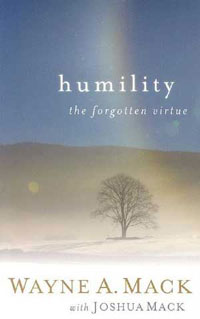
 Those who grumble and complain about the circumstances of their lives are manifesting a spirit of pride. A person who complains about his circumstances does so because he thinks he deserves better.
A humble person, on the other hand, willingly accepts whatever God ordains. He says with Paul, “I have learned to be content in whatever circumstances I am” (Phil. 4:11).
– Wayne A. Mack (with Joshua Mack) in Humility
Author: Brian
Follower of Jesus, Husband, Dad, Grandpa, and Pastor
Definitions of Pride
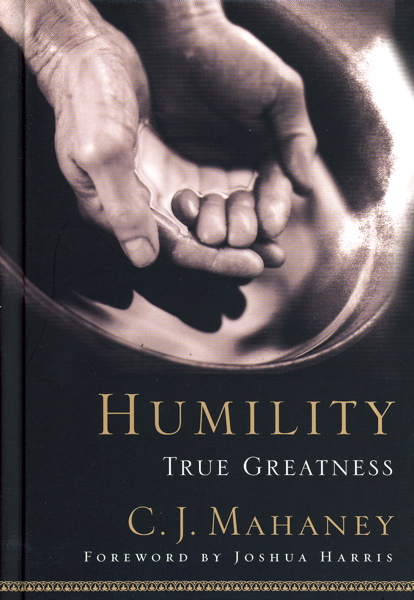 Pride is when sinful human beings
aspire to the status and position of God and
refuse to acknowledge their dependence upon him.
– C. J. Mahaney in Humility
Pride consists in attributing to ourselves
and demanding for ourselves the honor,
privileges, prerogatives, rights, and power
that are due to God alone.
– Wayne A. Mack (with Joshua Mack) in Humility
Passion Points
I was gone the past week to attend the RHMA Small Town Pastor/Wife Conference with my wife. I hope to share some highlights next week. In the meantime, here are some good posts for your weekend reading:
When I Am God – Tim Challies
How life changes when we try to make ourselves God instead of acknowledging the one true God.
Praying Past Our Preferred Outcomes – Nancy Guthrie (via Gospel Coalition)
Related to the post before, am I willing to pray for God’s will in my concerns?
Christ-Centered Accountability – Jared Wilson
A good consideration of helpful and not-so-helpful accountability.
Keep Looking Unto Jesus – J. C. Ryle Quotes
Keep on looking unto Jesus. Faith shall soon be changed to sight, and hope to certainty.
Hope you have a great Lord’s Day with your local church celebrating the one true God!
Passion Points
Here are some good posts on overcoming sin and walking in holiness:
Jonathan Dodson has a three part series on overcoming sin:
Know Your Sin
Fight Your Sin
Trust Your Savior, Not Your Efforts
Kevin DeYoung offers an Anatomy of Holiness, looking at what holiness is as it relates to our bodies.
Finally, Trevin Wax offers a prayer for Grace To Love What God Commands.
Hope you have a great Lord’s Day growing in your love for God and His commands!
All of God
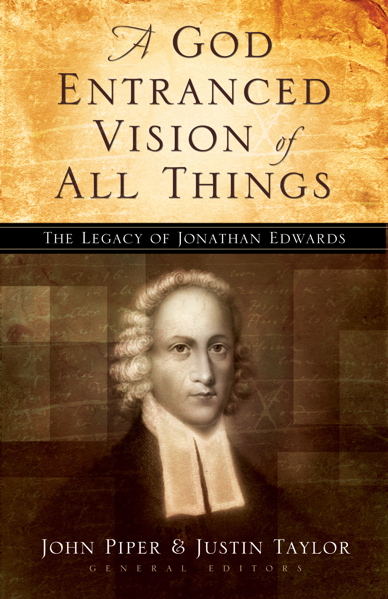 God is the beginning, the middle, and the end of all things. Nothing exists without his creating it. Nothing stays in being without his sustaining word. Everything has its reason for existing from him. Therefore nothing can be understood apart from him, and all understandings of all things that leave him out are superficial understandings, since they leave out the most important reality in the universe. We can scarcely begin to feel today how God-ignoring we have become, because it is the very air we breathe.
– John Piper
in A God Entranced Vision of All Things
Revival
Revival is God touching minds and hearts in an arresting, devastating, exalting way, to draw them to himself through working from the inside out rather than from the outside in. It is God accelerating, intensifying, and extending the work of grace that goes on in every Christian’s life…. It is the near presence of God giving new power to the gospel of sin and grace. It is the Holy Spirit sensitizing souls to divine realities and so generating deep-level responses to God in the form of faith and repentance, praise and prayer, love and joy, works of benevolence and service and initiatives of outreach and sharing.
– J. I. Packer
in A God Entranced Vision of All Things
Home Sweet Home
He who dwells in the shelter of the Most High
will abide in the shadow of the Almighty.
I will say to the Lord, “My refuge and my fortress,
my God, in whom I trust.”
– Psalm 91:1-2
There is no place like home. Home is where we dwell. Home is where we abide.
For the Christian, home is God.
A man’s home is his castle. For the Christian this is especially true.
We find our home in his shelter. We are at home in the shadow of the Almighty.
He is our refuge and fortress.
Home is where the heart is. Our home is in God. Our heart should be with God.
God should be our great desire, our burning passion.
God is our home. He is our castle. He has our heart.
Home sweet home!
Passion Points
Here are some good thoughts on our Savior for the weekend:
He is the Radiance of the Glory of God – Jared Wilson
Considering the glorious radiance of Jesus.
The Cross as the Scepter – Leo the Great (via Trevin Wax)
An interesting take on Jesus carrying his cross.
On the Third Day – Jim Hamilton (via Crossway)
And interesting look at the pattern of the third day through Scripture.
Only Christ Can Provide Real Comfort – J. C. Ryle Quotes
“There is a gulf in your heart which nothing but Christ can fill.”
Hope you have a great Lord’s Day celebrating our radiant, reigning, risen Savior!
Family Quotes To Ponder
The joy of marriage: To be loved well and known deeply by one
is far more fulfilling than being adored by many and truly known by none.
– Gary Thomas
How soon marriage counseling sessions would end
if husbands and wives were competing in thoughtful self-denial.
— Walter Chantry
Some say, “I can’t love my spouse because he/she is so different than me.”
Then how will you ever love God? Is He just like you?
– Gary Thomas
Begin early to teach, for children begin early to sin.
— C.H. Spurgeon

