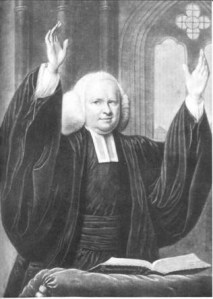
Hark the Herald Angels Sing

Charles Wesley wrote this hymn soon after he was saved in 1738, publishing it for the first time in 1739.  Interestingly it has gone through some adaptations to come to its present form today.  For instance, it was originally published as ten four-line stanzas instead of five eight line stanzas.  In 1753, George Whitefield, a contemporary and friend, changed the last line of the refrain from “Glory to the King of kings” to “Glory to the newborn king.”  For a full history see this article from Christianity Today.  Like most of Wesley’s hymns, there are more verses than we usually sing – note the final two verses below.  This hymn is quickly becoming a favorite of mine due to its rich theology.  It gives us a wonderful crash course on the incarnation and numerous aspects of our salvation.  To hear the music, see the music video which I stumbled across from my alma mater at the start of this blog. 

Hark! The herald angels sing,
“Glory to the newborn King;
Peace on earth, and mercy mild,
God and sinners reconciled!”
Joyful, all ye nations rise,
Join the triumph of the skies;
With th’angelic host proclaim,
“Christ is born in Bethlehem!”
Hark! the herald angels sing,
“Glory to the newborn King!”

Christ, by highest Heav’n adored;
Christ the everlasting Lord;
Late in time, behold Him come,
Offspring of a virgin’s womb.
Veiled in flesh the Godhead see;
Hail th’incarnate Deity,
Pleased with us in flesh to dwell,
Jesus our Emmanuel.
Hark! the herald angels sing,
“Glory to the newborn King!”

Hail the heav’nly Prince of Peace!
Hail the Sun of Righteousness!
Light and life to all He brings,
Ris’n with healing in His wings.
Mild He lays His glory by,
Born that man no more may die.
Born to raise the sons of earth,
Born to give them second birth.
Hark! the herald angels sing,
“Glory to the newborn King!”

Come, Desire of nations, come,
Fix in us Thy humble home;
Rise, the woman’s conqu’ring Seed,
Bruise in us the serpent’s head.
Now display Thy saving power,
Ruined nature now restore;
Now in mystic union join
Thine to ours, and ours to Thine.
Hark! the herald angels sing,
“Glory to the newborn King!”

Adam’s likeness, Lord, efface,
Stamp Thine image in its place:
Second Adam from above,
Reinstate us in Thy love.
Let us Thee, though lost, regain,
Thee, the Life, the inner man:
O, to all Thyself impart,
Formed in each believing heart.
Hark! the herald angels sing,
“Glory to the newborn King!”

The Lord Our Righteousness

Jeremiah 23:6, “The Lord our Righteousness”

Whoever is acquainted with the nature of mankind in general, or the propensity of his own heart in particular, must acknowledge, that self-righteousness is the last idol that is rooted out of the heart: being once born under a covenant of works, it is natural for us all to have recourse to a covenant of works, for our everlasting salvation. And we have contracted such devilish pride, by our fall from God, that we would, if not wholly, yet in part at least, glory in being the cause of our own salvation….

This is the sorest, though, alas! the most common evil that was ever yet seen under the sun. An evil, that in any age, especially in these dregs of time wherein we live, cannot sufficiently be inveighed against. For as it is with the people, so it is with the priests; and it is to be feared, even in those places, where once the truth as it is in Jesus was eminently preached, many ministers are so sadly degenerated from their pious ancestors, that the doctrines of grace, especially the personal, ALL-SUFFICIENT RIGHTEOUSNESS of Jesus, is but too seldom, too slightly mentioned. Hence the love of many waxeth cold; and I have often thought, was it possible, that this single consideration would be sufficient to raise our venerable forefathers again from their graves; who would thunder in their ears their fatal error….

Can you say, the Lord our righteousness? I say, the Lord OUR righteousness. For entertaining this doctrine in your heads, without receiving the Lord Jesus Christ savingly by a lively faith into your hearts, will but increase your damnation. As I have often told you, so I tell you again, an unapplied Christ is no Christ at all. Can you then, with believing Thomas, cry out, “My Lord and my God?” Is Christ your sanctification, as well as your outward righteousness? For the word righteousness, in the text, not only implies Christ’s personal righteousness imputed to us, but also holiness wrought in us. These two, God has joined together. He never did, he never does, he never will put them asunder. If you are justified by the blood, you are also sanctified by the Spirit of our Lord. Can you then in this sense say, The Lord our righteousness? Were you ever made to abhor yourselves for your actual and original sins, and to loathe your own righteousness; for, as the prophet beautifully expresses it, “your righteousness is as filthy rags? Were you ever made to see and admire the all-sufficiency of Christ’s righteousness, and excited by the Spirit of God to hunger and thirst after it? Could you ever say, my soul is athirst for Christ, yea, even for the righteousness of Christ? O when shall I come to appear before the presence of my God in the righteousness of Christ! Nothing but Christ! Nothing but Christ! Give me Christ, O God, and I am satisfied! My soul shall praise thee for ever.

Was this ever the language of your hearts? And, after these inward conflicts, were you ever enabled to reach out the arm of faith, and embrace the blessed Jesus in your souls, so that you could say, “my beloved is mine, and I am his?” If so, fear not, whoever you are. Hail, all hail, you happy souls! The Lord, the Lord Christ, the everlasting God, is your righteousness. Christ has justified you, who is he that condemneth you? Christ has died for you, nay rather is risen again, and ever liveth to make intercession for you. Being now justified by his grace, you have peace with God, and shall, ere long, be with Jesus in glory, reaping everlasting and unspeakable fruits both in body and soul. For there is no condemnation to those that are really in Christ Jesus.

– George Whitefield, excerpts from his sermon:  The Lord Our Righteousness

Come Thou Long Expected Jesus

Charles Wesley was saved in 1738 and wrote his first hymn that very day.  In the seven years that followed, he wrote 18 Christmas hymns which were published in 1745 as Hymns for the Nativity of our Lord.  You can find the lyrics to these hymns here.  The most familiar of them is Come Thou Long Expected Jesus.   Unlike many of Charles Wesley’s long hymns, this one is only two stanzas.  Interestingly though, the hymn that follows in this collection has the same metre, and I have to wonder if there is some relation.  Speculation aside, Come Thou Long Expected Jesus is a hymn expressing Israel’s hope of the coming Messiah, and our hope in his return.  Christ is further proclaimed as our King who should rule our hearts, and our Savior in whose merit we find salvation.  For further thoughts on the theology of this hymn, see an article by Probe Ministries here.  For the music, listen to the music video at the beginning of this post. 

Come, thou long-expected Jesus,
Born to set thy people free,
From our fears and sins relieve us,
Let us find our rest in thee:
Israel’s strength and consolation,
Hope of all the earth thou art,
Dear desire of every nation,
Joy of every longing heart.

Born thy people to deliver,
Born a child and yet a King,
Born to reign in us for ever,
Now thy gracious kingdom bring;
By thine own eternal Spirit,
Rule in all our hearts alone,
By thine all-sufficient merit
Raise us to thy glorious throne.

Christmas Questions

It is Christmas – time for all those work parties and extended family get-togethers.  What do you talk about?  And how might you turn the conversation toward the true reason for the season?  Donald Whitney gives us ten great questions to ask people to get the conversation rolling and help us move the conversation toward Christ.  He makes this available as a bulletin insert which I distributed to my church family this past Sunday.  Well worth taking a look.

Heaven

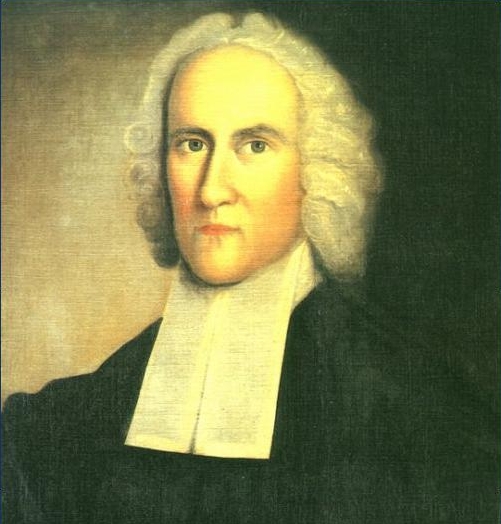
Heaven is that place alone where is to [be] obtained our highest end, and highest good. God hath made us for himself: “of God, and through God, and to God are all things” (Romans 11:36). Therefore then do we attain to our highest end, when we are brought to God. But that is by being brought to heaven, for that is God’s throne; that is the place of his special presence, and of his glorious residence. There is but a very imperfect union with God to be had in this world: a very imperfect knowledge of God in the midst of abundance of darkness, a very imperfect conformity to God, mingled with abundance of enmity and estrangement. Here we can serve and glorify God but in an exceeding imperfect manner, our service being mingled with much sin and dishonoring to God.

But when we get to heaven, if ever that be, there we shall be brought to a perfect union with God. There we shall have the clear views of God’s glory: we shall see face to face, and know as we are known [1 Corinthians 13:12]. There we shall be fully conformed to God, without any remains of sin: “we shall be like him; for we shall see him as he is” [1 John 3:2]. There we shall serve God perfectly. We shall glorify him in an exalted manner, and to the utmost of the powers and capacity of our nature. Then we shall perfectly give up ourselves to God; then will our hearts be wholly a pure and holy offering to God, offered all in the flame of divine love.

In heaven alone is attainment of our highest good. God is the highest good of the reasonable creature. The enjoyment of him is our proper happiness, and is the only happiness with which our souls can be satisfied. To go to heaven, fully to enjoy God, is infinitely better than the most pleasant accommodations here: better than fathers and mothers, husbands, wives, or children, or the company of any or all earthly friends. These are but shadows; but God is the substance. These are but scattered beams; but God is the sun. These are but streams; but God is the fountain. These are but drops; but God is the ocean.

– Jonathan Edwards

Aslan’s Other Name

In The Voyage of the Dawn Treader book and movie, Aslan tells Edmund and Lucy that they won’t be coming back to Narnia.  Lucy especially is heartbroken because she won’t see Aslan again, but Aslan tells her that he is in our world too.  He continues:

But there I have another name.  You must learn to know me by that name.  This was the very reason why you were brought to Narnia, that by knowing me here for a little, you may know me better there.

So what is Aslan’s other name?  His other name is Jesus.  As Aslan died to rescue Edmund, so Jesus died to rescue us.  As Aslan rose triumphantly from the dead, so Jesus rose triumphantly from the dead.  As Aslan was the children’s guide to Caspian, so Jesus is our guide.  As Aslan helped the children in the Dark Island, so Jesus helps us in our trials.  As Asalan helped Lucy overcome temptation, so Jesus helps us overcome temptation.  As Lucy loved Aslan, so we should love Jesus. 

The wonder of Aslan is a glimpse into the wonder of Jesus. 

Do you know Aslan by his other name?

Lasting Joy

Christmas is a time of joy – family get-togethers, happy memories, old traditions, presents, goodies, carols, and parties.  Yet many struggle with joy at this time of year – perhaps they are sick, or alone, or without a job.  Many struggle as they remember a loved one who has passed away.  Even when our circumstances are good, we are busy which makes us weary and often anything but joyful.  Where can we find lasting joy? 

We can find lasting joy in the coming of a Savior.  In the Luke 2:10-11, the angel proclaims: “Fear not, for behold, I bring you good news of great joy that will be for all the people.  For unto you is born this day in the city of David a Savior, who is Christ the Lord.” 

A Savior has come – God has taken on flesh, been born as a baby, become one of us.  A Savior has come – to die on a cross to pay the penalty for sin and rebellion, so people could be forgiven and have a relationship with God.  A Savior has come – who rose from the dead to give new life with Christ and the hope of heaven and one’s own resurrection.  No matter our circumstances, this reality remains: a Savior has come, and we can find lasting joy here.

We can find lasting joy in our salvation.  After sending out 72 disciples, we read in Luke 10:17-20: The seventy-two returned with joy, saying, “Lord, even the demons are subject to us in your name!”  And he said to them, “I saw Satan fall like lightning from heaven.  Behold, I have given you authority to tread on serpents and scorpions, and over all the power of the enemy, and nothing shall hurt you.  Nevertheless, do not rejoice in this, that the spirits are subject to you, but rejoice that your names are written in heaven.” 

The disciples are rejoicing in this power over the devil and his minions, and it is a wonderful thing to see the devil defeated.  We too like power, the spectacular.  We want to see miracles.  But Jesus reminds us there is something greater to rejoice in – that our names are written in heaven, that we have been saved through Jesus Christ.  We rejoice not only that a Savior has come, but that our Savior has come – that salvation has been applied in our lives through faith.  No matter our circumstances, if we have received Jesus as our Savior, we have the greatest blessing in the world – and we can find lasting joy here.

We can find lasting joy in God’s will.  Jesus goes on in Luke 10:21-24 to say: In that same hour he rejoiced in the Holy Spirit and said, “I thank you, Father, Lord of heaven and earth, that you have hidden these things from the wise and understanding and revealed them to little children; yes, Father, for such was your gracious will.  All things have been handed over to me by my Father, and no one knows who the Son is except the Father, or who the Father is except the Son and anyone to whom the Son chooses to reveal him.”  Then turning to the disciples he said privately, “Blessed are the eyes that see what you see!  For I tell you that many prophets and kings desired to see what you see, and did not see it, and to hear what you hear, and did not hear it.”

God is sovereign.  He acts according to his will,  has the power to accomplish his will, and so his will gets done.  If we will find joy in God’s will like Jesus does here, we can find lasting joy.  Our problem is that we seek joy in our own will, in what we want.  If we get what we want, we are happy.  If we don’t get what we want, we aren’t happy.  If we seek joy in our own will, we will often be without joy – unless we conform our will to God’s will.  We need to learn to trust in God’s will even when we don’t get it.  We need to learn to be content with God’s plan for our lives even when it is hard.  If we will conform our will to his, trust in his will, and learn to be content with his plan, we can find lasting joy in God’s will like Jesus did.

Paul gives us a great example here in the book of Philippians.  Paul is in prison.  Yet as you read this letter you see a man who is conforming his will to God’s.  He is trusting God’s will.  He is content no matter what happens.  For him, to live is Christ and to die is gain.  And what is the great characteristic of this letter that jumps out at us?  Joy.  Paul is rejoicing, because he can find joy in God’s will.  If Paul found lasting joy in God’s will even in prison, we can find lasting joy in God’s will in the midst of our trials.  But again we must conform our will to his, trust him, and learn to be content with his plan for our lives.

Finally, we can find lasting joy in God Himself.  Paul tells us in Philippians 4:4: Rejoice in the Lord always; again I will say, Rejoice.  Note the word “always.”  We should always rejoice in the Lord.  We can find lasting joy in Him.  God blesses us with many temporary joys.  Even in our worst trials, God sends blessings.  And as we receive his many blessings, we always have reason to rejoice in him.

And yet, we rejoice in the Lord not just because of his blessings, but because of Himself.  In Psalm 16:11, David writes: …in your presence there is fullness of joy….  We can find lasting joy in God Himself.  Note the context of Psalm 16.  It begins with the words: Preserve me, O God, for in you I take refuge.  David is in the midst of some trial – and finds joy in God.  In the midst of our trails then, we too can find joy in his presence.  Note further that in God, David finds fullness of joy.  We can find some joy in various blessings, but in the source of every blessing there is fullness of joy.  So let us draw near to him and find in Him lasting joy.

Our circumstances may be good or bad this Christmas.  But no matter our circumstances we can find lasting joy in the coming of a Savior, in our own salvation, in God’s will, and in God Himself.  May you have a joyful Christmas!

Church Is Cancelled – Now What?

The winter storm closed most of the churches in our area this morning.  So how should we respond when we hear that church is cancelled?  Let me give you six suggestions.

1. Disappointment.  We should be excited about the opportunity to gather with God’s people in God’s presence each week for worship, discipleship, and fellowship.   Naturally there will be a sense of disappointment when that opportunity is taken away.  If there is not that sense of disappointment, we must ask ourselves why.  Have our hearts grown dull?  Have we lost interest in fellowship with God and his people?  Lost the hunger to worship and grow?  Certainly we might be thankful that we do not have to brave the winter mess, but to actually be excited about having no church and lacking a sense of disappointment says much about our hearts.  Our hearts should reflect the Psalmist’s heart who wrote in Psalm 42:1-2:  As a deer pants for flowing streams, so pants my soul for you, O God.  My soul thirsts for God, for the living God.  When shall I come and appear before God?  If this is not our response, we must examine our hearts.

2. Trust.  God is sovereign; he is in control.  Our lives are in his hands.  If his plan is to send a winter storm so that we can’t meet together as a church, then that is his business.  We may be disappointed, but we should also trust that God knows what he is doing.  Be still, and know that I am God (Psalm 46:10).

3. Rest.  This Christmas season is hectic.  Today was supposed to bring not only morning services but a Christmas party and Christmas caroling.  Now suddenly everything has been called off.  Perhaps in the midst of all of our busyness, God knew we just needed a break, a chance to stop and rest.  So perhaps perhaps part of our response is to take the opportunity God has given and rest from the all the hustle and bustle.  Rest was part of the Sabbath principle anyway, wasn’t it?

4. Family Worship.  We may not be able to meet as a church, but we can certainly still meet as a family to praise God and study God’s Word.  Whether there is one or two or four or twenty or any number in between in your family, you can gather to worship.  Sing some songs of praise from a hymnal or chorus book or with a praise CD.  Discuss a passage of Scripture together or listen to a sermon on the radio or internet or from a CD.  Gathering as a church to worship is important, but if you can’t, gather to worship as a family.

5. Personal Time with the Lord.  You have been given the gift of a whole day.  In addition to worshipping as a family, why not spend some personal time with the Lord in prayer and His Word.  Perhaps read part of a book that will challenge you to grow in the Lord or encourage you to look to God in your trials.  Don’t waste the day – invest it for your walk with the Lord.

6. Family Time.  Enjoy time together as a family.  Talk.  Laugh.  Play a game.  Do something together.  Again, don’t waste the day – invest it for your family.

O For A Thousand Tongues To Sing

A year after Charles Wesley was saved, he penned the hymn, O For A Thousand Tongues To Sing.  In this hymn he wants to express his praise to God for his salvation.  Notice his joy that salvation has been applied to him in this stanza:

I felt my Lord’s atoning blood
Close to my soul applied;
Me, me He loved, the Son of God,
For me, for me He died!

Notice also that you have probably never seen this stanza as most hymnals only have four or five verses.  But Wesley wrote many more as you can see below.  Notice how he moves from praise in the beginning stanzas to a plea to other sinners to find the salvation that he has found in the later verses.  For an organ version of one verse click here or listen to the music video at the beginning of this post for a simple rendition of the most familiar verses.

O for a thousand tongues to sing
My great Redeemer’s praise,
The glories of my God and King,
The triumphs of His grace!

 My gracious Master and my God,
Assist me to proclaim,
To spread through all the earth abroad
The honors of Thy name.

Jesus! the name that charms our fears,
That bids our sorrows cease;
’Tis music in the sinner’s ears,
’Tis life, and health, and peace.

He breaks the power of canceled sin,
He sets the prisoner free;
His blood can make the foulest clean,
His blood availed for me.

He speaks, and, listening to His voice,
New life the dead receive,
The mournful, broken hearts rejoice,
The humble poor believe.

Hear Him, ye deaf; His praise, ye dumb,
Your loosened tongues employ;
Ye blind, behold your Savior come,
And leap, ye lame, for joy.

In Christ your Head, you then shall know,
Shall feel your sins forgiven;
Anticipate your heaven below,
And own that love is heaven.

Glory to God, and praise and love
Be ever, ever given,
By saints below and saints above,
The church in earth and heaven.

On this glad day the glorious Sun
Of Righteousness arose;
On my benighted soul He shone
And filled it with repose.

Sudden expired the legal strife,
’Twas then I ceased to grieve;
My second, real, living life
I then began to live.

Then with my heart I first believed,
Believed with faith divine,
Power with the Holy Ghost received
To call the Savior mine.

I felt my Lord’s atoning blood
Close to my soul applied;
Me, me He loved, the Son of God,
For me, for me He died!

I found and owned His promise true,
Ascertained of my part,
My pardon passed in heaven I knew
When written on my heart.

Look unto Him, ye nations, own
Your God, ye fallen race;
Look, and be saved through faith alone,
Be justified by grace.

See all your sins on Jesus laid:
The Lamb of God was slain,
His soul was once an offering made
For every soul of man.

Awake from guilty nature’s sleep,
And Christ shall give you light,
Cast all your sins into the deep,
And wash the Æthiop white.

Harlots and publicans and thieves
In holy triumph join!
Saved is the sinner that believes
From crimes as great as mine.

Murderers and all ye hellish crew
In holy triumph join!
Believe the Savior died for you;
For me the Savior died.

With me, your chief, ye then shall know,
Shall feel your sins forgiven;
Anticipate your heaven below,
And own that love is heaven.

And Can It Be

On the day of Charles Wesley’s conversion, he penned the hymn Where Shall My Wondering Soul Begin which we looked at in a past post.  Soon after, he penned a much more familiar hymn with much the same message – And Can It Be.  Like his first hymn, he expresses his amazement that God would save him – notice expecially his use of the phrase “for me” in the first verse.   Notice his excitement at his forgiveness, the quenching of God’s wrath, and the reality that in Christ he will face no condemnation.   By the way, also notice that he wrote more than the four verses in our typical hymnals.  I particularly like the fifth verse.  The entire hymn is one of my favorites, and I especially like verse four.  I confess though that I have a doctrinal difference with one line in verse three.  “Emptied himself of all but love” I suspect attempts to address Philippians 2, but I would disagree that the Son gave up his other attributes to become a man.  If you want the music, you can link here for an organ version of the first verse or try a beautiful rendition of the four most common verses in the music video at the beginning of this post. 

And can it be that I should gain
An interest in the Savior’s blood?
Died He for me, who caused His pain—
For me, who Him to death pursued?
Amazing love! How can it be,
That Thou, my God, shouldst die for me?
Amazing love! How can it be,
That Thou, my God, shouldst die for me?

’Tis mystery all: th’Immortal dies:
Who can explore His strange design?
In vain the firstborn seraph tries
To sound the depths of love divine.
’Tis mercy all! Let earth adore,
Let angel minds inquire no more.
’Tis mercy all! Let earth adore;
Let angel minds inquire no more.

He left His Father’s throne above
So free, so infinite His grace—
Emptied Himself of all but love,
And bled for Adam’s helpless race:
’Tis mercy all, immense and free,
For O my God, it found out me!
’Tis mercy all, immense and free,
For O my God, it found out me!

Long my imprisoned spirit lay,
Fast bound in sin and nature’s night;
Thine eye diffused a quickening ray—
I woke, the dungeon flamed with light;
My chains fell off, my heart was free,
I rose, went forth, and followed Thee.
My chains fell off, my heart was free,
I rose, went forth, and followed Thee.

Still the small inward voice I hear,
That whispers all my sins forgiven;
Still the atoning blood is near,
That quenched the wrath of hostile Heaven.
I feel the life His wounds impart;
I feel the Savior in my heart.
I feel the life His wounds impart;
I feel the Savior in my heart.

No condemnation now I dread;
Jesus, and all in Him, is mine;
Alive in Him, my living Head,
And clothed in righteousness divine,
Bold I approach th’eternal throne,
And claim the crown, through Christ my own.
Bold I approach th’eternal throne,
And claim the crown, through Christ my own.