Marvel

After Jesus came down from his Transfiguration, he cast out an unclean spirit (Luke 9:37-43).  “And all were astonished at the majesty of God…they were all marveling at everything he was doing….”  In his actions they saw the majesty, the greatness, the glory of God, and they marveled, they were astonished, they wondered, they were amazed.  We too should marvel at the glory of God.  So why don’t we marvel more?  Let me suggest two reasons.

First, we are distracted by idols.  Our world is full of stuff marketed in shining wrappings that make it look glorious.  The glory often fades as soon as you buy it, and it eventually ends up in the trash heap, and yet it still allures us, attracts us, distracts us.  We fill our homes and lives with this stuff that distracts us from the true glory of God.

And it is not just stuff.  Power, sex, fame, popularity, and on the list goes.  All these things present themselves as glorious.  And indeed there is nothing wrong with them in their proper contexts.  But we are attracted by the empty promises that these things will satisfy, will fulfill, and they distract us from the one who truly does.  They are idols distracting us from the true glory of God.

Second, we don’t marvel more because we fail to see the glory of God.  His glory is all around us, but we miss it in the hurry of life.  We need to slow down and open our eyes.

We need to open our eyes to his glory revealed in the Bible.  We get so used to the stories, we miss the glory of the one who is acting in incredible ways.  See his glory in the miracles of Jesus, in the proclamations of Isaiah, the glimpse of heaven in Revelation, the praises in Psalms, and on and on it could go. 

We need to open our eyes to his glory revealed in creation.  I love to camp on the shores of Lake Superior each summer.  As I see the powerful waves of the big lake, as I see the incredible sunsets over the lake, I am struck with the glory of God.  But is his glory not revealed where I live the rest of the year?  Of course it is, but I miss it.  I miss it because I am in too much of a hurry.  I miss it because we have manufactured our own indoor world that keeps me away from his creation.  I miss it because I spend too much time on man’s ultimate creation to date – what we are on right now as I write this and you read it.  I need to go outside and see the sunset outside my home.  I need to open my eyes to the wonder of the towering trees in my backyard, the incredible variety of flowers, and the way the garden grows.  I need to see the glory of God’s image in my family, and my co-workers, and my church.  I need to open my eyes and see his glory all around me in his creation.

We need to open our eyes to his glory revealed in his providential working in our lives.  The ways he answers prayer.  The ways he guides our lives, protects us, cares for us, strengthens us, provides for us.

We need to open our eyes to his glory revealed in our salvation.  That he would come to earth as a man.  That he would suffer and die in my place.  That he powerfully rose from the dead.  That the Spirit of God would choose to come into my life and transform me.  That my sins are washed away.  That I have a new life in Christ.  That I am righteous in his sight.  That I am his child.  That I have an inheritance.  That I will spend eternity with God.  We just need to open our eyes to see his glory.

Father, you reveal your glory all around us.  Help us to topple the idols that distract us.  Help us to open our eyes to see your glory.  Help us to be a people that marvel at your glory.  Amen.

Listen

During the Transfiguration recorded in Luke 9:28-36, a cloud overshadows them, and a voice says, “This is my Son, my Chosen One; listen to him!”  The Father commands the disciples to listen to Jesus.  We too must listen to Jesus, but how?  He does not walk among us as he did then, so how do we listen to him?

Some might suggest that the words that he spoke while he was here that are recorded in Scripture – the words in red – are his words that we must listen to, but that does not go far enough.  We know that the apostles and prophets wrote the entire Bible as they were led by the Holy Spirit (II Peter 1:20-21).  We also know that the Spirit speaks the words of Jesus (John 16:13-14).  That means that the entire Bible is the words of Jesus.  When we open the Bible and read, Jesus speaks to us.  We must listen.

We must stop and listen.  Peter wakes up to find Jesus talking to Moses and Elijah, and he bgins to chatter on about building three tents.  But is this a time to talk?  Would you interrupt Jesus, Moses, and Elijah?  Wouldn’t you want to hear their conversation?  This is a time to stop all other thoughts, words, and actions, and just listen.

As we gather on Sunday mornings to open the Book which contains the very words of our glorious Savior, this is not a time to get up and wander about, to daydream, to think about lunch or afternoon plans.  This a time to stop and listen.

As we wake up each morning to open the Book to read the very words of Jesus, we must stop all distractions, stop thinking about our plans for the day, and just listen to Jesus Himself speak to us.  Stop and listen.

But we must not just stop and listen, we must also listen and respond.  We cannot listen to Jesus like we often listen to a news announcer – in one ear and out the other as they say.  When God speaks, we must respond.  The Parable of the Sower in the prior chapter reminds us that we must not just hear the Word, but must respond (8:4-15).  Jesus tells us his family are those who “hear the Word of God and do it” (8:21).  We must not just hear the Word; we must do what it says (James 1:22).

So as we gather on Sunday morning to open the Book, do we come planning to not only hear but also respond?  As we open the Book each morning, do we intend to respond?  Do we intend to obey that command, or claim that promise, or believe that truth, or confess that sin, or follow that example?  Do we plan to listen and respond?

Father, you have given us a great gift – the very words of Jesus.  As we open the Book, help us to remember that we are reading the very words of God.  Help us to stop.  Help us to listen.  Help us to respond.  For your glory, we pray.  Amen.

It Is Not About Me

In the last post, we considered the identity of Jesus.  We considered his claim to be the King and Savior of the world.  We suggested that either he was the King and Savior or he was an egotistical nut.  Assuming we believe his claim to be the King and Savior (as I do), how should we respond.  Jesus continues in Luke 9 to tell us.

“If anyone would come after me, let him deny himself and take up his cross daily and follow me” (v23).  We are to come after him, to follow him, and this following includes self-denial.

I have a card on my computer which says: “Oh yeah.  I keep forgetting.  It’s not about me.  It is about Him.”  Self-denial is living out this card, not living for myself but rather living for him.  If he is my King, I must live for him.  If he is my Savior, I owe him my life.  How might this play out in practical terms?

It means first of all, that I deny my life (v23-24).  Verse 23 says we should take up our cross.  The disciples knew this was an invitation to die.  As Jesus died for us, we should be willing to die for him.  And countless Christians through the centuries and around the world have given their lives for Jesus and continue to do so today.

Yet, he says to take up your cross daily.  This takes us beyond a willingness to literally die to the idea of dying to ourselves; that is, not living for ourselves, but rather giving of ourselves each day for him and indeed for others.  Because it is not about me, I can set aside my agenda to serve Christ by serving people.  Verse 24 goes on to say that if I seek to save my life (live for myself), I will lose.  But if I die t myself, giving of myself, I will find true life.

Secondly, I must deny nt nly my life, but my stuff (v25).  Yes, I can enjoy what God gives me, but I don’t live for it.  I am willing to give it away.  I can give to others rather than hoard my resources seeking to gain the world.

Thirdly, I must deny my reputation (v26).  Not ashamed, I must be willing to lose my reputation for Jesus by telling others about him.  People may laugh, scoff, or ridicule, but it is not about me, it is about him.  It is not about lifting up my name, but his.

Jesus is our King and Savior.  It is not about me.  It is about him.  May God help us live this out more and more each day.

The Identity of Jesus

Who is Jesus?  What is his identity?  As Jesus traveled around teaching and healing, people were talking.  They wondered who he was, and they came to some interesting conclusions, as we can see in Luke 9.

Popular Ideas (v7-9, 18-19)

Herod wondered who Jesus was and heard what people were saying.  Some thought Jesus was John the Baptist risen from the dead.  Others thought he was Elijah.  Still others thought he was another ancient prophet raised again.  When Jesus asked his disciples who people said he was, they responded with the same ideas – John, Elijah, an ancient prophet.  All three options agree on the idea that he was a prophet.  Curiously, all three ideas also agree that he was a dead prophet raised from the dead.

Today, people have their own ideas about who Jesus is.  Some children presumably might think Jesus is simply a swear word, as that is the only time they have ever heard the name.  Others think he was a great deceiver of the people.  Most I suspect would simply say he was a good teacher, a moral person, a spiritual leader akin to the Dalia Lama and others.  Who is Jesus?

His Claim (v20-22)

Jesus asked his disciples who they thought he was.  Closer to the source perhaps they had a better answer.  As usual Peter takes the role of the spokesman and suggests that he is the Christ of God; that is, he is God’s Messiah, the one predicted in the Old Testament to be sent by God, the coming king.  It is clear from parallel passages that Jesus agrees with Peter’s assessment…as far as it goes.

And yet the popular view of the Messiah at the time was that of a political leader who would free the Jewish people from their Roman oppressors.  And so Jesus goes on to redefine for them who he was as the Messiah.  He must suffer.  He would be rejected by the Jewish leaders.  He would be killed.  And then he would be raised from the dead.

The Old Testament speaks of one who will in fact suffer, be rejected and killed, an even hints at a resurrection in various places.  The clearest passage is surely Isaiah 53 which clearly predicts these things, as well as giving the reason – he will die to pay for sins.  As Jesus seeks to broaden their understanding of the Messiah, he points to himself as not only the King but also the Savior.

Sorting the Options

This didn’t fit with their understanding.  Indeed parallel passages tell us that Peter rebukes Jesus.  This view of Jesus overall doesn’t fit today either.  A good teacher is fine, but not the King and Savior of the world.  And yet, suppose I claimed to be sent by God to reign over you as king and to save you from your sins.  Would you call me a good teacher?  A spiritual leader?  No, you would think I was an egotistical nut.  Such claims to be king and savior negate the idea of being a good teacher, unless those claims are true.

Who is Jesus?  He is either the King and Savior as he claims or he is an egotistical nut, a fruitcake.  And yet he doesn’t act like a nut.  He is not at all like the mentally disturbed folks you might meet wandering around downtown cities claiming to be the Messiah.  He speaks and acts with sanity, and indeed with power – casting out demons, calming storms, healing disease, and even raising the dead.  The evidence, I suggest, points to him being who he claims to be – the King and Savior.  Have you come to believe in him as your King and your Savior?

Web Weekly

Maybe I should have called this Web Bi-weekly, but I’d lose the alliteration.  Anyway, here are some highlights from the last 2-3 weeks related to living the three passions life.

First, Ray Ortlund gives another good picture of a passion for God versus idolatry.

Second, Justin Taylor notes the important distinction between loving people in abstract and really having compassion for people (and it even includes a Peanuts cartoon!)

Finally, here are a number of recommended posts about important habits of three passions living – daily prayer, worship, church, simplicity, and even an interesting discussion of modesty.

The Provision of Jesus

Can the provision of Jesus meet my needs?  This is an important question today as we live in a world of uncertainty.  Many are fearful of the future with a poor economy, lack of jobs, loss of money, and the list could go on.  Do we need to be afraid?  Or can we trust in the provision of Jesus?  We get a helpful glimpse of an answer in Luke 9:10-17.

Jesus is preaching to a crowd of over 5000 in a desolate place.  Evening comes, and the crowds are hungry.  This is a big need.  It would take a lot to feed over 5000 people!  Have you ever had a big need in your life? Maybe you do now.

Jesus tells the disciples to give them something to eat.  They rightly recognize that they can’t – this situation is too big for them.  Ever been there – in a situation too big for you?  Maybe you are now.

The disciples manage to come up with five small loaves and two little fish, but that won’t even feed the disciples, let alone the multitudes.  They consider buying food, but where would they get so much food?  There are no Super Walmarts.  The surrounding towns are smaller than the crowd with Jesus.  Even if they could find the food, how would they pay for it?  Mark 6 gives us the figure of 200 denarii.  Each denarius is a day’s wage.  Estimate $100 a day and you get $20,000.  How many of us have that kind of cash on us?  None of the disciples did.  No place to buy food and no money to do it.  The situation seemed impossible.  Ever been there?  Maybe you are now.

But Jesus thanks God (literally blesses God) for the food, divides it up, and they all eat, are satisfied, and have 12 baskets of leftovers.  There was a great need beyond any of them, and Jesus provided for the need.  How has Jesus provided for your needs in the past.  Times when the need was so great you didn’t see how it could be met, but He did.  I can think of ways God has provided jobs in incredible ways for me.  I asked the congregation Sunday, and we heard a number of wonderful stories of God’s provision.  Don’t you think he can provide for your need today?

Of course Jesus provides in different ways for different people.  He might meet a need miraculously like he did in these verses.  Or he might use others to provide for our need as he did when he sent the disciples out in verses 1-6.  Often he provides a job for us to work that our needs might be met.  He makes our gardens grow that we might have food.  And on and on the list might go.  Sometimes he provides in totally unexpected ways.  We are waiting for provision in one way, and he provides in a completely different way.  We don’t understand why, but how he provides is up to him.

He also provides in various amounts.  He provided more than enough for the crowds in our passage.  In verses 1-6, he presumably provided just enough.  Verse 5 suggests there were times when they didn’t get any food, but God still provided enough to keep them going.  None of them starved.  Which reminds us that we could get by on much less than we think.  Paul tells us that if we have food and clothes, we should be content (I Timothy 6:8).  Most of us have much more than that!

Our greatest need, however, is not even food and clothes.  Our greatest need is God, a relationship with him, a home with him forever.  This too is provided to us by Jesus who died for our sins and rose again to give us a new life with God.  Should he choose to withhold food, clothing, or health, still in him we have our greatest need met.  The Psalmist reminds us of this in Psalm 73:26 – “My flesh and my heart may fail, but God is the strength of my heart and my portion forever.”  One day it will come our time to die.  He will withhold our physical needs.  But he will provide something greater – a home with him.

With all this in mind, how should we face the future?  Do we need to be afraid?  Or is the provision of Jesus enough to meet our needs?  The answer is found in the feeding of the 5000.  The answer is found in our own past experiences.  He is more than able to meet our needs.  So let us:

  • Seek.  Seek his provision for our needs.  Let us pray as Jesus taught us to pray – “Give us this day our daily bread.”
  • Trust.  Trust the Lord to take care of us.  We need not be afraid.  God will give us what we need.
  • Be Content.  God may provide abundantly or just enough.  He might provide for us to come home to him.  Regardless of how he provides, let us be content.
  • Give Thanks.  God provides for us in measureless ways.  We always have reason to give thanks to God.

Freedom Prayer

Father,

Thank you for our country, and the freedoms we enjoy as Americans.  Thank you for freedom of speech, press, and travel. Thank you for the freedom to gather to worship you, and the freedom to scatter to share the good news with others.

Even more we thank you for Jesus, and the freedoms we enjoy as Christians.  Thank you for freedom from the penalty of sin, freedom from the power of sin, and the promise that one day we will have freedom from the very presence of sin.

Thank you for the wonderful freedoms you have blessed us with in this country and in Christ.  Amen.

Cross Centered or Idol Centered?

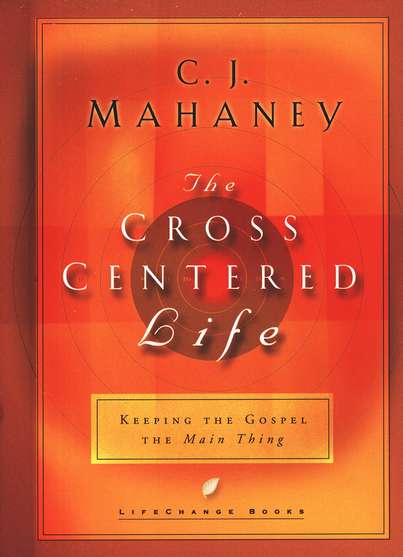
C.J. Mahaney in his book, The Cross Centered Life, provides two quotes that tie his topic to the issue of idolatry:

I fear that the cross, without ever being disowned, is constantly in danger of being dismissed from the central place it must enjoy, by relatively peripheral insights that take on far too much weight.  Whenever the periphery is in danger of displacing the center, we are not far removed from idolatry. – D. A. Carson

Legalism has its origin in self-worship. [i.e. idolatry]  If people are justified through their obedience to the law, then they merit praise, honor, and glory.  Legalism, in other words, means the glory goes to people rather than God. – Thomas Schreiner

(For more thoughts on idolatry, see the new Three Passions Idolatry page.)

Finding Help In God

God must be trying to tell me something because my reading this morning again points toward relying on God.

Psalm 146 tells us not to trust in people, for in them there is no salvation.  It would seem to me that this includes ourselves.  Indeed Proverb 26:12 warns us about being wise in our own eyes.  When we think that our newest plan, idea, program, message, or whatever is hot stuff to change the world – we are being wise in our eyes.  We are full of ourselves and our own wisdom and cleverness.  The proverb goes on to say that there is more hope for a fool than one who is wise in his own eyes.  When I am impressed with myself, I am worse than a fool.  This is pretty strong considering the nine verses before all speak of the fool in in very negative terms.

Back to Psalm 146, instead of trusting in people we are called to trust in God.  “Blessed is he whose help is the God of Jacob, whose hope is in the Lord his God” (v5).  When we rely not on ourselves but on God, we are blessed.  And why should we rely on God?  Verse 6 continues the thought – because God is the maker of heaven and earth.  As the one who made everything, he can help us.  We should rely on him.

And how does he help us.  The Psalmist begins a list:

  • He keeps faith
  • He executes justice
  • He gives food
  • He sets free
  • He opens eyes
  • He lifts up
  • He loves
  • He watches over
  • He upholds

Of course this is only a partial list.  But the point is that God is the one we should rely on because he is the one who can truly help us.  May we be wise, stop trusting in ourselves, and look to him.

More Relying On God

A few more voices on our need to rely on God.

Mark Altrogge notes that we could be the greatest in our area of ministry, but without God all our “efforts would be useless.”

On a related note, Joshua Harris asks, “What are we leaning on?”  He also quotes Jerry Bridges on our need to know God that we might trust or rely on him.