 Who we love above all else is who we worship, and who we worship controls us.
– Edward Welch in Side by Side
 Who we love above all else is who we worship, and who we worship controls us.
– Edward Welch in Side by Side
 Why do people choose the substitutes over God himself? Probably the most important reason is that it obviates accountability to God. We can meet idols on our own terms because they are our own creations. They are safe, predictable, and controllable; they are, in Jeremiah’s colorful language, the “scarecrows in a cucumber field” (10:5). They are portable and completely under the user’s control. They offer nothing like the threat of a God who thunders from Sinai and whose providence in this world so often appears to us to be incomprehensible and dangerous. People who “remain in the center of their lives and loyalties, autonomous architects of their own futures,” Keyes argues, thereby avoid coming face to face with God and his truth. They need face only themselves. That is the appeal of idolatry.
– David Wells in God in the Wasteland
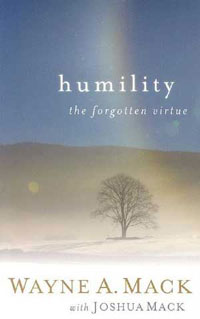 Pride is self-idolatry. God alone is to be worshipped and served because His will is supreme and He alone is God, but pride asserts that man should take supremecy over God. God proclaimed through Isaiah, “My glory I will not give to another” (Isaiah 48:11). God will not tolerate a usurper who attempts to rise above him. God hates pride because the proud man sets himself up in opposition to God. The proud man attempts to steal the glory that God alone deserves.
– Wayne A. Mack in
Humility: The Forgotten Virtue
 When we find ourselves feeling anxious, that feeling tells us that something we treasure is being threatened…. [It is] a signpost telling us that something is amiss with our hearts. We are not loving the Lord as we should – which is to say, we have lost sight of his supreme loveliness and forgotten that in his presence only is fullness of joy (Ps. 16:11). We have other gods…. Our Savior, the one who loves and welcomes us, tells us where our treasure should be: with his kingdom and his righteousness (Matt. 6:33). If our treasure is in living our lives for him and in leaving our success and security to his providential care, and if our treasure is his righteousness, not ours, then we will be able to appreciate all the good things he bestows without succumbing to worry. On the other hand, when we find ourselves plagued by anxieties, we have to conclude that his kingdom and his righteousness are not the chief delight of our heart.
– Elyse M. Fitzpatrick and Dennis E. Johnson
Counsel from the Cross, p136-137
 Here are some helpful quotes from Edward Welch on the connection between idolatry and addictions:
The true nature of all addictions is that we have chosen to go outside the boundaries of the kingdom of God and look for blessings in the land of idols. (47)
Addictions are ultimately a disorder of worship. Will we worship ourselves and our own desires or will we worship the true God? (xvi)
Life is about God. It is about worshipping him, trusting him, knowing him, and loving him. The deepest problem for addicts is that they are not worshipping, trusting, knowing, or loving the true God. (102)
If the root problem of addictions is false worship, the answer is knowing the Lord, the One who deserves our worship. (141)
Here are a few more quotes – this time on the gospel and idolatry.
The Gospel
Tim Keller: You’re more sinful than you ever dared believe; you’re more loved than you ever dared hope.
Tullian Tchividjian: When you trust in Jesus, your identity and worth is no longer based on what you can accomplish but on what Jesus accomplished for you.
Tullian Tchividjian: The gospel is meant to bring us to the end of ourselves so that we finally place our meaning, purpose, and sense of well-being in Jesus.
Idolatry
D.A. Carson: The heart of all idolatry in the world is the de-Godding of God.
Louie Giglio: Worship should really matter to you – whatever you worship, you become.
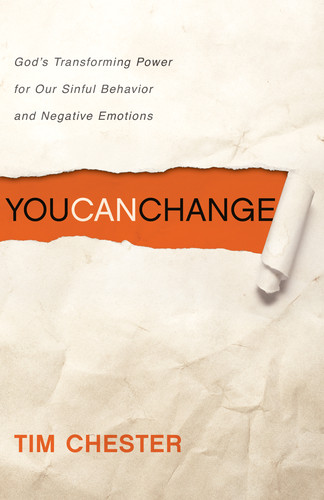 In Ephesians 4:31, Paul tells us: “Let all bitterness and wrath and anger and clamor and slander be put away from you, along with all malice.” Tim Chester in his book, You Can Change, makes these illuminating comments on this verse:
These behaviors all have two things in common. First, they all involve other people. Second, they’re all symptoms of thwarted and threatened sinful desires. Often we can’t spot sinful desires. But when they’re threatened or thwarted by other people, we respond with bitterness, rage, anger, brawling, slander, and malice. One of the great things about living as part of a community is that in community people walk all over your idols. People press your buttons. That’s when we respond with bitterness, rage, and so on. And that gives us opportunities to spot our idolatrous desires. God is using the different people, the contrasting personalities, in your church to change your heart.
These are important words for the church today where many Christians whose idols are walked over simply find another church or leave church altogether. But God placed us in the church to help reveal our idols, to change us, to draw us nearer to him. So next time someone irritates you, consider why. What idol are they walking all over? What sinful desire in your heart is your response to their actions revealing? That other person isn’t the problem. The idols in our hearts are the problem. Together we can identify our idols, and with God’s help turn away from our idols to serve more and more the one true God.
I have been reading You Can Change by Tim Chester. It is a very helpful and practical book on Christian growth, which I highly recommend. I am even planning to use it in a Sunday School class this winter in our church. In the book, one of the issues he addreses is idolatry. I want to share over the next few days a few quotes to ponder. The first goes right along with Thanksgiving:
The world is full of good things given by God. We can, and indeed should, enjoy them. But they’re meant as bridges to joy in God. We delight in the gift and the Giver. We do this by receiving them with thanksgiving. “For everything created by God is good, and nothing is to be rejected if it is received with thanksgiving, for it is made holy by the Word of God and prayer” (I Timothy 4:4-5). But a good thing can become a “god-thing” if it eclipses God, if the gift matters more to us than the Giver…. God isn’t the key to the good life (however I choose to define it). He defines the good life. He is the good life. God must be desired for his own sake, not as the purveyor of worldly success.
Idolatry, ancient and modern alike, consists in trusting some substitute for God to serve some uniquely divine function…. Why do people choose the substitute over God himself? Probably the most important reason is that it obviates accountability to God. We can meet idols on our own terms because they are our own creations. They are safe, predictable, and controllable; they are, in Jeremiah’s colorful language, the “scarecrows in a cucumber field” (10:5). They are portable and completely under the user’s control. They offer nothing like the threat of a God who thunders from Sinai and whose providence in this world so often appears to us to be incomprehensible and dangerous. People who “remain in the center of their lives and loyalties, autonomous architects of their own futures,” Keyes argues, thereby avoid coming face to face with God and his truth. They need face only themselves. That is the appeal of idolatry.
– David Wells in God in the Wasteland (Eerdmans 1994)
Keyes quote from Keyes, “The Idol Factory” in No God But God
edited by Os Guinness and John Seel (Moody Press 1993)
 Brian J. Mikul