Responding to God’s Words

In Sunday School, my church has started a study on the Ten Commandments. As a result, you will be seeing lots of quotes and thoughts on the Ten Commandments during the next several weeks. This past Sunday was an introduction.

HisLovingLawJani Ortlund has a wonderful book on how to pass on the Ten Commandments to our children. In it, she suggests three things we should do with the Ten Commandments:

The first thing we should do is listen to his words… Listening is communing with God. It is seeing reality from his perspective…

The second thing we should do is love his words… Open, eager cherishing of God’s words leads us into deeper intimacy with him. Loving his words is experiencing life in his presence…

The third thing we should do is leave his words. His words are for listening, for loving, and also for leaving a legacy to the children in our lives… Intentional, insightful teaching of God’s words brings our families into a sacred accountability with God. It is passing on a way of life that will last forever.

So how are we doing in our response to God’s words? Are we listening? Do we love them? Are we passing them on to the next generation?

What Love Looks Like

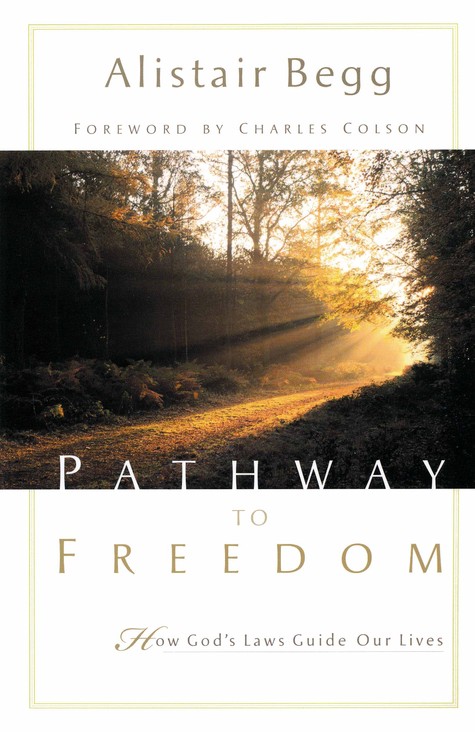
pathwaytofreedomThe Ten Commandments spell out what love for God and our neighbors looks like. The content of our love for God and neighbor is not for us to decide. We are too sinful, too selfish, and too foolish to make our own decisions about these matters.

– Charles Colson in the Forward to
Pathway to Freedom by Alistair Begg

Tinkering with the Church

GodInTheWastelandIt is one of the remarkable features of contemporary church life that so many are attempting to heal the church by tinkering with its structures, its services, its public face. This is clear evidence that modernity has successfully palmed off one of its great deceits on us, convincing us that God himself is secondary to organization and image, that the church’s health lies in its flow charts, its convenience, and its offerings rather than in its inner life, its spiritual authenticity, the toughness of its moral intentions, its understanding of what it means to have God’s Word in this world.

– David Wells in God in the Wasteland

All We Really Need To Know

GodInTheWastelandThe fact is, of course, that the New Testament never promises anyone a life of psychological wholeness or offers a guarantee of the consumer’s satisfaction with Christ. To the contrary, it offers the prospect of indignities, loss, damage, disease, and pain. The faithful in Scripture were scorned, beaten, imprisoned, shipwrecked, and executed. The gospel offers no promise that contemporary believers will be spared these experiences, that they will be able to settle down to the sanitized comfort of an inner life freed of stresses, pains, and ambiguities; it simply promises that through Christ, God will walk with us in all the dark places of life, that he has the power and the will to invest his promises with reality, and that even the shadows are made to serve his glory and our best interests. A therapeutic culture will be inclined to view such promises as something of a disappointment; those who understand that reality is at heart moral because God is centrally holy will be satisfied that this is all they really need to know.

– David Wells in God in the Wasteland