
Thanksgiving Quotes

Thanks to all of you who read this blog!  Here are some quotes about thanksgiving for us to ponder this Thanksgiving:

“Every stream should lead us to the fountain; and the favours we receive from God should raise our admiration of the infinite perfections that are in God.”
– Matthew Henry

“It must be an odd feeling to be thankful to nobody in particular. Christians in public institutions often see this odd thing happening on Thanksgiving Day. Everyone in the institution seems to be thankful ‘in general.’ It’s very strange. It’s a little like being married in general.”
– Cornelius Plantinga, Jr.

 “Numberless marks does man bear in his soul, that he is fallen and estranged from God; but nothing gives a greater proof thereof, than that backwardness, which every one finds within himself, to the duty of praise and thanksgiving.”
– George Whitefield

“Giving thanks to God for both His temporal and spiritual blessings in our lives is not just a nice thing to do – it is the moral will of God.  Failure to give Him the thanks due Him is sin.”
– Jerry Bridges

“Would you know who is the greatest saint in the world: It is not he who prays most or fasts most, it is not he who gives most alms or is most eminent for temperance, chastity or justice; but it is he who is always thankful to God, who wills everything that God wills, who receives everything as an instance of God’s goodness and has a heart always ready to praise God for it.”
– William Law

“The Christian who walks with the Lord and keeps constant communion with Him will see many reason for rejoicing and thanksgiving all day long.”
– Warren Wiersbe

“Grasping the depths of one’s sin brings a sense of how much one has been forgiven, which increases one’s gratefulness, which in turn motivates service.”
– James S. Spiegel

“This is the holy reasoning of love; it draws no license from grace, but rather feels the strong constraints of gratitude leading it to holiness.”
– Charles Haddon Spurgeon
Whose Story Is It?

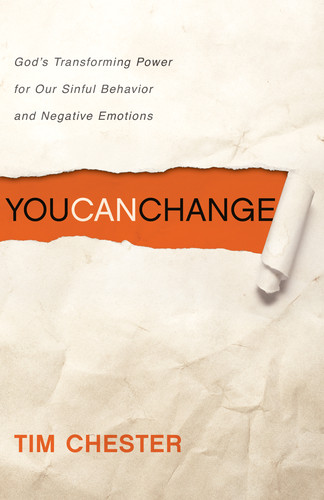
Here is one more quote from Tim Chester’s excellent book, You Can Change:

Our problem is that we think of ourselves as being at the center of our world.  We think of our lives as a story and, if we’re Christians, God is one of the characters in our story.  We look for him when we need him and expect him to be grateful when we serve him.  He’s a lovely piece of our story, but we still think of it as our story.  But it’s not our story.  It’s God’s story.  Of course there is a sense in which God is there for us.  But the bigger reality is that we’re there for God.  We exist to give him glory.  He doesn’t owe us anything, not even explanations.  Meanwhile, we owe him everything as our Creator and Redeemer.

So are we living like it’s our story or God’s story?  Ponder how our approach to life would be different depending on whose story we think it is….

Walking All Over Your Idols

In Ephesians 4:31, Paul tells us:  “Let all bitterness and wrath and anger and clamor and slander be put away from you, along with all malice.”  Tim Chester in his book, You Can Change, makes these illuminating comments on this verse:

These behaviors all have two things in common.  First, they all involve other people.  Second, they’re all symptoms of thwarted and threatened sinful desires.  Often we can’t spot sinful desires.  But when they’re threatened or thwarted by other people, we respond with bitterness, rage, anger, brawling, slander, and malice.  One of the great things about living as part of a community is that in community people walk all over your idols.  People press your buttons.  That’s when we respond with bitterness, rage, and so on.  And that gives us opportunities to spot our idolatrous desires.  God is using the different people, the contrasting personalities, in your church to change your heart. 

These are important words for the church today where many Christians whose idols are walked over simply find another church or leave church altogether.  But God placed us in the church to help reveal our idols, to change us, to draw us nearer to him.  So next time someone irritates you, consider why.  What idol are they walking all over?  What sinful desire in your heart is your response to their actions revealing?  That other person isn’t the problem.  The idols in our hearts are the problem.  Together we can identify our idols, and with God’s help turn away from our idols to serve more and more the one true God.

The Giver and the Gifts

I have been reading You Can Change by Tim Chester.  It is a very helpful and practical book on Christian growth, which I highly recommend.  I am even planning to use it in a Sunday School class this winter in our church.  In the book, one of the issues he addreses is idolatry.  I want to share over the next few days a few quotes to ponder.  The first goes right along with Thanksgiving:

The world is full of good things given by God.  We can, and indeed should, enjoy them.  But they’re meant as bridges to joy in God.  We delight in the gift and the Giver.  We do this by receiving them with thanksgiving.  “For everything created by God is good, and nothing is to be rejected if it is received with thanksgiving, for it is made holy by the Word of God and prayer” (I Timothy 4:4-5).  But a good thing can become a “god-thing” if it eclipses God, if the gift matters more to us than the Giver….  God isn’t the key to the good life (however I choose to define it).  He defines the good life.  He is the good life.  God must be desired for his own sake, not as the purveyor of worldly success.

Gain and Loss In Prayer

What do I lose when I have a praying life?  Control.  Independence. 
What do I gain?  Friendship with God.  A quiet heart. 
The living work of God in the hearts of those I love. 
The ability to roll back the tide of evil. 
Essentially, I lose my kingdom and get his. 
I move from being an independent player to a dependent lover. 
I move from being an orphan to a child of God.

– Paul Miller in A Praying Life

Substitute for God

Idolatry, ancient and modern alike, consists in trusting some substitute for God to serve some uniquely divine function….  Why do people choose the substitute over God himself?  Probably the most important reason is that it obviates accountability to God.  We can meet idols on our own terms because they are our own creations.  They are safe, predictable, and controllable; they are, in Jeremiah’s colorful language, the “scarecrows in a cucumber field” (10:5).  They are portable and completely under the user’s control.  They offer nothing like the threat of a God who thunders from Sinai and whose providence in this world so often appears to us to be incomprehensible and dangerous.  People who “remain in the center of their lives and loyalties, autonomous architects of their own futures,” Keyes argues, thereby avoid coming face to face with God and his truth.  They need face only themselves.  That is the appeal of idolatry.

– David Wells in God in the Wasteland (Eerdmans 1994)

Keyes quote from Keyes, “The Idol Factory” in No God But God
edited by Os Guinness and John Seel (Moody Press 1993)

The Greatest Good

It is difficult for us to see God’s hand of love in the adversities and heartaches of life because we persist in thinking, as the world does, that happiness is the greatest good.  Thus we tend to evalute all our circumstances in terms of whether or not they produce happiness.  Holiness, however, is a greater good than happiness, so God arranges and orchestrates circumstances to produce holiness before happiness.  He is more concerned about our eternal than or our temporal welfare and more concerned about our spiritual than our material welfare.  So all the trials and difficulties, all the heartaches, disappointments, and humiliations come from his loving hand to make us partakers of his holiness.

– Jerry Bridges in Transforming Grace

Our Only Worthiness

Remember we did not declare temporary spiritual bankruptcy.  Our bankruptcy is total and permanent.  The only worthiness we have for entrance into God’s Kingdom is in Christ.  The only worthiness we have with which to come before God is in Christ.  The only worthiness we have to qualify us for ministry is in Christ.  If we are to progress in any aspect of the Christian life, we must look outside ourselves and only to Christ.  It is is him that the grace of God is so abundantly poured out on us.

– Jerry Bridges in Transforming Grace

What Defines You?

C. J. Mahaney asks some good probing questions for all of us to consider in his book, The Cross Centered Life:

It’s important to ask honestly what we’re currently building our lives around….  We’re all living lives centered on something.  But is it the right thing?

So think about this for a moment.  What is the main thing in your life?

Let me put it another way.  What are you most passionate about?  What do you think about when you can think about whatever you want?  What do you love to talk about?

What defines you?

The Holy Spirit Humbles Us

Continuing our thoughts on humility, consider these words from Charles Spurgeon:

“One way in which the Holy Spirit glorifies Christ is this – He gives us more and more debasing views of our own selves.  There are two Gods, as it were – one the true, the other the false.  Self first mounts the throne in our hearts; the higher the throne of self is exalted, the lower must Christ go.  Much of self, little of the Savior.  With exalted views of self, self-power, or self-righteousness, then there are sure to be low views of Christ, but when self goes down, then Christ at once rises.  It may be said of self, as John the Baptist once said of Christ and himself, “He must increase, but I must decrease” (John 3:30).

“If you have had shallow views of your own natural depravity, then you have had very shallow thoughts of Christ.  If you think sin to be delightful, if Gethsemane and Golgotha and Calvary seem to you to be names without weight or meaning, if you have never groaned under your sin, I do not wonder that you think little of Christ’s groans and griefs and bloody sweat.

“But when you come to know yourself as verily lost and undone, then you will prize your Deliverer.  When the dread word lost has seemed to fall like a death knell upon your ear, then the tidings that the Son of Man came to seek and to save that which was lost will be sweet to you as the Christmas carol of the angels when they sang, “Glory to God in the highest, and on earth peace, good will toward men” (Luke 2:14).  If you feel the disease, you will value the Physician; if you know your own emptiness, you will prize Christ’s fullness. But if you reject the teaching of the Holy Spirit, which shows you your utter helplessness and worthlessness, in so doing you have rejected Christ and put far from you that Savior who alone came to save sinners.

“It is, then, a most precious thing when we begin to sink lower and lower in our own estimation.  At the commencement of spiritual life, we believe that we are nothing; as we advance, we find that we are less than nothing.  May the Holy Spirit so work in you!”

(From his sermon, The Spirit’s Office Toward Disciples)