Murder in Our Hearts and Words

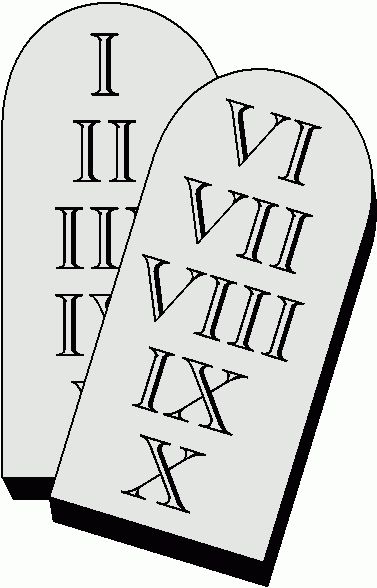
TenCommandsThe sixth command forbids us to murder. The reason is given in Genesis 1 and 9 – we are made in God’s image. As image-bearers of God, human life is sacred and to be respected. Jesus teaches that this respect for human life must go beyond our actions to include our attitudes and words. We must not let our anger burn against others or speak contemptuously to others or of others (Matthew 5:21-22). John adds that we are murderers if we hate others (I John 3:15). We cannot murder with our hands or our thoughts or our words. Our hearts and words as well as our actions must be governed by respect and love.

By this definition, we all break the sixth commandment. How often are we angry with others because they get in our way? How often do we refer to others as idiots or morons? How often does hate lurk in our hearts? And both Jesus and John tell us that such attitudes and words deserve judgment in hell. We are all guilty, and in desperate need of a Savior.

And so this command drives us to the cross. It drives us to Jesus who died to pay for sins just like these. But Jesus also fulfilled this command by keeping it perfectly. The most dramatic example of his fulfillment is at the cross. As he is surrounded by angry hate-filled attackers, he asks his Father to forgive them. He doesn’t express hate or anger. As they mock and insult him, he does not respond in kind, but looks to his Father, trusting in Him throughout the ordeal (see I Peter 2:22-24). And through faith in Jesus, we are clothed in his perfect righteousness, his perfect fulfillment of this command.

And his perfect fulfillment then serves as an example for us to follow. By the power of the Holy Spirit as we too place our trust in the Father, we can follow Jesus in living out this command. So let us repent and put away our anger and hatred. Let us guard our tongues from speak contemptuously against others. And let us instead show respect and love towards those who are made in the very image of our God.

Honoring Your Parents Isn’t Only For Young Children

TenCommandsThe fifth commandment calls us to honor our father and mother. We often think of this command in connection with young children obeying their parents, and yet it has application to adults as well.

We honor our parents when we show them respect. We must show them respect in our attitude, words, and actions towards them. We must show them respect in our words about them as we speak to others. True honor will respect.

We honor our parents when we live uprightly. Do our lives bring honor or dishonor to our parents’ reputation? Do our actions cause the family name to be held with respect or disdain? Are we children who fill our parents’ hearts with joy or sorrow? True honor will live uprightly.

We honor our parents when we remember them. Too many parents are never visited, never called, never written to. They are forgotten and ignored. But true honor will remember.

We honor our parents when we care for them. As they age, they may need help with various things they were once able to do on their own. They may need help with something their spouse used to do who has passed on. They may need our time. They may need some financial support. They may just need someone to listen, to be there. True honor will care.

So how well are we living out this command? How do we need to grow today?

Who Will You Trust?

In Isaiah 36-37, we are confronted with the question: who will we trust?

Will we trust in other people? Judah trusted in Egypt to help them, but Egypt was “a broken reed of a staff, which will pierce the hand of any man who leans on it” (36:6). And so other people will fail us too – whether they mean to or not. They are not strong enough, big enough to take care of all the trials that come against us. Like us, they are broken.

Will we trust in ourselves? Assyria mocked Judah, saying that even if Assyria provided them with 2000 horses, Judah could not put riders on them (36:8-9). So how could Judah overcome even the smallest part of Assyria’s army? We too are tempted to trust in our own strength, our own plans. But like Judah, our strength is often too weak, and our plans too often fail.

Will we trust in our trials? That seems odd, but it is entirely possible to believe that our trials are so powerful, that the only thing we can do is give up to them. That is what Assyria encouraged Judah to do – give up to the Assyrians (36:16-17). And we are often tempted to just give up in the face of our trials.

Or will we trust in the Lord? Will we trust in the Lord who alone is God over all the kingdoms of this world? Will we trust in the Lord our God who loves us and is with us? Will we trust in the Lord of Hosts who has all of the hosts of heaven at his command (37:16)? He is greater than other people, greater than ourselves, greater than our trials. He can help us no matter we face. And he invites us to trust in Him.

So in the midst of your trials, who will you trust this week?

Behold the Works of the Lord

Psalm 111 calls us to behold the works of the Lord:

His works are great
His works are full of splendor and majesty
His works are righteous
His works are wondrous
His works are gracious and merciful
His works are powerful
His works are faithful and just

His work of provision
His work of revelation
His work of redemption

Delight in these works
Study these works
Give thanks for these works
Individually and with God’s people
Today and forevermore
Amen.

Six Joyful Blessings for the Future

In Isaiah 35, God gives us six joyful blessings for the future:

  • New Life (v1-2, 5-7) – He paints a picture of new life spring up all over the new earth. The wilderness and desert are blossoming. Abundant water is flowing. And even better there is new life for his people. Here today we grow old: our eyes dim, our hearing goes. We need help walking. At the end we may not be able to speak. But one day we will experience new life: v5-6 We will throw away our glasses and hearing aids and walkers. We will experience new life on a new earth springing up with new life.
  • New Sight (v2) – We will see the glory and majesty of our God. Think of the most glorious majestic sight in creation you have ever seen. Maybe a sunset over a lake, stars ablaze in the sky, a forest of trees in all their Fall splendor, or some particular place of beauty. That is just a glimpse of the majesty and glory of our Creator. One day we will see him. We will see our Savior who suffered and died for us, who rose from the dead and ascended into heaven where he reigns at the right hand of the Father. We will have a new sight.
  • New Salvation (v4) – God will save us from all that comes against us: the trials that we face today, the struggles that seem to never end, the persecution many of our brothers and sisters in Christ around the world face. God will save us from our final enemy death, and all the sickness and disease that goes with it. We will have a new salvation.
  • New Way (v8) – There will be a new way – a way of holiness. We will walk rightly before God, never to sin again. Those who are unclean – lost in their sins – will not be there, but only those clothed in the righteousness of Christ. There will be a new way.
  • New Safety (v9) – There will be no wild animals on this way to harm us. Indeed, there will be nothing to harm us ever again. Nothing. There will be no more valleys of the shadow of death to walk through. Today the road is often difficult. Dangers lurk all around. But one day we will enjoy a new safety.
  • New Joy (v1, 2, 6, 10) – Joy is a repeated theme throughout the chapter that reaches its crescendo in verse 10: v10 Today we may know sorrows and sighing, but one day sorrow and sighing will flee away. Everlasting joy will chase sorrow away forever. And we will sing, celebrating our glorious God and gracious Savior. There will be a new joy forever.

And how should we respond to these joyful future blessing?

We should be strong (v3-4). Looking at these joyful blessings should give us strength for today. These blessings should strengthen our weak hands, make firm our feeble knees, and give courage to our anxious hearts. In the midst of all of our struggles, there is a light at the end of the tunnel. Our path may take us through dark valleys, but it leads to a joyful end. So be strong.

We should be saved (v8-10). The unclean will not experience these blessings (v8). Only the redeemed, the ransomed of the Lord will know this glorious future (v9-10). So let us embrace the redemption that is found in Jesus. On the cross he paid the debt of our sins; he bore the judgment we deserve for our sins. Instead of judgment, we can know these joyful blessings if we simply look to Jesus. So be saved.

We should share with others. How could we keep these blessings to ourselves? Let’s encourage one another with this glorious hope that we have. And let’s tell others about Jesus and his promises that they too might receive Jesus and one day experience these blessings too.

The Blessing of the Sabbath

TenCommandsIn Exodus 20, the fourth commandment required Israel to take a Sabbath rest on the seventh day of each week. This pattern was established by God as he rested on the seventh day from his work of creation. And so while the command is indeed part of the Mosaic Covenant, it is also a pattern built into the very framework of creation.

In Deuteronomy 5, a different reason was given for keeping the Sabbath. God reminded them that they were slaves in Egypt, but God had saved them out of their slavery. And so everyone (even the animals!) ought to enjoy and celebrate this new freedom by resting on the Sabbath. Here was a great blessing for everyone to enjoy!

And yet, by Jesus’ day, the Sabbath had become a burden with a myriad of man-made rules attached to it. And so Jesus teaches us further about the Sabbath in Matthew 12:5-14. He makes clear that acts of ministry (like priests offering sacrifices) can be part of the Sabbath. He demonstrates that acts of mercy (like Jesus healing people) can be part of observing the Sabbath. And acts of necessity (like getting a sheep out of a pit) are also acceptable on the Sabbath.  In other words, while it is a day of rest and worship, we can do good things for other people (and animals) on this day. Again it was to be a day of blessing!

Many Christians these day have lost sight of the Sabbath, and so have lost out on a great blessing.  Some Christians argue that this command is only for Israel, and has no place today. Some claim that since this command is not repeated in the New Testament, that it is not applicable to us. But here in Matthew 12, and indeed scattered throughout the gospels, we find Jesus teaching about the Sabbath. Apparently the gospel writers believed Christians needed to be instructed on the Sabbath. If it does not apply to us, why include it in the gospels when there is so much Jesus must have said and did that we know nothing about?

And in Matthew 12, we are told that Jesus is the lord of the Sabbath. The Lord we follow is lord of the Sabbath, which strongly suggests we ought to follow him in keeping it. And in Mark 2:27, we are told that the Sabbath was made for man – again it is a blessing designed for people!

While the Sabbath command remains, its application changes under the New Covenant. Because Jesus rose from the dead on the first day of the week, the church quickly started meeting for worship on that day (Acts 20:7, I Corinthians 16:2) instead of the seventh day. Instead of remembering creation and salvation from Egypt, now we remember Jesus’ work of re-creation and salvation from sins through the cross and resurrection. And so the early church celebrated our salvation through the Lord’s Supper (Acts 20:7), did acts of ministry like teaching (Acts 20:7), and also acts of mercy like giving (I Corinthians 16:2) – all on the first day of the week.

My purpose here is not only to encourage you to rethink the fourth commandment’s application for today, but even more to encourage you to consider what a blessing it would be for all of us to follow it whether it is required or not.

  • What a blessing to step out of the commercial rat race one day a week.
  • What a blessing to rest from the busyness and constant running of the rest of the week.
  • What a blessing to get a break from our jobs and school work once a week.
  • What a blessing to have a day set aside for corporate and private worship.
  • What a blessing to have a day to spend extra time in the Word and prayer, growing in our relationship with the Lord.
  • What a blessing to spend time with God’s people doing ministry and acts of mercy.
  • What a blessing to have time free to spend with family and friends.

The Sabbath is a command, but it is also a gift. A day of worship and rest. A day of delight and joy.

A day of blessing.

God Loves Us

The Lord is merciful and gracious,
slow to anger and abounding in steadfast love….
For as high as the heavens are above the earth,
so great is his steadfast love toward those who fear him;
as far as the east is from the west,
so far does he remove our transgressions from us….
But the steadfast love of the Lord is from everlasting to everlasting
on those who fear him….
– Psalm 103:8, 11-12, 17

His love shines forth in his mercy and grace and patience toward us.
His love is higher than the heavens.
His love removes our sin.
His love lasts forever.

To those who fear Him.
Toward His people.

Not because we are great,
But because His love is great.
We are sinners; we are dust.
But he loves us anyway.

God loves us!

God Is Greater

In Isaiah 33, God reminds us that he is greater than all the things that come against us.

He Is Our Strength (v2) – He is our arm of strength for daily life. He gives us strength in the midst of those things that come against us. Indeed he gives us strength every morning. Each day there is a fresh supply of God’s mighty powerful strength to help us through our trials and struggles. He is our strength.

He Is Our Stability (v5-6) – He is the stability for our times – times of trouble, times of distress, times of difficulty. He is a sure foundation on which we can stand. He is a solid rock when the tempest blows all around us. He is exalted and dwells on high; he is not shaken by all that comes against us, and so we anchor ourselves to him. He is our stability.

He Is Our Salvation (v2-4, 6-12) – God not only gives us strength and stability in the midst of our trials, but in his perfect times he will save us from those trials. When God arises in our lives, all that comes against us scatters. He gobbles up the enemy. His judgment is like a great fire against all that comes against us. He is greater than those things that oppose us, and he will save us in his perfect time. He is our salvation.

And so we wait for him (v2). We don’t need to freak out about trials, threats, dangers, and struggles. We wait for Him with patience – resting in his strength and leaning on his stability. We wait for him with longing for the salvation that he will bring. This week, may we wait for Him who is greater than all that can come against us.

Seven Ways We Must Not Misuse God’s Name

The Third Commandment tells us to not take the name of God in vain – to not misuse his name. There are several ways that we can use God’s name in the wrong way, which we must not do:

First, we must not use his name in an oath and then not keep our oath (Leviticus 19:12). In our day that could apply to testifying in court or to our marriage vows before God.

Second, we must not use his name offering praise to him with our lips while our hearts are far from him (Isaiah 29:13). As we praise God’s name, our praise must be true – not just empty words.

Third, we must not put words in God’s mouth (Jeremiah 23:31). We ought not claim that God said something that he did not say. The other day I heard a local radio station tell us that “Jesus says” – and then go on to read from a bestselling book. But Jesus didn’t say those words, and so that is a misuse of his name.

Fourth, we must not use God’s name with contempt – speaking of God with scorn or ridicule or hatred.

Fifth, we must not use God’s name as a swear word. “Oh my God” should be reserved for our prayers, not as an empty utterance.

Sixth, we must not use God’s name in a flippant empty manner. For instance, when we say “God bless you” – do we mean it, or are we just throwing his name around?

Seventh, we must not use God’s name as a joke. Christians like to tell “Christian” jokes, but God must not be the punch line – God’s name is not a joking matter.

All of these ways that we misuse God’s name ought to make clear the positive requirement of the command. We must use God’s name with reverence and awe. He is a great and glorious God, and we must treat him as such. May God help us to honor his name.

9 Reasons to Not Make a Visual Image of God

In the Second Commandment (Exodus 20:4-6), God commands us not to make for ourselves any graven or carved images of God. Why? Here are nine reasons:

First, God is the Creator, and so transcends his creation. Any visual image we could make is created, and could never fully represent the Creator God.

Second, God is Spirit, and so he doesn’t have a physical body. Any visual image we could make would be physical, and so misrepresent God.

Third, God is jealous (v5). God doesn’t want us creating false images of him, any more than a wife wants her husband to create false images of her. We must love God as he is.

Fourth, God is loving (v6). God loves us and we ought to respond by loving Him, not a false image of Him.

Fifth, God is omnipresent. Any image we could make would localize him in a specific place.

Sixth, God is glorious. No image could do justice to his glory, but would rather obscure his glory.

Seventh, God is sovereign. An image can be manipulated, but God cannot.

Eighth, God created us in his image. When we create an image of God, we make him in our image according to our biases. This flips the order of creation upside down.

Ninth, God is holy. When we create false images of God, we will follow those false images, which will inevitably lead us to sin. Or put another way: what we believe about God influences our behavior, and wrong views of God will influence our behavior in the wrong direction.