
Costly Obedience

The Lord GOD has opened my ear,
and I was not rebellious;

I turned not backward.
I gave my back to those who strike,
and my cheeks to those who pull out the beard;
I hid not my face from disgrace and spitting.
– Isaiah 50:5-6

These verses speak of the Servant of the Lord. He would obey God even to the point of suffering. And we know that the Servant is Jesus whose back was lashed, whose beard was pulled out, whose face was spit upon. As Philippians 2:8 tells us, he was obedient to the Father even to the point of death on the cross.

What about us? Are we willing to obey even to the point of suffering? Will we obey God even when it is hard, when it hurts? Will we obey even when we don’t feel like it? Will we obey even when it hits our pocketbook, intrudes on our free time, or crosses our comfort zone?

Jesus obeyed to the point of death, giving us an example of costly obedience. And he calls us to follow in his steps.

And yet on the other side of the cross, Jesus was and is exalted above every other name. On the other side of the suffering came great blessing. And so it is for us. Obedience may bring suffering for a time, but blessing follows close behind.

So let us obey regardless of the cost, setting our gaze on the blessings yet to come.
Morning by Morning

Morning by morning he awakens;
he awakens my ear
to hear as those who are taught.
– Isaiah 50:4b

This verse is found in the third Servant Song speaking of the coming Servant of the Lord, our Lord Jesus Christ. And morning by morning he listened to God. It was a regular habit – a daily habit – listening to God.

Now the verse gives us a description of the Servant. It is not a command. And yet it is a good example for us to follow, even more so because it is the example of our Lord whom we follow. Morning by morning, he listened to God.

I love to read Christians biographies of men who were close to God and did great things in the kingdom. And the recurring testimony of these men is that they spent time with God morning by morning. If we want to be close to God and be used by God in his kingdom, we ought to consider their testimony and follow their example.

Morning by morning – listen to God.

Not Forgotten

In Isaiah 49, Isaiah is writing to the people of Israel in Babylonian exile. And they need to know that they are not forgotten. The Lord has not forgotten them.

And still today as we face our own trials and struggles, we need to know that we are not forgotten. The Lord has not forgotten us.

Though it feels that way sometimes, doesn’t it?

But Zion said, “The LORD has forsaken me;
my Lord has forgotten me.”  – Isaiah 49:14

Ever feel that way? Ever think those thoughts? As you are walking through some trial or struggle, you wonder: where is God in the midst of all of this? And it feels like God has forgotten. But your feelings are wrong.

“Can a woman forget her nursing child,
that she should have no compassion on the son of her womb?
Even these may forget, yet I will not forget you.”
– Isaiah 49:15

Could a mom forget the baby lying in her arms? Could your mom have forgotten you? And even if she did, even if your mom and dad and everyone were to abandon you, God says, “I will not forget you. I have compassion on you. I care about you. I care for you. I love you.”

Remember this week no matter what you face that you are not forgotten. The Lord has not forgotten you.

That We Might Believe

In Isaiah 44-48, God predicts the coming of a king named Cyrus who will defeat the Babylonian empire and allow the people of Israel to return to their land.

And around 200 years later, Cyrus comes, defeats the Babylonians, and allows Israel to return to their land.

God predicts and brings it to pass – that we might believe.

In Isaiah 49, God predicts the coming of His Servant whose words will be like a sharp sword, who will glorify God, and who will labor in vain. This Servant will gather the people of Israel and be a light to the nations. He will be both despised and honored. He will be a covenant for the people.

And around 600 years later, Jesus comes. His words are like a sword that pierce the heart. He lived for God’s glory. He labored among the people, but many didn’t understand or accept him. He gathered many in Israel, and his gospel has spread to the nations. He was despised by rulers, and yet will one day be honored by all. He is a new covenant through whom we can have a relationship with God.

God predicts and brings it to pass – that we might believe.

Cyrus and Jesus came just like God said they would, and they did just what God said they would do. And because God predicts and brings it to pass, our faith is strengthened. We have reason to believe in the one true God. We need not doubt. We need not chase after idols. We can trust Him with our lives. We can trust Him with our future.

God predicts and brings it to pass – that we might believe.

Who Carries Who?

In Isaiah 46, the Babylonians must carry their gods around. And still today people carry their gods around. It might be money. It might be a technological gadget. It might be anything that we live for, that we trust in, that we center our lives around, that we look to for significance and satisfaction and security. And we carry it.

In contrast, the one true God carries us. He carried us in the womb. He has carried us through life through the good and the bad. He will carry us in old age. At death, he will carry our souls to Himself. And at the resurrection, he will carry us to the new earth.

You can carry around a man-made god or you can rest in the God who carries you.

God’s Blessings on the Humble

If my people who are called by my name humble themselves,
and pray and seek my face and turn from their wicked ways,
then I will hear from heaven and will forgive their sin and heal their land.

– II Chronicles 7:14

For you save a humble people, but the haughty eyes you bring down.
– Psalm 18:27

He leads the humble in what is right, and teaches the humble his way.
– Psalm 25:9

The Lord lifts up the humble; he casts the wicked to the ground.
– Psalm 147:6

For thus says the One who is high and lifted up,
who inhabits eternity, whose name is Holy:

“I dwell in the high and holy place,
and also with him who is of a contrite and lowly spirit,

to revive the spirit of the lowly, and to revive the heart of the contrite.
– Isaiah 57:15

But this is the one to whom I will look:
he who is humble and contrite in spirit and trembles at my word.
– Isaiah 66:2b

But he gives more grace. Therefore it says,
“God opposes the proud, but gives grace to the humble.”
– James 4:6

Humble yourselves, therefore, under the mighty hand of God
so that at the proper time he may exalt you.
– I Peter 5:6

A Church Prayer

Father,
Thank you for good news of Jesus, thank you for your grace in our lives.
May your work in our lives spur us on to share the good news with others.
May the gracious welcome of Jesus lead us to graciously welcome each other.
May freedom from bondage to sin move us to press on in growing together.
May all that you have done for us draw us to sing and live for your glory.
Amen.

Welcome One Another

Therefore, welcome one another as Christ has welcomed you, for the glory of God.
– Romans 15:7

How has Christ welcomed you? Was it based on your good works that he welcomed you? Was it based on your behavior? Was it based on your performance? No, he welcomed you apart from your works, apart from your behavior, apart from your performance. Indeed, he welcomed you in spite of your works, your behavior, your performance. He died for you while you were still a sinner. He loved you when you were unlovable. He welcomed you by grace, in light of his sacrifice on your behalf.

And we are to welcome each other as Christ welcomed us – apart from their works, their behavior, their performance. Even when they are unlovable, when they don’t measure up to our standards, when they are not perfect. We are to look past their sins that Jesus already paid for and see their righteous standing in Christ. We are to welcome each other as Christ welcomed us – by grace.

But again, how has Christ welcomed you? Was it based on your personality? Was it based on your personal convictions about all kinds of little things? Was it based on your standard of living? Was it based on your level of education? Was it based on your sense of humor? No, of course not – he welcomed you based on his finished work on the cross.

And we are to welcome each other as Christ welcomed us – regardless of our personalities, personal convictions, standards of living, levels of education, or senses of humor. We come together in Christ. The church is not a club for people that are all the same. The church is for very different people coming together in Christ, welcoming each other by grace.

Therefore, welcome one another as Christ has welcomed you, for the glory of God.

10 Reasons We Should Flee Coveting

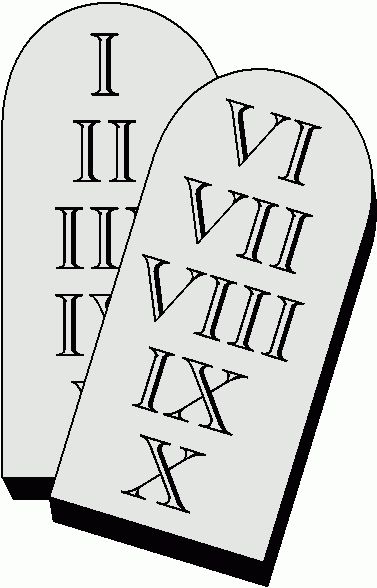
TenCommandsThe tenth commandment forbids coveting. The Bible fleshes out that command by giving us several practical reasons to flee coveting:

1. Life does not consist in the abundance of our possessions – there is more to life than stuff (Luke 12:15).

2. There is great gain in godliness, so we should pursue being godly instead of having more (I Timothy 6:6).

3. Things are temporary – you can’t take them with you when you die (I Timothy 6:7).

4. Only a few things are needful – things like food and clothing. Anything else is extra and unnecessary (I Timothy 6:8).

5. Coveting leads to other temptations that can lead to ruin and destruction (I Timothy 6:9).

6. Coveting has led some to walk away from Christ – they have lost their soul seeking to gain the world (I Timothy 6:10, Matthew 16:26).

7. Riches are uncertain – we should look to God to provide instead of pursuing things (I Timothy 6:17, Hebrews 13:5, Matthew 6:33).

8. Things rot, wear out, rust, break, become obsolete, and can be stolen – we ought to pursue treasures that have a more eternal value (Matthew 6:19-20).

9. Coveting reveals a heart that is caught up in the idolatry of wealth (Matthew 6:21, 24).

10. Everything else is rubbish compared to the surpassing worth of knowing Jesus (Philippians 1:21, 3:8).

Four Good Reasons We Should Speak The Truth

TenCommandsThe ninth commandment forbids bearing false witness. The command alone should cause us to commit to speaking the truth. But God gives us at least four more good reasons to speak the truth:

1. God hates lying. Proverb 12:22 tells us that “lying lips are an abomination to the Lord.” God absolutely despises lying, and so we ought to speak the truth.

2. Habitual liars are lost. In Revelation 21:8, liars join murderers, sorcerers, and many other sinners in the lake of fire. A life characterized by lying denies a gospel transformation in one’s life. Liars need salvation.

3. Lying belongs to the old way of life. Colossians 3:9-10 reminds us that we have put off the old self with its sinful practices (including lying) and put on the new self. We have a new life in Christ, and we should act like it.

4. We follow the truth. Jesus is the truth (John 14:6). The Spirit is the Spirit of Truth (John 4:16-17). The Word is the Word of Truth (John 17:17). As we follow Jesus, the Holy Spirit, and God’s Word, we follow the truth. And if we follow the truth, our words should agree with the truth.