10 Reasons We Should Flee Coveting

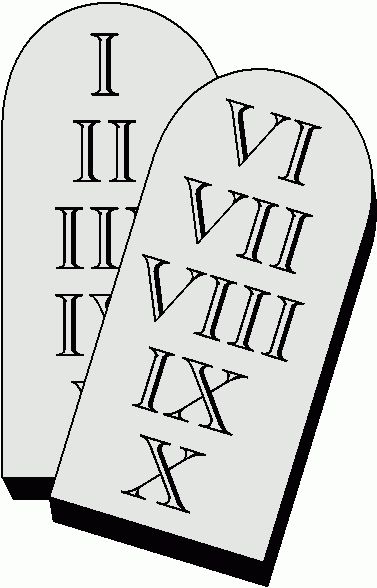
TenCommandsThe tenth commandment forbids coveting. The Bible fleshes out that command by giving us several practical reasons to flee coveting:

1. Life does not consist in the abundance of our possessions – there is more to life than stuff (Luke 12:15).

2. There is great gain in godliness, so we should pursue being godly instead of having more (I Timothy 6:6).

3. Things are temporary – you can’t take them with you when you die (I Timothy 6:7).

4. Only a few things are needful – things like food and clothing. Anything else is extra and unnecessary (I Timothy 6:8).

5. Coveting leads to other temptations that can lead to ruin and destruction (I Timothy 6:9).

6. Coveting has led some to walk away from Christ – they have lost their soul seeking to gain the world (I Timothy 6:10, Matthew 16:26).

7. Riches are uncertain – we should look to God to provide instead of pursuing things (I Timothy 6:17, Hebrews 13:5, Matthew 6:33).

8. Things rot, wear out, rust, break, become obsolete, and can be stolen – we ought to pursue treasures that have a more eternal value (Matthew 6:19-20).

9. Coveting reveals a heart that is caught up in the idolatry of wealth (Matthew 6:21, 24).

10. Everything else is rubbish compared to the surpassing worth of knowing Jesus (Philippians 1:21, 3:8).

Four Good Reasons We Should Speak The Truth

TenCommandsThe ninth commandment forbids bearing false witness. The command alone should cause us to commit to speaking the truth. But God gives us at least four more good reasons to speak the truth:

1. God hates lying. Proverb 12:22 tells us that “lying lips are an abomination to the Lord.” God absolutely despises lying, and so we ought to speak the truth.

2. Habitual liars are lost. In Revelation 21:8, liars join murderers, sorcerers, and many other sinners in the lake of fire. A life characterized by lying denies a gospel transformation in one’s life. Liars need salvation.

3. Lying belongs to the old way of life. Colossians 3:9-10 reminds us that we have put off the old self with its sinful practices (including lying) and put on the new self. We have a new life in Christ, and we should act like it.

4. We follow the truth. Jesus is the truth (John 14:6). The Spirit is the Spirit of Truth (John 4:16-17). The Word is the Word of Truth (John 17:17). As we follow Jesus, the Holy Spirit, and God’s Word, we follow the truth. And if we follow the truth, our words should agree with the truth.

From Stealing To Giving

TenCommandsThe Eighth Commandment tells us not to steal. We must not shoplift, take items from work, waste time while on the clock, lie on our expense accounts, or cheat on our taxes. We must not kidnap, embezzle, or commit fraud. We must not cheat on a test or plagiarize someone’s work. We must not rob someone of their reputation, or steal glory from God. We must not steal.

Instead we must work to provide for our needs in an honest way. We must earn what we have. And yet, God calls us to go further. We must work so that we can give to those in need (Ephesians 4:28).

Instead of stealing, our lives are to be marked by giving. Instead of hands that grab what belongs to another, we are to have open hands that share with others. God is a giving God, and we, who are made in his image and are being conformed back into his image, should be a giving people.

Is your life characterized by giving?

Jesus and Human Sexuality

TenCommandsIt is often said that Jesus didn’t say anything about homosexuality. This is wrong on at least two accounts. First, such a statement fails to recognize that Jesus is God, and as God spoke the entire Bible which addresses homosexuality in several places. Second, such a statement misses Jesus’ clear teaching on human sexuality in Matthew 19:

First, God determines our gender. Jesus clearly says that God made us male and female (v4). Our gender is determined by God, and not by our thoughts, feelings, desires, or whims. God, by his act of creation, determines reality, and he creates us genetically and biologically as male or female. To reject his determination is to abandon reality. My gender is not for me to decide. God determines our gender.

Second, God determines the definition of marriage. Jesus takes us back to Genesis, and tells us that marriage is between a man and a woman (v5). Marriage is determined by God, and not by our thoughts, feelings, desires, or whims. Again, God as the Creator determines reality, and he has determined that marriage is between a man and a woman. To reject his determination is to abandon reality. The definition of marriage is not for me to decide. God determines the definition of marriage.

Third, God determines the right context for sex. Jesus teaches that it is within marriage that a man and woman are to have a one flesh sexual relationship (v5). The right context for sex is determined by God, and not by our thoughts, feelings, desires, or whims. God as our Creator determines not only reality, but also morality, and he has determined that sexual activity is to take place within marriage. And so a man and woman who sleep together before marriage, live together, shack up together for a night, or have an affair are committing sexual immorality and sinning against God. Two men or two women who engage in homosexual activity are committing sexual immorality and sinning against God. The right context for sex is not for me to decide. God determines the right context for sex.

Jesus teaches that God determines our gender, the definition of marriage, and the right context for sex. Which leave us with a stark choice: We can reject Jesus’ teaching and God’s determination, and join the rest of our culture in its mass sexual confusion. Or we can follow the teachings of Jesus, embracing both reality and morality. We can throw out the teachings of Jesus and go our own way, or we can follow him. The choice is ours, but we must choose. Let’s not have any nonsense about following Jesus while rejecting his teaching. We must choose.

What will you do with Jesus’ teaching on human sexuality?

Why We Pursue Purity

TenCommandsA few days ago we considered how to pursue purity. Today, we want to consider why we should pursue purity. I Corinthians 6 gives us several reasons:

First, those who practice sexually immorality will not inherit the kingdom of God (v9-10). These words ought to startle us awake. Living in sexual sin is simply incompatible to a relationship with the Lord. Those who are living together, sleeping around, or practicing homosexual acts have no reason to think they are saved – they are outside the kingdom of God.

Second, sexual immorality belongs to our old way of life (v11). “Such were some of you,” but not anymore. Now we have been washed from that dirty behavior. Now we have been set apart from those sins. Now we are declared righteous in Jesus. We have a new life, and sexual immorality can have no part in it. In other words, we must live out who we now are in Christ.

Third, our bodies are meant for the Lord (v13-18). We are to use our bodies in service to Jesus, not in service to sin. How could we join our bodies to another in sexual sin, when we are joined to Christ?

Fourth, our bodies are temples of the Holy Spirit (v19). How could we desecrate his temple by involving it in sexual sin? God is holy, and as his temples, we must strive to be holy.

Fifth, our bodies belong to God (v19-20). When Jesus died to pay for our sins, he purchased us out of our slavery to sin. We now belong to him. And so we must use our bodies to glorify him. Our actions must honor him.

Sexual immorality of all kinds is a characteristic of the old sinful way of life that is destined for hell. But in Christ, we have been washed and justified; we have a new life. Our bodies are set apart unto God. They are meant for the Lord. They are temples of the Holy Spirit. They belong to Him.

And so we must flee sexual immorality.

Pursuing Purity

TenCommandsAs a young person, the slogan for purity was “Just Say No.” Which I suppose was good as far it went. The problem was that it simply didn’t go far enough. Purity is much more than simply avoiding sex outside of marriage. If we are going to pursue purity, we must guard our eyes, guard our minds, and guard our actions.

Guard Our Eyes – We need to guard our eyes from those things which would encourage impure or lustful thoughts (Job 31:1, Psalm 101:3). This of course includes pornography of all kinds. But it also includes certain movies, TV shows, pictures on Facebook, magazines, and books. It includes how we look at another person; we must not look at them with lustful intent (Matthew 5:28). Indeed to drive this point home, Jesus goes on to speak of gouging out our eyes. His point is not that we should injure ourselves, but that we must get serious about this. We need to guard our eyes.

Guard Your Mind – In Colossians 3:5, Paul tells us to put to death sexual immorality, and then works backwards showing how one gets to that point. And it begins with covetousness – desiring to possess that other person to use them for our own gratification. His point is clear – unless you are married to that person, he/she doesn’t belong to you, so don’t think (and then act) as if he/she does. Another root of sexual immorality that he points to is evil desire or lust. We are not to think of others with sexual desire. We are not to fantasize about others in this way. We need to guard our minds.

Guard Our Actions – Paul continues in Colossians 3:5 from coveting and evil desire to passion and impurity. Those are actions that flow from evil desire and lead to sexual immorality. So the Bible is not just teaching us to say no to sexual immorality, but also to those actions that would lead to sexual immorality. Song of Solomon warns us not to awaken love until it pleases (2:7, 3.5). That is, don’t do those things that will awaken desires within you that you can’t lawfully fulfill outside of marriage. We need to guard our actions.

Sexual immorality doesn’t just happen. It occurs when we fail to guard our eyes, guard our minds, and guard our actions. So let’s be on our guard. Pursue purity.

Murder in Our Hearts and Words

TenCommandsThe sixth command forbids us to murder. The reason is given in Genesis 1 and 9 – we are made in God’s image. As image-bearers of God, human life is sacred and to be respected. Jesus teaches that this respect for human life must go beyond our actions to include our attitudes and words. We must not let our anger burn against others or speak contemptuously to others or of others (Matthew 5:21-22). John adds that we are murderers if we hate others (I John 3:15). We cannot murder with our hands or our thoughts or our words. Our hearts and words as well as our actions must be governed by respect and love.

By this definition, we all break the sixth commandment. How often are we angry with others because they get in our way? How often do we refer to others as idiots or morons? How often does hate lurk in our hearts? And both Jesus and John tell us that such attitudes and words deserve judgment in hell. We are all guilty, and in desperate need of a Savior.

And so this command drives us to the cross. It drives us to Jesus who died to pay for sins just like these. But Jesus also fulfilled this command by keeping it perfectly. The most dramatic example of his fulfillment is at the cross. As he is surrounded by angry hate-filled attackers, he asks his Father to forgive them. He doesn’t express hate or anger. As they mock and insult him, he does not respond in kind, but looks to his Father, trusting in Him throughout the ordeal (see I Peter 2:22-24). And through faith in Jesus, we are clothed in his perfect righteousness, his perfect fulfillment of this command.

And his perfect fulfillment then serves as an example for us to follow. By the power of the Holy Spirit as we too place our trust in the Father, we can follow Jesus in living out this command. So let us repent and put away our anger and hatred. Let us guard our tongues from speak contemptuously against others. And let us instead show respect and love towards those who are made in the very image of our God.

Honoring Your Parents Isn’t Only For Young Children

TenCommandsThe fifth commandment calls us to honor our father and mother. We often think of this command in connection with young children obeying their parents, and yet it has application to adults as well.

We honor our parents when we show them respect. We must show them respect in our attitude, words, and actions towards them. We must show them respect in our words about them as we speak to others. True honor will respect.

We honor our parents when we live uprightly. Do our lives bring honor or dishonor to our parents’ reputation? Do our actions cause the family name to be held with respect or disdain? Are we children who fill our parents’ hearts with joy or sorrow? True honor will live uprightly.

We honor our parents when we remember them. Too many parents are never visited, never called, never written to. They are forgotten and ignored. But true honor will remember.

We honor our parents when we care for them. As they age, they may need help with various things they were once able to do on their own. They may need help with something their spouse used to do who has passed on. They may need our time. They may need some financial support. They may just need someone to listen, to be there. True honor will care.

So how well are we living out this command? How do we need to grow today?

The Blessing of the Sabbath

TenCommandsIn Exodus 20, the fourth commandment required Israel to take a Sabbath rest on the seventh day of each week. This pattern was established by God as he rested on the seventh day from his work of creation. And so while the command is indeed part of the Mosaic Covenant, it is also a pattern built into the very framework of creation.

In Deuteronomy 5, a different reason was given for keeping the Sabbath. God reminded them that they were slaves in Egypt, but God had saved them out of their slavery. And so everyone (even the animals!) ought to enjoy and celebrate this new freedom by resting on the Sabbath. Here was a great blessing for everyone to enjoy!

And yet, by Jesus’ day, the Sabbath had become a burden with a myriad of man-made rules attached to it. And so Jesus teaches us further about the Sabbath in Matthew 12:5-14. He makes clear that acts of ministry (like priests offering sacrifices) can be part of the Sabbath. He demonstrates that acts of mercy (like Jesus healing people) can be part of observing the Sabbath. And acts of necessity (like getting a sheep out of a pit) are also acceptable on the Sabbath.  In other words, while it is a day of rest and worship, we can do good things for other people (and animals) on this day. Again it was to be a day of blessing!

Many Christians these day have lost sight of the Sabbath, and so have lost out on a great blessing.  Some Christians argue that this command is only for Israel, and has no place today. Some claim that since this command is not repeated in the New Testament, that it is not applicable to us. But here in Matthew 12, and indeed scattered throughout the gospels, we find Jesus teaching about the Sabbath. Apparently the gospel writers believed Christians needed to be instructed on the Sabbath. If it does not apply to us, why include it in the gospels when there is so much Jesus must have said and did that we know nothing about?

And in Matthew 12, we are told that Jesus is the lord of the Sabbath. The Lord we follow is lord of the Sabbath, which strongly suggests we ought to follow him in keeping it. And in Mark 2:27, we are told that the Sabbath was made for man – again it is a blessing designed for people!

While the Sabbath command remains, its application changes under the New Covenant. Because Jesus rose from the dead on the first day of the week, the church quickly started meeting for worship on that day (Acts 20:7, I Corinthians 16:2) instead of the seventh day. Instead of remembering creation and salvation from Egypt, now we remember Jesus’ work of re-creation and salvation from sins through the cross and resurrection. And so the early church celebrated our salvation through the Lord’s Supper (Acts 20:7), did acts of ministry like teaching (Acts 20:7), and also acts of mercy like giving (I Corinthians 16:2) – all on the first day of the week.

My purpose here is not only to encourage you to rethink the fourth commandment’s application for today, but even more to encourage you to consider what a blessing it would be for all of us to follow it whether it is required or not.

  • What a blessing to step out of the commercial rat race one day a week.
  • What a blessing to rest from the busyness and constant running of the rest of the week.
  • What a blessing to get a break from our jobs and school work once a week.
  • What a blessing to have a day set aside for corporate and private worship.
  • What a blessing to have a day to spend extra time in the Word and prayer, growing in our relationship with the Lord.
  • What a blessing to spend time with God’s people doing ministry and acts of mercy.
  • What a blessing to have time free to spend with family and friends.

The Sabbath is a command, but it is also a gift. A day of worship and rest. A day of delight and joy.

A day of blessing.

Seven Ways We Must Not Misuse God’s Name

The Third Commandment tells us to not take the name of God in vain – to not misuse his name. There are several ways that we can use God’s name in the wrong way, which we must not do:

First, we must not use his name in an oath and then not keep our oath (Leviticus 19:12). In our day that could apply to testifying in court or to our marriage vows before God.

Second, we must not use his name offering praise to him with our lips while our hearts are far from him (Isaiah 29:13). As we praise God’s name, our praise must be true – not just empty words.

Third, we must not put words in God’s mouth (Jeremiah 23:31). We ought not claim that God said something that he did not say. The other day I heard a local radio station tell us that “Jesus says” – and then go on to read from a bestselling book. But Jesus didn’t say those words, and so that is a misuse of his name.

Fourth, we must not use God’s name with contempt – speaking of God with scorn or ridicule or hatred.

Fifth, we must not use God’s name as a swear word. “Oh my God” should be reserved for our prayers, not as an empty utterance.

Sixth, we must not use God’s name in a flippant empty manner. For instance, when we say “God bless you” – do we mean it, or are we just throwing his name around?

Seventh, we must not use God’s name as a joke. Christians like to tell “Christian” jokes, but God must not be the punch line – God’s name is not a joking matter.

All of these ways that we misuse God’s name ought to make clear the positive requirement of the command. We must use God’s name with reverence and awe. He is a great and glorious God, and we must treat him as such. May God help us to honor his name.