Reformation Day

Today is Reformation Day – the day we remember Martin Luther’s posting of his 95 Theses that started the Reformation.  Does the Reformation matter today?  Indeed.  Matthew Barrett at the Gospel Coalition blog gives us a helpful reminder of what Luther fought for and where we still must stand:

Four Hairs from the Head of Mary

There they sat. Relics. Lots of them. There was a cut of fabric from the swaddling cloth of baby Jesus, 13 pieces from his crib, a strand of straw from the manger, a piece of gold from a Wise Man, three pieces of myrrh, a morsel of bread from the Last Supper, a thorn from the crown Jesus wore when crucified, and, to top it all off, a genuine piece of stone that Jesus stood on to ascend to the Father’s right hand. And in good Catholic fashion, the blessed Mary was not left out. There sat three pieces of cloth from her cloak, four from her girdle, four hairs from her head, and better yet, seven pieces from the veil that was sprinkled with the blood of Christ. These relics and countless others (19,000 bones from the saints!), stood ready to be viewed by pious pilgrims. These relics were the proud collection of Frederick the Wise, elector of Saxony, Martin Luther’s prince. And they sat in the Castle Church at Wittenberg, prepared and ready for showing on All Saints Day, November 1, 1517.

But in the midst of this fanfare was the essential ingredient, namely, the procurement of indulgences. Veneration of these relics would be accompanied by indulgences reducing time in purgatory by 1,902,202 years and 270 days. An indulgence, the full or partial remission of punishment for sins, was drawn from the Treasury of Merit, which was accumulated not only by the meritorious work of Christ but also by the superabundant merit of the saints.

The Coin in the Coffer Rings

Needing funds to build St. Peter’s basilica, Pope Leo X began selling indulgences. But not any indulgence would do. He needed an indulgence for the full remission of sins, one that would return the sinner to the state of innocence first received at baptism. Even the horrors of years in purgatory would be removed. Not even a sin against the Divine Majesty would outweigh the efficacy of these indulgences. In short, if you had enough money, repentance was for sale!

There was no one so experienced as the Dominican Johann Tetzel to market such a once in a lifetime opportunity. Going from town to town with all the pomp of Rome, Tetzel laid the guilt trip on heavy: “Listen to the voices of your dear dead relatives and friends, beseeching you and saying, ‘Pity us, pity us. We are in dire torment from which you can redeem us for a pittance. . . . Will you let us lie here in flames? Will you delay our promised glory?'” And then came Tetzel’s famous jingle, “As soon as the coin in the coffer rings, the soul from purgatory springs.” With just a quarter of a florin you could liberate your loved one from the flames of purgatory and into the “fatherland of paradise.”

100 – 5 = 95 Theses


Martin Luther had enough. One year earlier, Luther preached against indulgences. This time, however, he would put his objections in writing. In 95 theses Luther exposed the abuse of indulgences. When finished, the theses were posted to the Castle Church door. Luther biographer Roland Bainton summarizes the 95 theses for us: “There were three main points: an objection to the avowed object of the expenditure, a denial of the powers of the pope over purgatory, and a consideration of the welfare of the sinner.”

Continue reading here.
Perseverance Lessons

Last week I attended a pastor’s conference entitled “Don’t Lose Heart” at West Cannon Baptist Church in Grand Rapids, MI.  What an encouraging two days.  One of the speakers, Joel Beeke, shared several keys to perseverance from the lives of John Calvin and John Bunyan.  Here are some of the “keys” I found particularly helpful:

Love your people.

Remember that God has ways to bless us
even when the doors we would have chosen are closed.

Learn from one another.

God can use a God-fearing wife to help us persevere.

Don’t ignore the reality that we have physical limitations.

Have a pilgrim’s mindset.

Remember your hope of glory.

John Stott 1921-2011

A giant of the Faith has finished his race.  John Stott passed away yesterday.  I remember reading his book The Preacher’s Portrait in college as I was beginning my training to be a pastor.  And then his commentary on Ephesians which revolutionized my view of the church in seminary.  Since then, I have gathered other commentaries and other books by him.  I suppose I am one of countless many who have been touched in some way by his life and ministry.  Here is a sampling of tributes and reviews of his life:

A review of his life by Justin Taylor including a memorial video.

A tribute at Gospel Coalition.

A brief tribute from Chris Brauns with links to more.

Jonathan Edwards’ Resolutions

In the last two posts I have given some suggestions of questions to ask to evaluate our lives and ponder changes we might want to pursue for the coming year.  Another way to profitably evaluate ourselves and consider the coming year is to look at other people’s resolutions.  Perhaps some of their resolutions might suggest ways we want to live in the coming year.

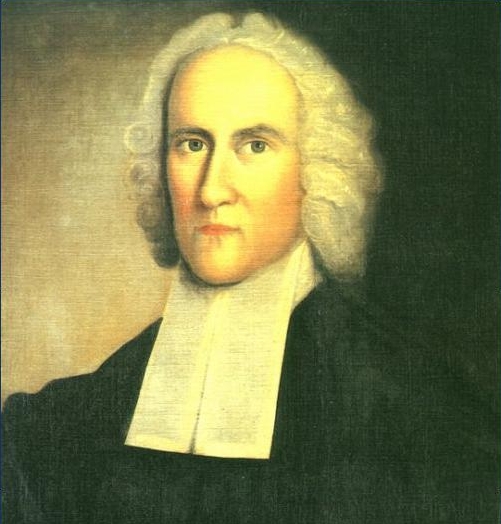
Jonathan Edwards recorded 70 resolutions not simply to guide one year but to guide his life.  Below are a sampling.  All 70 can be found here.

1. Resolved, that I will do whatsoever I think to be most to God’s glory, and my own good, profit and pleasure, in the whole of my duration, without any consideration of the time, whether now, or never so many myriads of ages hence. Resolved to do whatever I think to be my duty, and most for the good and advantage of mankind in general. Resolved to do this, whatever difficulties I meet with, how many and how great soever.

2. Resolved, to be continually endeavoring to find out some new invention and contrivance to promote the forementioned things.

3. Resolved, if ever I shall fall and grow dull, so as to neglect to keep any part of these Resolutions, to repent of all I can remember, when I come to myself again.

4. Resolved, never to do any manner of thing, whether in soul or body, less or more, but what tends to the glory of God; nor be, nor suffer it, if I can avoid it.

5. Resolved, never to lose one moment of time; but improve it the most profitable way I possibly can.

6. Resolved, to live with all my might, while I do live.

7. Resolved, never to do anything, which I should be afraid to do, if it were the last hour of my life.

8. Resolved, to act, in all respects, both speaking and doing, as if nobody had been so vile as I, and as if I had committed the same sins, or had the same infirmities or failings as others; and that I will let the knowledge of their failings promote nothing but shame in myself, and prove only an occasion of my confessing my own sins and misery to God.

9. Resolved, to think much on all occasions of my own dying, and of the common circumstances which attend death….

24. Resolved, whenever I do any conspicuously evil action, to trace it back, till I come to the original cause; and then both carefully endeavor to do so no more, and to fight and pray with all my might against the original of it.

25. Resolved, to examine carefully, and constantly, what that one thing in me is, which causes me in the least to doubt of the love of God; and to direct all my forces against it….

28. Resolved, to study the Scriptures so steadily, constantly and frequently, as that I may find, and plainly perceive myself to grow in the knowledge of the same….

Resolutions

I am teaching a class on the Great Awakening.  Today we are looking at Jonathan Edwards.  As part of the class we are going to look at his Resolutions, or at least the first 10 of his 70 (time constraints!).  They are well worth reading.  I have included the first 10 to challenge us with a few observations following:

Excerpt from Jonathan Edward’s Resolutions

Being sensible that I am unable to do anything without God’s help, I do humbly entreat him by his grace to enable me to keep these Resolutions, so far as they are agreeable to his will, for Christ’s sake.

Remember to read over these Resolutions once a week.

1. Resolved, that I will do whatsoever I think to be most to God’s glory, and my own good, profit and pleasure, in the whole of my duration, without any consideration of the time, whether now, or never so many myriads of ages hence. Resolved to do whatever I think to be my duty, and most for the good and advantage of mankind in general. Resolved to do this, whatever difficulties I meet with, how many and how great so ever.

 2. Resolved, to be continually endeavoring to find out some new invention and contrivance to promote the fore-mentioned things.

 3. Resolved, if ever I shall fall and grow dull, so as to neglect to keep any part of these Resolutions, to repent of all I can remember, when I come to myself again.

 4. Resolved, never to do any manner of thing, whether in soul or body, less or more, but what tends to the glory of God; nor be, nor suffer it, if I can avoid it.

 5. Resolved, never to lose one moment of time; but improve it the most profitable way I possibly can.

 6. Resolved, to live with all my might, while I do live.

 7. Resolved, never to do anything, which I should be afraid to do, if it were the last hour of my life.

 8. Resolved, to act, in all respects, both speaking and doing, as if nobody had been so vile as I, and as if I had committed the same sins, or had the same infirmities or failings as others; and that I will let the knowledge of their failings promote nothing but shame in myself, and prove only an occasion of my confessing my own sins and misery to God.

9. Resolved, to think much on all occasions of my own dying, and of the common circumstances which attend death.

10. Resolved, when I feel pain, to think of the pains of martyrdom, and of hell.

Three Observations

First, his focus.  He has a clear focus, a purpose in life.  He isn’t just coasting along.  And his focus is summed up in his first resolution: to live for God’s glory, his own profit and pleasure, and the good of mankind.  One may wonder how the middle one relates to the others, but in Edward’s mind his profit and pleasure were found in God.  So living for God and his own pleasure were the same thing.  And of course, living for the good of others is part of living for God.  The question for us then is:  Are we living focussed lives, and if so, what is our focus? 

Second, his sense of time.  He wants to remember that this life is brief.  Death is certain (#9), and so he wants to live each moment as if it were his last (#7).  He wants to live with all of his might (#6), not wasting a single hour (#5).  His desired intensity is incredible.  Meanwhile we talk about wasting time here and killing time there.  Life is short – are we living it well? 

Third, his humility.  He recognizes how feeble he is.  In his introduction, he recognizes his need of God’s help and grace to keep these resolutions – he can’t do them in his own power.  He further sees the possibility of failure, and recognizes the need to repent and start again (#3).  Finally, rather than condemning the failures of others, he wants the failures of others to remind him of his own failings (#8).  Essentially he wants to remember that he is a sinner saved by grace.  What about us?  Do we recognize our own sins and see our daily need for grace?

Maybe with God’s help we need to make some of our own resolutions for life….

Book Look: Jonathan Edwards

Jonathan Edwards – Iain H. Murray

Each year I like to read some biographies.  This year my focus is Jonathan Edwards.  Murray gives a mostly readable look at Edward’s life.  He includes interaction with many of Edwards writings published during his life (which slows the pace a bit, but helps you better understand the man and his times).  Murray concludes by considering his legacy.  At 500 pages, it requires some dedication, but is worth the effort.

The Holy Spirit Humbles Us

Continuing our thoughts on humility, consider these words from Charles Spurgeon:

“One way in which the Holy Spirit glorifies Christ is this – He gives us more and more debasing views of our own selves.  There are two Gods, as it were – one the true, the other the false.  Self first mounts the throne in our hearts; the higher the throne of self is exalted, the lower must Christ go.  Much of self, little of the Savior.  With exalted views of self, self-power, or self-righteousness, then there are sure to be low views of Christ, but when self goes down, then Christ at once rises.  It may be said of self, as John the Baptist once said of Christ and himself, “He must increase, but I must decrease” (John 3:30).

“If you have had shallow views of your own natural depravity, then you have had very shallow thoughts of Christ.  If you think sin to be delightful, if Gethsemane and Golgotha and Calvary seem to you to be names without weight or meaning, if you have never groaned under your sin, I do not wonder that you think little of Christ’s groans and griefs and bloody sweat.

“But when you come to know yourself as verily lost and undone, then you will prize your Deliverer.  When the dread word lost has seemed to fall like a death knell upon your ear, then the tidings that the Son of Man came to seek and to save that which was lost will be sweet to you as the Christmas carol of the angels when they sang, “Glory to God in the highest, and on earth peace, good will toward men” (Luke 2:14).  If you feel the disease, you will value the Physician; if you know your own emptiness, you will prize Christ’s fullness. But if you reject the teaching of the Holy Spirit, which shows you your utter helplessness and worthlessness, in so doing you have rejected Christ and put far from you that Savior who alone came to save sinners.

“It is, then, a most precious thing when we begin to sink lower and lower in our own estimation.  At the commencement of spiritual life, we believe that we are nothing; as we advance, we find that we are less than nothing.  May the Holy Spirit so work in you!”

(From his sermon, The Spirit’s Office Toward Disciples)

Last Poem

Charles Wesley wrote over 9000 hymns and sacred poems in his lifetime.  His last a few days before he died was this:

In age and feebleness extreme,
Who shall a sinful worm redeem?
Jesus, my only hope Thou art,
Strength of my failing flesh and heart;
O could I catch a smile from Thee,
And drop into eternity!

May we have that same hope when our turn comes!

Together For The Gospel

Just finished reading biographies about George Whitefield, Charles Wesley, and John Wesley – the three leaders of the Great Awakening in England.  I confess I was most interested in Whirefield as I am more at home with his theology.  The Wesleys were interesting when they weren’t railing against the Biblical doctrine of predestination or pushing their unBiblical view of Christian perfection.  Okay that was strong – but that was Whitefield’s view.  Of course, the Wesleys thought Whitefield’s views were unBiblical.  And yet, for most of their lives, they were friends.

They met and became friends at school before any of them were saved or famous.  After they were born again, they ministered together preaching the gospel around England (and beyond).  But then, despite Whitefield’s plea, John began preaching against and writing against predestination.  Whitefield felt he had no choice but to respond and defend the doctrine.  The cord of three was broken.  But over time they came together again.  The gospel was central in each of their lives and it was around this that they came together.  They agreed to disagree on the other issues – the main thing was the gospel.  Indeed at the end they were preaching for each other again.  When George Whitefield died, John Wesley led the service in England.  Charles Wesley wrote a long poem about his friend.  In particulars they differed, but they were friends in the gospel.

Which brings us to today.  Calvinism is on the rise – and I praise God for it.  Yet it is often antagonistic toward non-Calvinists.  On the other side is a responding antagonism against Calvinism.  Can we agree to disagree?  Can we come together around the gospel like Whitefield and the Wesleys?  Can we keep the main thing the main thing?  Whitefield didn’t want Wesley to publish against predestination because he didn’t want to divide the church and hurt the revival that was going on.  For the sake of the church, and the hope of revival, can we keep the gospel central and rally around it?

We have much to learn from these men.  For further reading, check out these biographies that I just read:

George Whitefield – Arnold Dallimore (I read the one volume edition, there is also a much more complete two volume edition)

George Whitefield and the Great Awakening – John Pollock

Assist Me To Proclaim: Life and Hymns of Charles Wesley – John Tyson

John Wesley – Stephen Tomkins

Not About Me

George Whitefield was a great preacher and revivalist who God used along with others to bring about the First Great Awakening.  Crowds of thousands flocked to hear him.  Yet he knew it wasn’t about him, but about Christ.  Consider these Whitefield quotes I found in Dallimore’s Whitefield biography:

“Let the name of Whitefield perish, but Christ be glorified.”

“Let my name die everywhere, let even my friends forget me, if by that means the cause of the blessed Jesus may be promoted.”

“But what is Calvin, or what is Luther?  Let us look above names and parties; let Jesus be our all in all – So that he is preached….I care not who is uppermost.  I know my place…even to be the servant of all.”

It’s not about me.  It’s not about you.  It’s only about Jesus.  Lord, help us share Whitefield’s attitude, and let your glory be over all the earth!