Resource Wednesday: The Art of Rest

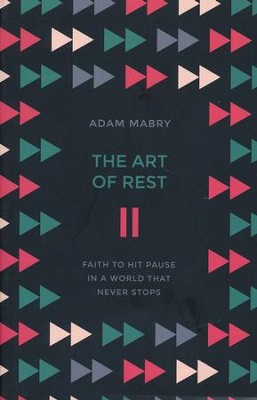
I’ve been thinking a lot about rest over the past few years, and this was a really helpful book! In midst of an over-busy world, Adam Mabry gives good Biblical teaching about rest, including the important benefits of rest. And this month, the e-book is available for free here. Go check it out! Read it, and learn to rest.

Book Collection

This is a bit late, but here are the top five books I read in 2018, followed by links to other best books of 2018 posts.  You are bound to find some good suggestions.

My Top Five Books

1. Faithfulness and Holiness – J. I. Packer & J. C. Ryle

2. How Should We Develop Biblical Friendship – Michael Haykin & Joel Beeke

3. Reset – David Murray

4. The Rest of God – Mark Buchanan

5. The Art of Rest – Adam Mabry

Other Lists

2018 TGC Book Awards

Kevin DeYoung

Jared Wilson

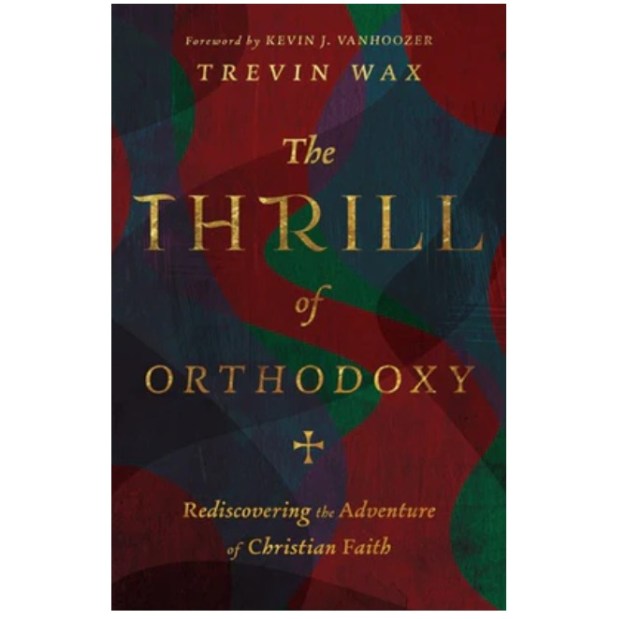
Trevin Wax

Russell Moore

Tim Challies (includes lists from several bloggers)

Happy reading!

Book Collection

I’m a bit late this year, but here are several “best books of 2017” posts.  With a great variety of categories, there is something for everyone.  If you are looking for some good books to read this year, check out these lists.

2017 TGC Book Awards

Christianity Today’s 2018 Book Awards

Best Books of 2017 – Kevin DeYoung

Top 17 Books of 2017 – Tony Reinke

My Top Books of 2017 – Jared Wilson

The Collected Best Christian Books of 2017 – Tim Challies

One of my top books for 2017, that showed up a few times on the above lists, is David Murray’s book Reset which I highly recommend (even passed out a few).

For youth, Jaquelle Crowe’s book This Changes Everything also showed up several times.  I am taking our youth group through it right now.

For children you might try Trillia Newbell’s God’s Very Good Idea which is also on numerous lists.

A few others that are now on my reading list include This Is Our Time by Trevin Wax, The Story of Reality by Greg Koukl, Recapturing the Wonder by Mike Cosper, and The Sermon on the Mount and Human Flourishing: A Theological Commentary by Jonathan Pennington.

And if you want to know in general what not to read, you might check out Tim Challies’ new post: A Guided Tour to 2017’s Bestselling Christian Books.  Surely we can do better.


Book Collection

What will you read in 2017?  Here is a collection of favorite books from some other bloggers to give you some ideas.

My Top Books of 2016 – Tim Challies

10 Favorite Reads of 2016 – Trevin Wax

My Top 10 Books of 2016 – Jared Wilson

Top Ten Books of 2016 – Kevin DeYoung

2016 TGC Book Awards – Collin Hansen & Ivan Mesa (TGC)

50 Books J.I. Packer Thinks You Should Read – Matt Tully (Crossway)

Book Look: What The Bible Really Teaches About Homosexuality

Kevin DeYoung’s new book What The Bible Really Teaches About Homosexuality is a short, yet incredibly helpful, book written for Christians to better understand the Bible’s teaching on homosexuality. In a world opposing, ridiculing, and often attacking the Scripture’s teachings, this book is a much needed resource for the church.

Part One looks at many of the most relevant verses related to homosexuality. He happily begins with Genesis 1-2 which is foundational for the Biblical understanding of homosexuality as it defines how God designed humanity, sexuality, and marriage (chapter 1).

He then goes on to look at Genesis 19 (chapter 2), Leviticus 18 and 20 (chapter 3), Romans 1 (chapter 4), and I Corinthians 6 and I Timothy 4 (chapter 5). Each chapter addresses the basic issues and shows how the text supports the traditional interpretation. I particularly found his connection of the words used in I Corinthians 6 and I Timothy 4 with the words found in Leviticus 18 and 20 to be quite helpful and conclusive.

Certainly more could be said for each passage, but overall DeYoung does an admirable job summarizing the main points in an accessible way for the every-day Christian. The chapters taken together provide a good case for the traditional Biblical understanding.

Part Two addresses common objections to the Biblical understanding of homosexuality. In chapter 6, he shows that the Bible really does take homosexuality, and indeed all sexual sin, very seriously (this is not an irrelevant issue). Chapter 7 points to the widespread homosexual activity in the Greek and Roman world that counters the often heard argument that Paul wasn’t talking about the same homosexual behavior we see today. In reading this chapter and the earlier one on Romans 1, I was reminded that we are quickly returning to the religious climate of the early church, and that we shouldn’t be surprised by the rise of homosexuality as our nation veers further and further from God.

Other chapters helpfully address the necessity of repentance for the Christian and the church, and the folly of the “wrong side of history” argument. I thought he drifted a bit in chapter 8 as he dissected the sin of gluttony, and again in chapter 12 as he discussed the church at Thyatira in Revelation 2, but perhaps these have been important points in experiences he has had on this issue.

Meanwhile, chapter 11 was spot on as it addressed the objection that the Bible’s position on homosexuality just isn’t fair. He treats the struggle of having homosexual desires, the necessity of celibacy in connection to those desires, and the misery many feel because of the struggle. Here DeYoung moves from scholar to pastor, and addresses these real feelings with both grace and truth. This chapter alone is worth the price of the book for any Christian with friends or family members who identify themselves as homosexual.

All in all, the book makes an excellent resource for any Christian who wants to better understand the Bible’s teaching on this important issue. As a pastor I can see myself recommending it to people in my church and using it as a resource in my own teaching.

Disclaimer: I received a complimentary copy of this book in exchange for my honest review.

The Discipline of Giving

The Men’s Discipleship Group at my church went through R. Kent Hughes book, Disciplines of a Godly Man this past year. It was a good study. One discipline Hughes focused on was giving. He calls for a disciplined understanding of giving and a disciplined act of giving.

Disciplined Understanding of Giving

  • Giving is not a meritorious work.
  • Giving does bring blessing.
  • Giving which pleases God is generous and sacrificial.
  • Giving should never be decided casually or flippantly, but through serious prayer.

Disciplined Act of Giving

  • The act of giving should be accompanied by offering oneself to the Lord.
  • Everyone should at least consider the first 10 percent as a starting point in giving – a minimum.
  • Your giving ought to be regular.
  • You must begin giving now.
  • Giving should not only be regular, but responsive to need, spontaneous.
  • Your giving should be joyous.

Book Look: Crazy Busy

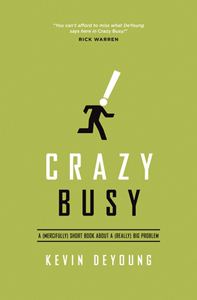
CrazyBusyI like Kevin DeYoung.  I’ve heard him speak, been to his church for a conference, and read a few of his books.  So when I was offered the opportunity to get a free digital copy of his new book, Crazy Busy, to review on this blog, I was all for it…except that I’m crazy busy.  Would I have time to read it?  Even though the book is only about 100 pages long, this has been a crazy busy week.  But somehow, I just finished reading it, so now it’s time for a quick review.

Let’s start with a quick summary.  DeYoung starts with three dangers of being crazy busy (including a loss of joy – can you relate?), and then offers seven diagnoses, plus one thing we must do (spend time with the Lord – which he points out has some amazing applications to our busyness).  Along the way, he makes clear that the problem is not being busy.  It is good to be busy, provided we are busy for the right reasons, within the right boundaries, and with the right attitude.  Which brings us back to the seven diagnoses.  Let me highlight three that challenged me.

His second diagnosis is that I am trying to do what God does not expect me to do.  That is, I’m trying to do more than I can as one finite person.  I have recently been big-time challenged with the importance of missions.  I want to make a difference for Christ.  I want to see missions go forth into all the world.  And there is much that I can and should do.  But I have limits.  I can’t financially support, pray for, or read about every missions group that is out there.  I am not the Christ.  I am only one man.  And for that matter, DeYoung reminds us, even Jesus didn’t do everything – as the quotes I posted from the book this morning make clear.  If I try to do everything, I will indeed be crazy busy.  I must decide what God wants me to do, and focus on that – like Jesus did.

His fifth diagnosis is that I am letting the screen strangle my soul.  If you are reading this blog, this may be a struggle for you as it is for me and DeYoung.  How many times do I have to check my e-mail or FB each day?  How many times did I check both one more time before finally getting back to read his book?  There is an technological allure that can quickly become an addiction.  And how much time do we waste surfing the web or staring at some mindless show on TV.  Not, DeYoung is quick to say, that technology is bad, but there needs to be some boundaries.

His sixth diagnosis is that I am failing to incorporate a proper balance of work and rest into my life.  Here in a few pages is an incredibly wise and practical look at the implications of the Sabbath principle for today, and then some important words on the necessity of sleep.  This chapter alone is worth the price of the book, and worth much further reflection and application on my part in the days to come.

If you struggle with being not just busy, but crazy busy, this is a good book to pick up.  Not every diagnosis connected with me, and probably won’t with you.  But the ones that do will likely be words you need to hear (or read).  I know they were for me.

P.S. Through the end of the month, Westminster is selling this book for 50% off – $6.00.

Book Look: John Newton

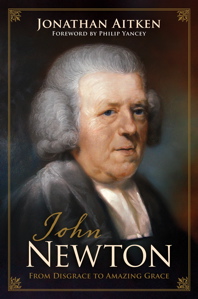
NewtonI recently read John Newton: From Disgrace to Amazing Grace by Jonathan Aitken.  It was an enjoyable and easy to read look at Newton’s life.  Aitken takes us from the foul-mouthed slave trader to the country parson to the city pastor and mentor.

I have read other biographies on Newton, but I learned some things here.  Newton kept journals and wrote many letters, and Aitken has clearly dug into them, using them to flesh out Newton’s life.  I found particularly interesting Newton’s relationship with William Wilberforce throughout Wilberforce’s drive to end the slave trade.  Through Newton’s letters, we also learn much about his loving relationship with his wife Polly.

As a Christian, I was amazed again by God’s incomparable grace that saves people who are blatantly against God.  I was challenged by Newton’s personal devotional habits and his never ending wonder at God’s grace.  As a man, I was challenged by his love for his wife – and his ability to communicate it to his wife.  And as a pastor, I appreciated learning about his ministry – with lots of good ideas for today.

If you are looking for a good introduction to Newton, and want to be encouraged in your Christian life, marriage, or ministry, this is a good book to take up and read.

Best Books of the Year

I have collected several lists of the best books of the year from around the web.  There are lots of good books to consider reading!  If you don’t feel like wading through the lists, here are the top two choices.  Three lists included these two books:

Several books had mention on two lists; I’ll let you discover them:

Top Ten Books of 2012 – Kevin DeYoung

TGC Staff Cite Best Books from 2012 – Gospel Coalition

My Ten Favorite Reads of 2012 – Trevin Wax

Top 12 Books of 2012 – Tony Reinke at Desiring God

My Top Books of 2012 – Tim Challies

Best of 2012 – Andreas Kostenberger

Crossway also compiled some top book recommendations from their staff and some of their authors.  These lists are broader than 2012 reads.