Every year we sing numerous Christmas carols from our hymnal at church. But often our hymnal only has a few select verses included. So this week I want to feature some forgotten verses from some of our favorite Christmas carols. Here is the first:
Sinners, wrung with true repentance, Doomed for guilt to endless pains, Justice now revokes the sentence, Mercy calls you; break your chains. Come and worship, come and worship, Worship Christ, the newborn king.
Though an Infant now we view Him, He shall fill His Father’s throne, Gather all the nations to Him; Every knee shall then bow down: Come and worship, come and worship, Worship Christ, the newborn king.
All creation, join in praising God, the Father, Spirit, Son, Evermore your voices raising To th’eternal Three in One. Come and worship, come and worship, Worship Christ, the newborn king.
“Angels From the Realms of Glory”
James Montgomery
Written 1816-1825
As found in the Cyber Hymnal
Matt Boswell and D.A. Carson have written a new hymn for Christmas entitled “Exult in the Savior’s Birth.” You can download the music, chords, and lead sheet here for free. This would be a great song for pastors and worship leaders to introduce to their congregations during the upcoming Advent season. Also makes a good song to add to your Christmas rotation on your MP3 player.
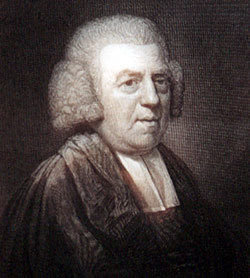
Thanks for mercies past receive, Pardon of our sins renew; Teach us, henceforth, how to live With eternity in view: Bless thy word to young and old, Fill us with a Saviour’s love; And when life’s short tale is told, May we dwell with thee above.
– John Newton from the Olney Hymns
Tomorrow for Resurrection Sunday many will sing Charles Wesley’s great hymn, Christ the Lord Is Risen Today (my sympathies if you don’t!). Wesley wrote the hymn in 1739 for the first service of the Foundry Meeting House in London – the first chapel for Methodists who followed the Wesleys. The hymn was originally written without the alleluias, which were added later by an unknown editor. Most hymnals only have four stanzas, but below you will find ten, though only the first seven were written by Wesley. The last three come from the 14th Century and were translated from Latin. These last three stanzas are found in many hymnals under the name, Jesus Christ is Risen Today. Both hymns share the same tune – Lyra Davidica.
Christ, the Lord, is risen today, Alleluia!
Sons of men and angels say, Alleluia!
Raise your joys and triumphs high, Alleluia!
Sing, ye heavens, and earth, reply, Alleluia!
Love’s redeeming work is done, Alleluia!
Fought the fight, the battle won, Alleluia!
Lo! the Sun’s eclipse is over, Alleluia!
Lo! He sets in blood no more, Alleluia!
Vain the stone, the watch, the seal, Alleluia!
Christ hath burst the gates of hell, Alleluia!
Death in vain forbids His rise, Alleluia!
Christ hath opened paradise, Alleluia!
Lives again our glorious King, Alleluia!
Where, O death, is now thy sting? Alleluia!
Once He died our souls to save, Alleluia!
Where thy victory, O grave? Alleluia!
Soar we now where Christ hath led, Alleluia!
Following our exalted Head, Alleluia!
Made like Him, like Him we rise, Alleluia!
Ours the cross, the grave, the skies, Alleluia!
Hail, the Lord of earth and Heaven, Alleluia!
Praise to Thee by both be given, Alleluia!
Thee we greet triumphant now, Alleluia!
Hail, the resurrection, thou, Alleluia!
King of glory, Soul of bliss, Alleluia!
Everlasting life is this, Alleluia!
Thee to know, Thy power to prove, Alleluia!
Thus to sing and thus to love, Alleluia!
Hymns of praise then let us sing, Alleluia!
Unto Christ, our heavenly King, Alleluia!
Who endured the cross and grave, Alleluia!
Sinners to redeem and save. Alleluia!
But the pains that He endured, Alleluia!
Our salvation have procured, Alleluia!
Now above the sky He’s King, Alleluia!
Where the angels ever sing. Alleluia!
Jesus Christ is risen today, Alleluia!
Our triumphant holy day, Alleluia!
Who did once upon the cross, Alleluia!
Suffer to redeem our loss. Alleluia!
I have a book with a couple hundred hymns by Isaac Watts, and I found this one that goes along with Palm Sunday. We are planning to sing it this Sunday using the familiar tune to O For A Thousand Tongues To Sing (both hymns share the same meter and the music fits well). Read the words and notice their theological depth in reference to the person of Christ that leads to the call to praise him.
Hosannah To Christ Isaac Watts
Hosannah to the royal Son Of David’s ancient line! His natures two, his person one, Mysterious and divine.
The root of David here, we find, And offspring is the same: Eternity and time are join’d In our Immanuel’s name
Bless’d he that comes to wretched men With peaceful news from heav’n! Hosannahs of the highest strain To Christ the Lord be giv’n!
Let mortals ne’er refuse to take The hosannah on their tongues, Lest rocks and stones should rise and break Their silence into songs.
For St Patrick’s Day, I thought I would explore another hymn, one of my favorites – Be Thou My Vision. St Patrick was born in 373 in Scotland. At 16 he was captured and taken to Ireland as a slave. He eventually escaped and returned home. But then God called him to return to Ireland as a missionary. Though opposed by the druids, he preached and evangelized, ultimately planting 200 churches and baptizing thousands. The new Irish church endured, and in the 8th century, Be Thou My Vision was written:
Rop tú mo baile, a Choimdiu cride:
ní ní nech aile acht Rí secht nime.
Rop tú mo scrútain i l-ló ‘s i n-aidche;
rop tú ad-chëar im chotlud caidche.
At least those are the first lines in Old Irish according to Wikipedia. They were translated to English in 1905 by Mary Elizabeth Byrne to yield:
Be thou my vision O Lord of my heart
None other is aught but the King of the seven heavens.
Be thou my meditation by day and night.
May it be thou that I behold even in my sleep.
You can read the rest at the Wikipedia link above. Later Eleanor Hull took Byrne’s translation and crafted it into the verses we are familiar with. The tune is from a traditional Irish folk song from the area of Ireland where St. Patrick challenged the Druids with the gospel.
The verses of the hymn are below. Notice that the hymn is essentially a prayer that one’s mind and heart would be set completely on Christ. In Sunday School we have been discussing lately the reality that our actions are based on what we desire in our hearts, and what we desire is based on what we believe in our minds. So if our minds and hearts are completely set on Christ – what a difference that would make in our lives. May Christ indeed be our Wisdom and Treasure!
As you look at the words below, notice also the middle verse missing from every hymnal I’ve ever seen. You can listen to the hymn with the five verses in the video above. For another devotional thought and more history, see this link.
Be thou my vision, O Lord of my heart,
naught be all else to me, save that thou art;
Thou my best thought by day or by night,
Waking or sleeping, thy presence my light.
Be thou my wisdom, thou my true word,
I ever with thee and thou with me Lord;
Thou my great Father, I thy true son;
Thou in me dwelling, and I with thee one.
Be thou my battle shield, sword for the fight;
Be thou my dignity, thou my delight;
Thou my soul’s shelter, thou my high tower:
Raise thou me heavenward, O Power of my power.
Riches I heed not, nor man’s empty praise:
Thou mine inheritance now and always;
Thou and thou only first in my heart;
High King of Heaven, my treasure thou art.
High King of heaven, my victory won,
May I reach heaven’s joys, O Bright Heaven’s sun!;
Charles Wesley wrote this hymn soon after he was saved in 1738, publishing it for the first time in 1739. Interestingly it has gone through some adaptations to come to its present form today. For instance, it was originally published as ten four-line stanzas instead of five eight line stanzas. In 1753, George Whitefield, a contemporary and friend, changed the last line of the refrain from “Glory to the King of kings” to “Glory to the newborn king.” For a full history see this article from Christianity Today. Like most of Wesley’s hymns, there are more verses than we usually sing – note the final two verses below. This hymn is quickly becoming a favorite of mine due to its rich theology. It gives us a wonderful crash course on the incarnation and numerous aspects of our salvation. To hear the music, see the music video which I stumbled across from my alma mater at the start of this blog.
Hark! The herald angels sing,
“Glory to the newborn King;
Peace on earth, and mercy mild,
God and sinners reconciled!”
Joyful, all ye nations rise,
Join the triumph of the skies;
With th’angelic host proclaim,
“Christ is born in Bethlehem!”
Hark! the herald angels sing,
“Glory to the newborn King!”
Christ, by highest Heav’n adored;
Christ the everlasting Lord;
Late in time, behold Him come,
Offspring of a virgin’s womb.
Veiled in flesh the Godhead see;
Hail th’incarnate Deity,
Pleased with us in flesh to dwell,
Jesus our Emmanuel.
Hark! the herald angels sing,
“Glory to the newborn King!”
Hail the heav’nly Prince of Peace!
Hail the Sun of Righteousness!
Light and life to all He brings,
Ris’n with healing in His wings.
Mild He lays His glory by,
Born that man no more may die.
Born to raise the sons of earth,
Born to give them second birth.
Hark! the herald angels sing,
“Glory to the newborn King!”
Come, Desire of nations, come,
Fix in us Thy humble home;
Rise, the woman’s conqu’ring Seed,
Bruise in us the serpent’s head.
Now display Thy saving power,
Ruined nature now restore;
Now in mystic union join
Thine to ours, and ours to Thine.
Hark! the herald angels sing,
“Glory to the newborn King!”
Adam’s likeness, Lord, efface,
Stamp Thine image in its place:
Second Adam from above,
Reinstate us in Thy love.
Let us Thee, though lost, regain,
Thee, the Life, the inner man:
O, to all Thyself impart,
Formed in each believing heart.
Hark! the herald angels sing,
“Glory to the newborn King!”
Charles Wesley was saved in 1738 and wrote his first hymn that very day. In the seven years that followed, he wrote 18 Christmas hymns which were published in 1745 as Hymns for the Nativity of our Lord. You can find the lyrics to these hymns here. The most familiar of them is Come Thou Long Expected Jesus. Unlike many of Charles Wesley’s long hymns, this one is only two stanzas. Interestingly though, the hymn that follows in this collection has the same metre, and I have to wonder if there is some relation. Speculation aside, Come Thou Long Expected Jesus is a hymn expressing Israel’s hope of the coming Messiah, and our hope in his return. Christ is further proclaimed as our King who should rule our hearts, and our Savior in whose merit we find salvation. For further thoughts on the theology of this hymn, see an article by Probe Ministries here. For the music, listen to the music video at the beginning of this post.
Come, thou long-expected Jesus, Born to set thy people free, From our fears and sins relieve us, Let us find our rest in thee: Israel’s strength and consolation, Hope of all the earth thou art, Dear desire of every nation, Joy of every longing heart.
Born thy people to deliver, Born a child and yet a King, Born to reign in us for ever, Now thy gracious kingdom bring; By thine own eternal Spirit, Rule in all our hearts alone, By thine all-sufficient merit Raise us to thy glorious throne.
A year after Charles Wesley was saved, he penned the hymn, O For A Thousand Tongues To Sing. In this hymn he wants to express his praise to God for his salvation. Notice his joy that salvation has been applied to him in this stanza:
I felt my Lord’s atoning blood Close to my soul applied; Me, me He loved, the Son of God, For me, for me He died!
Notice also that you have probably never seen this stanza as most hymnals only have four or five verses. But Wesley wrote many more as you can see below. Notice how he moves from praise in the beginning stanzas to a plea to other sinners to find the salvation that he has found in the later verses. For an organ version of one verse click here or listen to the music video at the beginning of this post for a simple rendition of the most familiar verses.
O for a thousand tongues to sing My great Redeemer’s praise, The glories of my God and King, The triumphs of His grace!
My gracious Master and my God, Assist me to proclaim, To spread through all the earth abroad The honors of Thy name.
Jesus! the name that charms our fears, That bids our sorrows cease; ’Tis music in the sinner’s ears, ’Tis life, and health, and peace.
He breaks the power of canceled sin, He sets the prisoner free; His blood can make the foulest clean, His blood availed for me.
He speaks, and, listening to His voice, New life the dead receive, The mournful, broken hearts rejoice, The humble poor believe.
Hear Him, ye deaf; His praise, ye dumb, Your loosened tongues employ; Ye blind, behold your Savior come, And leap, ye lame, for joy.
In Christ your Head, you then shall know, Shall feel your sins forgiven; Anticipate your heaven below, And own that love is heaven.
Glory to God, and praise and love Be ever, ever given, By saints below and saints above, The church in earth and heaven.
On this glad day the glorious Sun Of Righteousness arose; On my benighted soul He shone And filled it with repose.
Sudden expired the legal strife, ’Twas then I ceased to grieve; My second, real, living life I then began to live.
Then with my heart I first believed, Believed with faith divine, Power with the Holy Ghost received To call the Savior mine.
I felt my Lord’s atoning blood Close to my soul applied; Me, me He loved, the Son of God, For me, for me He died!
I found and owned His promise true, Ascertained of my part, My pardon passed in heaven I knew When written on my heart.
Look unto Him, ye nations, own Your God, ye fallen race; Look, and be saved through faith alone, Be justified by grace.
See all your sins on Jesus laid: The Lamb of God was slain, His soul was once an offering made For every soul of man.
Awake from guilty nature’s sleep, And Christ shall give you light, Cast all your sins into the deep, And wash the Æthiop white.
Harlots and publicans and thieves In holy triumph join! Saved is the sinner that believes From crimes as great as mine.
Murderers and all ye hellish crew In holy triumph join! Believe the Savior died for you; For me the Savior died.
With me, your chief, ye then shall know, Shall feel your sins forgiven; Anticipate your heaven below, And own that love is heaven.


 Brian J. Mikul