Blog Break

Last August I took a three week break from blogging.  It was a great time to recharge, and so I’ve decided to take another three week break this year starting tomorrow.  If you need something to read in the meantime, here are some of the top posts so far this year:

Blueprint for Maturity

Overcoming Idolatry

Be Still Before God

Our Joy

Who Needs Who?

I Am Not Worthy

Praying Together: Examples

Prayer and the Holy Spirit

Praying Together: God’s Expectation

Reflections on the Hell Issue

Hope to see you again August 29!

Men, Women, and Faulty Expectations

In a recent post, Betsy Hart suggests that many “chick flicks” amount to romantic pornography.  In the same way typical pornography gives a faulty expectation of women and sex, so these movies give a faulty expectation of men and romance.  It is an interesting idea to consider.

But I’m not sure I want to call it pornography.  After all, pornography is about more than faulty expectations – it is about lust.  Certainly many of these movies which land the couple in bed could encourage lust, but that is a different issue entirely. 

And that brings up another thought.  An unmarried couple landing in bed should at least be a faulty expectation – it certainly does not fit the Christian worldview.  But many aspects of movies do not fit the Christian worldview, giving faulty expectations about how people should act.  Should we then call these movies thinking pornography? 

Again, I agree with Hart’s point, but not her word.  The word carries a lot of weight and meaning beyond faulty expectations.  If it is really pornography, then we should flee from it.  If it is simply giving a wrong idea of the world, then we could forseeably watch it in small amounts using heavy doses of discernment as she does – even as we interact with the rest of the world using heavy doses of discernment. 

One specific faulty expectation that Hart notes in these movies is that men should act like women.  She spends much of her post discussing the need for men to instead act like men.  While there clearly is a difference (despite our culture’s attempt to eliminate any such differences), it is tricky to define.  In a separate post responding to a separate issue, Kevin DeYoung writes about what it means to be a man.  While noting that the Bible has some clear teachings on this, he notes that the application can be a bit tricky.  In particular we need to avoid unhelpful stereotypes that

“Real men hunt and fish. Real men like football. Real men watch ultimate fighting. Real men love Braveheart. Real men change the oil and chop firewood.” It’s one thing for pastors to give men permission to be like this. It’s another to prescribe that they must. You simply can’t prove from the Bible that manliness must look like William Wallace. If you insist on one way to be a man, you’re in danger of two things: 1) Hurting godly men who are manly but don’t do things with sports, cars, or the outdoors. 2) Making your particular expression manhood the standard for everyone else.

Good points.  Meanwhile how can we positively speak about what it means to be a man?  Justin Taylor gives us two links to some helpful resources and provides brief summaries of each.  I encourage you to check out all these posts to ponder the issue further.

Responding To Hell

Yesterday I preached a sermon on Jesus’ parable about hell in Luke 16:19-31.  I showed that hell is not only real, but that it is a place of torment.  Hell is directly related to God’s justice (we really do deserve to go there).  And once you are there, there is no escape. This is the traditional and Biblical way of understanding hell.  But what should a Christian do with hell?  Just defend these truths from those who reject them?  This is necessary, but I suggest that there are many other responses we should make (and I am indebted to Michael Wittmer and Francis Chan for helping me think this through).

Humbly Submit to God

It is not up to me if there is a hell or not.  It is up to God, and he tells us it exists.  It doesn’t matter if I like it, if I consent to its existence, or if I understand it.  It doesn’t matter how I feel about it.  God says hell exists and I should humbly submit to what he says.  Or as Rick Warren apparently put it: “I believe in hell because Jesus says it’s real and he knows more about it than anyone.”

Examine Your Heart

Are you certain you are going to heaven and not hell?  Are you trusting in what Jesus did for you on the cross and through the resurrection?  Have you really received Jesus as your Savior?  Is there evidence of your salvation?  Has there been a change in your life?  Are you following Christ?  We will never be perfect here, but if we are God’s children, there will be a difference.  Our eternal destiny is on the line here.  We must be sure we are saved.

Rejoice In Your Salvation

Because of our sin, we deserve hell.  Every sin is rebellion against the King, a terrible offense against God.  We deserve eternal punishment.  But Jesus died to take our punishment upon himself so we could go free, so we could escape hell.  The more we grasp hell, the more we will praise God for saving us from it.  No wonder Paul tells us to rejoice in the Lord always (Philippians 4:4).  It doesn’t matter how bad your life is going right now – if God has saved you from hell, you have reason to rejoice.

Weep For The Lost

If hell is real, and people are going there, then we should weep.  We should mourn.  We should cry.  Too often we live without enough passion.  Not only don’t we rejoice enough in our salvation, we don’t weep enough for the lost.  And as we weep, we should:

Cry Out To God For People To Get Saved

Plead with God for your family, your friends, your co-workers, your neighbors, your community.  Let passionate cries for mercy ascend constantly to the throne of grace.  And as you pray:

Go And Share The Gospel

Look for opportunities to share the gospel with the people you see.  And if you don’t see opportunities, look for ways to create opportunities.  We need to give thought to ways we can reach out to people with the good news of Jesus.  The more we believe in hell, the more we will have a burden for the lost. 

Send Missionaries Around The World

Finally, if hell is real, we need to send people out with the gospel to those who have never heard.  We need to not only invest our time in sharing the gospel, but also our money to help others share the gospel in places we will never go.

How do you need to respond to hell today?

Resources on Hell

I am in process of preparing a sermon on hell from Luke 16, and so I’m researching the issue a bit, and thought I’d share a few resources available.

Rob Bell’s book (see prior post) has unleashed an avalanche of books supporting the traditional Biblical understanding of hell.  My former classmate and professor Michael Wittmer has a short book called Christ Alone that interacts with and critiques Bell’s book.  Francis Chan has a new book called Erasing Hell that looks at the relevent Biblical passages.  Mark Galli has a book coming soon called God Wins that according to Randy Alcorn (via Justin Taylor) looks more at the historical and theological aspects.  It also includes a small group study guide.  See Taylor’s summary of the books by Chan and Galli here.  In August, Keller, Mohler, and Packer have a brief book coming out called Is Hell For Real or Does Everyone Go To Heaven?  Too bad these last two books are coming out too late for me to look at for my sermon.

With all these new books coming out, Tim Challies looks at how well those with the traditional Biblical view of hell (himself included) responded to the Bell controversy.  In part of his critique he argues that all the uproar actually helped sell the book.  Taylor has a brief response.  I would simply add that while the uproar may have helped sell the book, Rob Bell was already a best-selling author whose book would have sold well even without an evangelical response – and the evangelical response was greatly needed (as Challies readily acknowledges).  While many may be led astray by Bell’s book, he has forced the church to re-examine and address the issue.  And with the recent slew of books, many will be better educated on the Bible’s teaching on hell.  And for that we can be grateful.

History of Hell

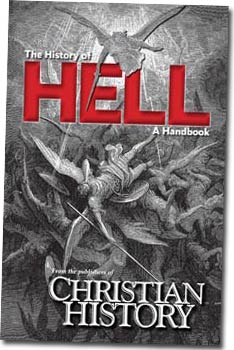
A few months ago, I encouraged you to sign up for Christian History magazine’s free issue on the KJV.  Christian History is now offering a free handbook on the history of Christian thought on hell.  As I wrote about the current hell controversary (from Rob Bell’s new book), I thought some of you might be interested.  If so, you need to sign up here by June 30. 

Note: in signing up you are adding yourself to their mailing list for future magazines, and they are hoping you will give a donation to keep the magazine going.

Blueprint for Maturity

Colossians 1:9-14 not only gives us a great prayer to prayer for one another’s maturity in Christ (see last post), but it also gives us a blueprint for maturity in Christ.

The Means of Maturity in Christ (v9)

How do we grow?  We grow through God’s Word that teaches us the knowledge of his will.  We grow through the Spirit as he gives us wisdom and understanding to apply the Word to our daily lives.  And we grow through the power of prayer – as we pray for ourselves and indeed as others pray for us, as Paul is praying for the Colossians.  These three – the Word, the Spirit, and prayer – are powerful means toward our maturity in Christ.

The Manner of Maturity of Christ (v10)

What does maturity in Christ look like?  What is the manner or path toward maturity?  Maturity is found as we are bearing fruit in every good work – as we turn from sin and live for righteousness.  Maturity is found as we are increasing in our knowledge of God – as we grow in a vibrant relationship with him.  These two – growing in good works and grow in our relationship with God – are the manner of maturity in Christ.  This is what maturity looks like.

The Might behind Maturity in Christ (v11)

What empowers us to mature?  Not our own strength, but God’s strength.  We have strength to endure and press on as we look to God for his mighty power.  His power is the might behind maturity in Christ.

The Motive for Maturity in Christ (v12-14)

What motivates us to mature in Christ?  Gratitude for God’s salvation.  Gratitude for our inheritance in Christ, our deliverance from darkness, or entrance into Christ’s kingdom, our freedom from bondage to sin, our receiving forgiveness for all our sins, and every other glorious blessing that is ours in Jesus Christ.  The more we grasp God’s salvation for us, the more we will give thanks; and the more grateful we are, the more we will desire to live for Christ.  Gratitude for God’s salvation motivates us to mature in Christ.

Here then is a blueprint for maturity in Christ.  While the rest of Scripture fills in some gaps, this prayer gives us the basic means, manner, might, and motive related to maturity in Christ.  May we follow Paul’s blueprint for our own growing maturity in Christ for the glory of our great God!

My Shepherd

Psalm 23 is one of the best known, most beloved passages in the Scriptures – perhaps because it gives us great assurance in troubled times.  As I look around this world, I see a people living in troubled times.  I see the concerns, cares, struggles, and pain that so many are facing, so many are carrying.  I see financial concerns, health struggles, loved ones who are ill or dying or who have passed away, family struggles, struggles with sin, and the list could go on.  I see a hurting people in need of some assurance.  When we look at Psalm 23 we find that assurance as we remember that we have a great Shepherd.

The Lord is my Shepherd (v1a).  What a wonderful thing that God – the Creator of the universe, the King of Kings and Lord of Lords – would care about little people like us, would choose to be our Shepherd.  And yet David makes it more personal than that.  He is not just our Shepherd, but he is my Shepherd.  I have personal relationship with God.  He cares about me.  He is my Shepherd.

Can you say that?  Can you say that he is your Shepherd?  Can you say that you are his sheep?  Jesus uses the same imagery in John 10:27-28.

My sheep hear my voice, and I know them, and they follow me.  I give them eternal life, and they will never perish, and no one will snatch them out of my hand.

Does God know you as his sheep?  Has he given you eternal life?  Eternal life in the Gospel of John is a relationship with God today that extends into eternity (John 17:3).  Have you received this eternal life, this relationship with God?  Jesus also says in John 10:

I am the good shepherd. The good shepherd lays down his life for the sheep. (v11)

I am the good shepherd. I know my own and my own know me, just as the Father knows me and I know the Father; and I lay down my life for the sheep. (v14-15)

For this reason the Father loves me, because I lay down my life that I may take it up again. (v17)

Jesus knows his sheep. He died for them and rose from dead.  And to be his sheep, we must simply believe in him.  Jesus said in verse 26:

But you do not believe because you are not part of my flock. 

If we do not believe, we are not his sheep.  But the opposite is also true.  If we believe in Jesus, we are his sheep.  If we believe that Jesus died for our sins and rose from the dead to give us eternal life, he will be our Shepherd. Have you received him as your Shepherd?  Have you become his sheep?  Without a shepherd you are a lost sheep, wandering in wilderness, chased by wolves, with no support, no help, and no hope.  But if you have Lord as your Shepherd – Psalm 23 gives you glorious truths that you can hold onto in troubled times:

He Provides For You

He makes me lie down in green pastures.  He leads me beside still waters (v2).  Sheep need green pastures in which to graze.  They need still waters to drink.  They need to lie down to rest.  And God provides food and drink and rest for you.  He provides for your needs.  He will take care of you in this uncertain economy.  Gas prices are rising, grocery bills are increasing, and health insurance and doctor bills are climbing.  Many people are without a job or losing their home.  In the midst of all of this, you can fret and fear, worry and whine.  Or you can look to your Shepherd –  he will provide for you. 

Spurgeon understands this verse as the Shepherd providing  spiritually for you.  He gives you the green pastures of his Word on which to feed.  God gives you living water, which is the Spirit at work in you (John 7:37-39).  Whether physical or spiritual, God provides for you.

He Restores You

He restores my soul (v3a).  Are you in need of restoration today?  The world offers many restoratives, but in the end they will leave you empty.  Only your great Shepherd can restore your soul, can restore you deep down where it hurts, where it aches, where you need it.  Are you cast down?  He will pick you up.  Are you weak?  He will give you strength.  Are you hurting and wounded?  He will bind up your hurts and heal your wounds.  Are you sinful?  He will pardon you and sanctify you.  Are you tired and weary?  He will revive you.  Are you wandering?  He will leave the 99 and come for you and bring you back (Luke 15).  Do you need restoration in your life?  Look to your Shepherd – he restores your soul.

He Leads You In Righteousness

He leads me in paths of righteousness for his name’s sake (v3b).  Through the Word and the Spirit, he leads you in righteousness.  He helps you to grow, to change, to be the person he created and saved you to be.  His grace teaches you to renounce ungodliness and worldly passions, and to live self-controlled, upright, and godly lives in the present age (Titus 2:12).  He leads you, but are you listening to his leading?  Are you in his Word?  Are you following?  Are you obeying?  Or have you been straying from the right paths, wandering away from your Shepherd?  He leads you, but you must follow.

He provides for you, restores you, and leads you in righteousness, and so you can say with David: The Lord is my Shepherd; I shall not want. This is the first of three statements about himself.  He shall not want.  He shall have no lack.  In God, he has everything he needs.  And why not, for God is the source of all good things (James 1:17).

And so you can be content in Him.  Many things of this world may be denied you, but in him you have what you need.  He will provide.  He will restore.  He will lead.  And so you can say with David in Psalm 16:5-6,

The Lord is my chosen portion and my cup;
you hold my lot.
The lines have fallen for me in pleasant places;
indeed, I have a beautiful inheritance.

You have what you need in him; you need not look elsewhere.  Other gods, idols of this world, tell you that they can provide, restore, and lead, but they can’t compare to your Shepherd.  They can’t compare to your God.  Your God is a big God.  Your God is a strong God.  Your God is a powerful God.  Your God loves you.  He is your Shepherd.  And you can be content in him.

He Is With You

Even though I walk through the valley of the shadow of death, I will fear no evil, for you are with me; your rod and your staff, they comfort me (v4).  Back in verse three, the words could be translated – he leads me in right paths.  Our translations tend to suggest the moral sense (paths of righteousness), but it could also be taken as God guiding your life in his perfect right way, and sometimes that way leads though the valley of shadow of death. 

You walk through this valley when a loved one dies.  And in midst of your loss, your Shepherd promises that he is with you.  You will walk one day through this valley as you face your own death, but you won’t face it alone because your Shepherd is with you.  Spurgeon notes that it is the shadow of death.  If you know Christ, death has lost its sting – it is now merely a shadow of what it once was.  Spurgeon further notes that shadow implies light.  It is the shadow of death because on other side of death is great light – the Light of the world with whom you will dwell forever.

The sense here can also be broader than shadow of death.  It could be translated as the valley of deep darkness.  Certainly this would include times of loss and your own death.  But your valley today might be something very different.  It might be your health, an illness, pain.  Your valley might be weariness or depression or loneliness.  Your valley might be a family issue or a financial concern.  Some other trial may be taking you through the valley of deep darkness. 

Whatever the valley, your shepherd reminds you that he is with you.  He will not leave you.  If you stumble, he will carry you.  He will also comfort you.  He will calm you.  He will give you a peace that passes understanding in midst of valley. 

Finally, Spurgeon notes that you walk not in the valley, but through the valley.  The valley won’t last; one day it will be past.  Until that day, remember that your shepherd is with you and will comfort you.

He is with you in the valley.  That brings us to David’s second statement about himself: I will fear no evil (v4).  If God is on your side who can be against you?  And so you can trust in Him.   As David declares in Psalm 56:3-4,

When I am afraid, I put my trust in you.
In God, whose word I praise,
in God I trust; I shall not be afraid.
What can flesh do to me?

And again David says in Psalm 16:8,

I have set the Lord always before me;
because he is at my right hand, I shall not be shaken.

In the midst of the valley of deep darkness whatever it is for you, you need not fear.  You need not be shaken.  He is with you, and you can trust him.  

He Blesses You

You prepare a table before me in the presence of my enemies(v5a).  You may be surrounded by enemies, trials, or struggles, but he still provides a meal for you.  In the midst of the struggle, he still provides. He still showers blessings upon you.  Have you not found that to be true in your life?  No matter how deep the valley, there are little rays of light.

You anoint my head with oil (v5b).  Oil was often used to bind up wounds, so this may speak of the blessing of healing.  How many times have you been sick or injured, and God has healed you?  Spurgeon suggests it refers to the anointing of the Holy Spirit – and certainly the Spirit’s work in your life is a great blessing.

My cup overflows (v5c).  Your cup overflows.  It runs over.  In other words, God gives you blessing upon blessing upon blessing upon blessing upon blessing upon blessing upon blessing…. 

Surely goodness and mercy shall follow me all the days of my life(v6a).  His goodness follows you; that is, it pursues you – it is right there with you.  God showers so many good things upon you.  And then there is his mercy.  You fail again and again, and he shows mercy again and again.  The word mercy could also be translated as unfailing covenant love.  His love won’t let you go.  His love continues.  It is unfailing.  He will keep blessing you until that day when you will dwell in his house forever.

That brings us to David’s third statement about himself: I shall dwell in the house of the Lord forever (v6b).  You will dwell in his house.  He blesses you in this life, and he will continue in life to come.  And so you can hope in Him.  Because of the resurrection of Jesus Christ, you have the hope that when Jesus your Shepherd returns, you will be raised with him to dwell with him forever.  Revelation 7:15-17 says:

Therefore they are before the throne of God,
and serve him day and night in his temple;
and he who sits on the throne will shelter them with his presence.
They shall hunger no more, neither thirst anymore;
the sun shall not strike them,
nor any scorching heat.
For the Lamb in the midst of the throne will be their shepherd,
and he will guide them to springs of living water,
and God will wipe away every tear from their eyes.

This is your hope – that you will dwell with him forever.

Conclusion

Do you know the shepherd?  Are you his sheep?  If not he invites you to turn from your sin and believe in him.  Through Christ’s death and resurrection, your sins will be forgiven, and you will know God as your Shepherd now and forevermore. 

And if you know God as your great Shepherd, remember:

He provides for you, restores you, and leads you in righteous, so you can say with David: I shall not want; I will be content in Him.

He is with you in the deepest valley, so you can say with David, I will fear no evil; I will trust in Him.

He blesses you now and forevermore, so you can say with David, I shall dwell in the house of the Lord forever; I will set my hope in Him.

May the grace of our Lord Jesus Christ help you to keep your gaze on your great Shepherd.

Obama’s bin Laden Speech

The Christian blogosphere is alive with commentary on the killing of bin Laden this past Sunday.  How should Christians view this event?  I want to suggest a few thoughts connected to President Obama’s announcement.

First, Obama sets the killing in the context of war, a war we have been fighting since 9/11.  Bin Laden was our enemy, and he has been defeated.  As David celebrated victory over his enemies through the Psalms, so we may celebrate victory over our enemy.

Second, Obama speaks of the killing as an act of justice, and so it is.  Genesis reminds us that the penalty for taking a human life is death (Genesis 9:6).  Bin Laden deserved death.  What’s more, God has given the government the authority and responsibility to pursue justice, including the taking of a life (Romans 13:1-4).  This was an act of justice.  For more on this point, see here.

Third, unlike the celebrations on the streets, Obama does not gloat or celebrate excessively.  Undoubtedly there are political reasons for this.  But beyond that, while we may celebrate this victory over our enemy and the carrying out of justice, the celebration is marred by the reality that a man made in God’s image has been killed.  Yes, the image of God in him was horribly warped.  Yes, he was an evil man deserving of death.  But let’s remember he was still a man.  Let’s remember that we are called to love our enemies even as Jesus did on the cross.  Let’s remember that he is, apart from Christ, in hell.  Our celebration of victory and justice has a twinge of bitterness too.  For more on this, see here.

Fourth, Obama thanks our military and intelligence professionals, many who have given their lives in the last ten years.  And we have every reason to be grateful to them for all they have done for our safety.  And yet, we ought to go a step further and also thank God for this victory.  Apart from God’s blessing, all of their worthwhile work for which we are grateful would yet prove fruitless.

Fifth, Obama calls us back to the sense of unity we had after 9/11.  Whether he will follow through with this call remains to be seen.  But it is a worthwhile call.  The political animosity in our country is anything but Christian, and anything but helpful in accomplishing anything worthwhile.  If both the president and Congress would drop the political posturing and come together to address the weighty issues before them, our country would be better off, and just maybe the people would begin to have a higher view of our leaders.   And ironically the same lack of respect that led bin Laden to kill hundreds is at work in the way people of opposite parties treat each other in Washington.  Yes, the outworkings of that lack of respect in bin Laden and Washington occur at very different levels and they are not morally equivalent, but the root issue is the same.  Basic respect and civility, even kindness, in Washington would be a welcome change.

Finally, Obama states, “Yet today’s achievement is a testament to the greatness of our country. And the determination of the American people. The cause of securing our country is not complete but tonight we are once again reminded that Americans can do whatever we set our mind to.”  I understand that our president is seeking to give us hope in the midst of many problems at home.  The problem here is that he finds that hope in the wrong place.  As he failed to thank God for this victory, he fails to look to God for help in the many problems our country faces.  Instead he makes our country into a god, an idol.  America is great.  America can do whatever we set our mind to.  America brought about this victory, and we can accomplish anything we want to do.  But apart from God we can do nothing.  “Some trust in chariots and some in horses, but we trust in the name of the Lord our God” (Psalm 20:7).  Let us not be too impressed with ourselves, for our country like every other is as nothing before God, indeed less than nothing and emptiness (Isaiah 40:17).  Instead of bowing down to our country, let’s join David in saying:

If it had not been the Lord who was on our side –
let Israel now say –
if it had not been the Lord who was on our side
when people rose up against us,
then they would have swallowed us up alive,
when their anger was kindled against us;
then the flood would have swept us away,
the torrent would have gone over us;
then over us would have gone the raging waters.
Blessed be the Lord,
who has not given us as prey to their teeth!
We have escaped like a bird from the snare of the fowlers;
the snare is broken, and we have escaped!
Our help is in the name of the Lord,
who made heaven and earth.

– Psalm 124

My Mighty Rock

For God alone, O my soul, wait in silence,
for my hope is from him.
He only is my rock and my salvation,
my fortress; I shall not be shaken.
On God rests my salvation and my glory;
my mighty rock, my refuge is God.
Trust in him at all times, O people;
pour out your heart before him;
God is a refuge for us.

– Psalm 62:5-8