
Just a quick post to say that there will not be any OT study or reflections this week. Each week’s study and reflections are tied to my church’s Sunday School class, and this week we are taking a break for a missions focus. We’ll continue with Deuteronomy next week!
Passion Points
Here are some good posts for your weekend reading:
7 Ways to Fight Distraction During Prayer – Gavin (Soliloquium)
Discontentment Says Something about You, Not Your Circumstances – Philip Graham Ryken (Crossway)
Beware the Busyness of Summer Break – Dave Zuleger (DG)
Why I Sit at the Front – Tim Chester
Hope you have a great Lord’s Day with your local church!
Become Who You Are
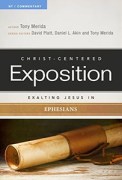 Positionally, we are holy because we are united with Christ. Now we must live in a manner that is consistent with this position. Personal holiness is about becoming in practice what we are in position.
– Tony Merida in Exalting Jesus in Ephesians
Reflections on Deuteronomy 12-17
God chose the people of Israel, and he expected them to be committed to him, as well as just toward each other.
- Treasured Possession – God chose the people of Israel to be his treasured possession. In response they were to be holy before him (14:2). God has chosen us too, making us a people for his own possession, to walk in holiness before him (I Peter 2:9). Ponder what it means to be chosen by God, to be his treasured possession. Are you seeking to walk in holiness before him?
- No Idolatry – God again reminded the people to be faithful to him. Anything connected to foreign gods was to be destroyed. Prophet, family member, or friend who suggested following after another god, was to be stoned. God did not want anything or anyone to lead the people of Israel Have you allowed things into your life that are pulling you away from God?
- Rejoice before the Lord – It is possible for us to imagine life at the tabernacle to be a grim affair. And certainly the sin offerings were a grim affair. But many sacrifices – including the tithe, freewill offering, and vow offerings – were times to feast and celebrate and rejoice before the Lord. Notice the repetition that you should rejoice before the Lord your God (12:12, 18; 14:26). When do you come before the Lord to rejoice and celebrate?
- The Poor – God makes clear that he cares about the poor, and so must we. We are to freely give to those in need. Indeed if we do not, God will hold us guilty of sin. How are you helping the poor?
- Justice – God is a just God and he expects justice. Are you treating those around you justly? The poor? The weak? The outcast? How are you pursuing justice in your relationships? What might you do to encourage justice in our world?
Prayer Quote of the Week
 I commend to you the importance of intercession in our prayers…. We should stir ourselves up to name other names besides our own before the throne of grace.
– J. C. Ryle
Reflections on Deuteronomy 9-11
Moses continues to exhort the people to follow the Lord as he notes God’s faithfulness to them.
- God’s Faithfulness – Why is God so faithful to these rebellious people? The answer in part is found in his covenant promise to Abraham, Isaac, and Jacob. Because of that covenant, he will bring them into the land (9:5). In response to that covenant, God has already made the people as numerous as the stars of heaven (10:22). God faithfully keeps his promises. What promises do you need to claim today?
- Fear, Love, Serve, Obey – Moses challenges the people to fear the Lord, walk in his ways, love God, serve him, and obey him (10:12-13). That same challenge applies to us. How well do these verses describe you? In what ways do you need to grow in your walk with the Lord?
- Choices – The people had a choice: to obey and be blessed, or to disobey and be cursed (11:26-28). We too have a choice each day to obey or not. Blessing comes from obedience. Disobedience will bring discipline. What choices are you making?
Classic Quote
 He, therefore, is the devout man, who lives no longer to his own will, or the way and the spirit of the world, but to the sole will of God; who considers God in everything, who serves God in everything, who makes all parts of his common life parts of piety, by doing everything in the name of God, and under such rules as are conformable to His glory.
– William Law
Deuteronomy 9-17: Our Relationship with God
(9-11) Who is this God with whom we have a relationship? What do you learn about him from this passage?
What do these attributes suggest about how we should relate to God?
(14) Who are we in relationship to God according to v1-2?
What does this suggest about how we should relate to God?
(10-11, 13) What words are used in these verses to describe how we should relate to God (10:12-13, 11:1, 11:13, 13:4)?
How do these words relate to each other?
What part does the heart play (see also 10:16, 11:18)? Why is that important to recognize?
(12-13) Israel’s relationship to God was to be exclusive. No other gods were permitted. What specific steps was Israel to take to keep from following other gods?
How might we be vigilant today to guard our hearts from idols and remain wholly faithful to our God?
(12, 14) As part of their relationship with God, the people were to bring their sacrifices and tithes before the Lord in order to eat and rejoice before the Lord (12:12, 12:18, 14:26). When do we gather to rejoice before the Lord? Why is this so important?
(15-17) An important part of their relationship with God was to be generous to the poor and just in their dealings. If we love God, we must love people. Give examples of how we might live this out.
Passion Points
Here are some good posts for your weekend reading:
Making the Most of Your Bible Reading – Godwin Sathianathan (FTC)
God desires to speak something to you. He has something for you in His Word for your particular day. Do you believe that? Are you eagerly anticipating what He might say to you today?
3 Truths to Speak To Your Temptation – Tim Challies
Sin promises joy but brings pain, sin promises happiness but brings shame, sin promises life but brings death, sin promises freedom but brings guilt, sin promises heaven but brings hell. It is always, always a lie.
Play Hard – Jared Wilson
We need to remember to play hard. We need to take having fun seriously. This means….being mindful in our rest, play, and fun that these things are gifts from God meant to help us celebrate being made in God’s image as Creator and project in some way the creative story he is telling with the universe.
Ten Things I Learned at Church on Sunday – Erik Raymond
God met us as a church in the ordinary and showed us his extraordinary faithfulness, grace, beauty, and power.
Hope you have a great Lord’s Day with your local church meeting with our great God!
First
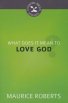 To love God is the first and highest duty in life.
– Maurice Roberts in What Does It Mean To Love God?

