No Little Mistake

WDBRT-HomosexualityThe fact that Paul singles out homosexual relations as a conspicuous example of the human heart suppressing the truth and turning from God suggests that we must not soft-pedal as no big deal what the Bible underlines as particularly egregious rebellion. And it means we must face squarely the serious indictment God’s Word levies against the individuals and churches that “give approval to those who practice them” (v. 32). It is no little mistake in God’s eyes to encourage and support what harms our fellow creatures and dishonors our Creator.

– Kevin DeYoung on Romans 1 in What Does The Bible Really Teach About Homosexuality

Current: Indiana RFRA

By now you must have heard about Indiana’s new RFRA law, but if you listen to the media’s portrayal, you probably think it has to do with discriminating against homosexuals. But of course, it really has nothing to do with discrimination, and everything to do with protecting our religious freedom. Joe Carter has a helpful post that summarizes What You Should Know About Religious Freedom Restoration Acts.  If you want the quick version, check out this helpful visual.  Even some, like Stephen Prothero and Douglas Laycock, who support same-sex marriage argue that that the law is not about discrimination but religious freedom. In Laycock’s words:

The critical fact with respect to all the hysteria over Indiana is this: No one has ever won an exemption from a discrimination law under a RFRA standard. Few have tried, and none have won. There is absolutely no basis in experience for the charge that these laws are a license to discriminate.

Despite having nothing to do with discrimination, many called for boycotting the state of Indiana. Aaron Earls points out that If You Are Boycotting Indiana, Here’s Where Else You Need to Boycott – including many other states with similar laws, our country with a similar federal law, and many other nations with much less friendly attitudes toward homosexuality.  But as Earls points out again, the laws really have nothing to do with homosexuality, and everything to do with religious freedom.  So boycotting Indiana really means one is opposing religious freedom.

And one wonders if that isn’t, after all, the point. How do we explain all the freaking out over this law that we have recently witnessed? Did the media and many political leaders, business leaders, entertainment leaders, and sports leaders simply act out of total ignorance of what the law says (raising serious questions of their competence)?  Or is there a growing opposition to religious freedom that the law seeks to protect?

Albert Mohler points to recent editorials in both The Washington Post and The New York Times that seek to redefine religious liberty, desire to give the government the right to infringe on religious liberty, or simply demand that religions bow “to the enlightenments of modernity.”

Meanwhile Russell Moore writes:

Many of those leading the discussion of religious freedom have little or no understanding of what motivates religious people…. If one cannot empathize with why defying conscience on a matter of religious exercise is a life-or-death concern, then one is free to impute all sorts of evil motives….  This is particularly problematic when widespread ignorance of religious motivation is joined with a zealotry that can only be called religious: for the stamping out of all dissent against the sexual revolution.

In our culture’s headlong rush toward so called “same-sex marriage,” it seems that many are willing to steamroll right over religious freedom.  Indeed, Frank Turek argues that “Same-Sex Marriage” Is Becoming the Established Religion. He writes:

Forget tolerance. This is well beyond tolerance. Now, if you don’t agree to celebrate same sex marriage, the established religion will commence an inquisition and, without a trial, punish you for heresy. That’s why this legislation is necessary.

So how should the church respond?

First, the church needs to stand firm on the Bible’s teaching on homosexuality and the definition of marriage no matter how unpopular it may be.  We are not in a popularity contest, and we seek to please God, not men.

Second, the church needs to continue to fight for religious freedom. We need to make our case in the public square for the freedom to believe, and to practice what we believe.

Third, the church needs to look past this looming issue, and continue to do what the church is always called to do – love God with all of our being and love our neighbor as ourselves.  Jesus said the world would know we are Christians by our love.  We need to counter our culture’s impression of hate with the true practice of daily love – even toward those who oppose us.

Finally, the church needs to remember what we celebrated only a few days ago.  Our Savior is risen.  He ascended into heaven and reigns at the right hand of the Father.  We need not freak out. The sky is not falling.  Our God is still on the throne.

Book Look: What The Bible Really Teaches About Homosexuality

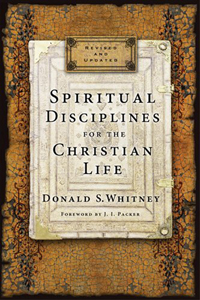
Kevin DeYoung’s new book What The Bible Really Teaches About Homosexuality is a short, yet incredibly helpful, book written for Christians to better understand the Bible’s teaching on homosexuality. In a world opposing, ridiculing, and often attacking the Scripture’s teachings, this book is a much needed resource for the church.

Part One looks at many of the most relevant verses related to homosexuality. He happily begins with Genesis 1-2 which is foundational for the Biblical understanding of homosexuality as it defines how God designed humanity, sexuality, and marriage (chapter 1).

He then goes on to look at Genesis 19 (chapter 2), Leviticus 18 and 20 (chapter 3), Romans 1 (chapter 4), and I Corinthians 6 and I Timothy 4 (chapter 5). Each chapter addresses the basic issues and shows how the text supports the traditional interpretation. I particularly found his connection of the words used in I Corinthians 6 and I Timothy 4 with the words found in Leviticus 18 and 20 to be quite helpful and conclusive.

Certainly more could be said for each passage, but overall DeYoung does an admirable job summarizing the main points in an accessible way for the every-day Christian. The chapters taken together provide a good case for the traditional Biblical understanding.

Part Two addresses common objections to the Biblical understanding of homosexuality. In chapter 6, he shows that the Bible really does take homosexuality, and indeed all sexual sin, very seriously (this is not an irrelevant issue). Chapter 7 points to the widespread homosexual activity in the Greek and Roman world that counters the often heard argument that Paul wasn’t talking about the same homosexual behavior we see today. In reading this chapter and the earlier one on Romans 1, I was reminded that we are quickly returning to the religious climate of the early church, and that we shouldn’t be surprised by the rise of homosexuality as our nation veers further and further from God.

Other chapters helpfully address the necessity of repentance for the Christian and the church, and the folly of the “wrong side of history” argument. I thought he drifted a bit in chapter 8 as he dissected the sin of gluttony, and again in chapter 12 as he discussed the church at Thyatira in Revelation 2, but perhaps these have been important points in experiences he has had on this issue.

Meanwhile, chapter 11 was spot on as it addressed the objection that the Bible’s position on homosexuality just isn’t fair. He treats the struggle of having homosexual desires, the necessity of celibacy in connection to those desires, and the misery many feel because of the struggle. Here DeYoung moves from scholar to pastor, and addresses these real feelings with both grace and truth. This chapter alone is worth the price of the book for any Christian with friends or family members who identify themselves as homosexual.

All in all, the book makes an excellent resource for any Christian who wants to better understand the Bible’s teaching on this important issue. As a pastor I can see myself recommending it to people in my church and using it as a resource in my own teaching.

Disclaimer: I received a complimentary copy of this book in exchange for my honest review.

Sermon Songs: Isaiah 53:10-12

MusicNotes

Jesus came to do God’s will
Ancient prophecies fulfill
There upon Golgotha’s hill
Hallelujah what a Savior

Our iniquities bearing
For our guilt an offering
That we might be his offspring
Hallelujah what a Savior

Jesus rose in victory
Conquered sin and death for me
This my song eternally
Hallelujah what a Savior

– From a sermon on Isaiah 53:10-12
(To the tune of the “Hallelujah What A Savior”)

Consider His Victory

Yet it was the will of the LORD to crush him;
he has put him to grief;
when his soul makes an offering for guilt,
he shall see his offspring; he shall prolong his days;
the will of the LORD shall prosper in his hand.
Out of the anguish of his soul he shall see and be satisfied;
by his knowledge shall the righteous one, my servant,
make many to be accounted righteous,
and he shall bear their iniquities.
Therefore I will divide him a portion with the many,
and he shall divide the spoil with the strong,
because he poured out his soul to death
and was numbered with the transgressors;
yet he bore the sin of many,
and makes intercession for the transgressors.
– Isaiah 53:10-12

Consider Jesus Our Savior. Consider his victory. Jesus rose victoriously. It is not stated in so many words in these verses, but is everywhere implied. After he has made an offering for guilt (by dying), he yet will see his offspring, his days will be prolonged, and the will of God will prosper in his hands (v10). Again, he will see and be satisfied (v11). And then he will receive the victor’s prize in v12. All of these things require his resurrection in order to happen in any realistic meaningful way.

And yet his victory is not simply found in his resurrection, but in what he accomplished through his death and resurrection:

  • By making an offering for guilt, he brings about an offspring (v10), a people for God who have had their sins paid for so that they might have a relationship with God.
  • By his perfectly righteous life, death, and resurrection, he makes God’s people to be accounted righteous (v11), so that there is now no condemnation for those who are in Christ Jesus.
  • He intercedes on our behalf (v12), through his payment of sin on the cross, and now in heaven, so that no accusation of the devil against us can stand.
  • Finally, he conquered death and lives forevermore (v10), that in Christ we too might have the sure hope of our own resurrection someday through him.

Consider Jesus our Savior. Consider his victory in his resurrection and for our salvation.

Father, thank you for the good news of the resurrection of Jesus.
May we live in gratitude and hope as we ponder the many saving benefits
of your salvation purchased for us.

Consider His Sacrifice

But he was pierced for our transgressions;
he was crushed for our iniquities;
upon him was the chastisement that brought us peace,
and with his wounds we are healed.
All we like sheep have gone astray;
we have turned—every one—to his own way;
and the LORD has laid on him the iniquity of us all.
– Isaiah 53:5-6

Consider Jesus our Savior. Consider his sacrifice.

Like sheep, we had all wandered away from the Shepherd to do our own thing. We chose the path of selfishness instead of loving God and people. We rebelled against our Creator and King. We chose what was evil and wicked. And all of our sins were laid on Jesus.

Jesus took our sins upon himself there on the cross. He paid the price for our sins. And consider the price for our sins. He was wounded. He was crushed. He bore our punishment, and the stripes we deserved. For us. In our place.

He bore the chastisement that we deserved to bring us peace – peace with God. In Jesus, we are reconciled to God. In Jesus, we can have a relationship with our Creator. We can draw near and commune with him as his children. We can know his daily presence in our lives, and the joy he alone can give.

And by his stripes we are healed, healed from the infection of sin and all its dire consequences. We are healed from the guilt of sin which was paid on the cross. We are healed from the power of sin, so we can live a new life with Jesus. And we will one day be healed from the presence of sin and all of its results. When Jesus returns, there will be no more sin, no more sorrow, no more sickness, no more suffering, no more pain, no more death.

Consider Jesus our Savior. Consider his sacrifice to pay for our sins to bring us peace with God and healing from sin.

Father, thank you for Jesus who paid the price for my sins.
Help me to live in the peace and healing that was purchased for me,
even as I look toward the day of final healing when Jesus returns.

Sermon Songs: Isaiah 53:4-9

MusicNotes

All like sheep we’ve gone astray
Each one turned to his own way
For each sin Jesus did pay
Hallelujah what a Savior

Bore our sins upon the tree
Fully paid the penalty
Crushed and wounded all for me
Hallelujah what a Savior

My salvation He did win
Freely I may enter in
Full redemption from my sin
Hallelujah what a Savior

Fully innocent was He
Perfect Lamb of God to be
Stricken and oppressed for me
Hallelujah what a Savior

With the wicked made His grave
Buried in a rich man’s cave
All of this for me to save
Hallelujah what a Savior

– From a sermon on Isaiah 53:4-9
(To the tune of the “Hallelujah What A Savior”)

Consider His Suffering Again

As many were astonished at you—
his appearance was so marred, beyond human semblance,
and his form beyond that of the children of mankind—
so shall he sprinkle many nations;
kings shall shut their mouths because of him…
– Isaiah 52:14-15a

Consider Jesus our Savior. Consider his suffering. He was beaten. A crown of thorns was pressed onto his head. He was scourged with a whip that ripped open his flesh forty times. He was hung on a cross with nails in his hands and feet. The extent of his suffering was so great that our passage tells us he didn’t even look like a man. He didn’t even look human, but rather a bloody mass of flesh hanging there on the cross. Consider his suffering.

And in his suffering, he sprinkles the nations. The high priest would sacrifice an animal and sprinkle the blood to cleanse, to purify, to make clean. And in the suffering of our Savior, his blood was spilt to be sprinkled on the nations, to cleanse us from our sins, to make us pure and clean. Consider his suffering that cleanses us from our sins.

And in his suffering, he shocks the nations. As people looked upon this suffering servant, they were astonished. They shut their mouths in shock and dismay at this spectacle of suffering. And yet the shock goes beyond the suffering to the salvation that flows from it – that we would be saved by his shed blood. How strange is this salvation!

And we ought to wonder. The cross can become so familiar to us. But stop and wonder at his sufferings on your behalf. Wonder at his incredible love that endured such suffering. Wonder at this great salvation that flows from his suffering. Stop and wonder.

Father, thank you for the suffering of Jesus that cleanses us from our sins.
May we wonder anew at his suffering and the shocking salvation
that flows from his blood.