The theme this week is…well…ten:
Ten Things Church Members Desire in a Pastor – Thom Rainer
10 Reasons Why We Must Love the Unlovable – Chuck Lawless (Christian Post)
10 Tips for Your Next Hospital Visit – Eric McKiddie (Pastoralized)

The theme this week is…well…ten:
Ten Things Church Members Desire in a Pastor – Thom Rainer
10 Reasons Why We Must Love the Unlovable – Chuck Lawless (Christian Post)
10 Tips for Your Next Hospital Visit – Eric McKiddie (Pastoralized)
Here is a great song celebrating our great Redeemer!
Here are some good posts for your weekend reading:
The Answer to Every Christian’s Identity Struggle – Paul Tautges
Good Works and Sanctification – Jason Helopoulos
How Many Motivations Are There for Godliness – Kevin DeYoung
9 Ways to Pray for Churches and Pastors – 9Marks (via Justin Taylor)
Hope you have a great Lord’s Day!
Flee religion that is empty
Stop doing wrong, learn to do right
Worship the Lord with purity
Repent, believe, be clean – snow white
– From a sermon on Isaiah 1:10-20
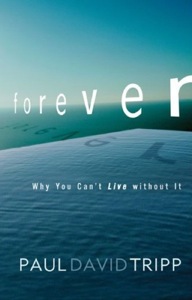 Separated from God, who was to be the source of their hope, Adam and Eve and the generations they birthed began to search for hope horizontally. So we look for hope in the temporary situations, locations, relationships, and possessions of the broken world. We hook ourselves to things that give temporary hope, or no hope at all, going back again and again until we become enslaved and addicted. In searching for hope horizontally, we are shopping for God replacements. But just like wooden idols that cannot see, hear, or speak, these God replacements have no capacity whatsoever to deliver. They quickly leave us empty, always craving for more….
How different would your life and mine be if we remembered that everything that exists in the created world is meant to be a finger pointing us to the only place where hope can be found?
– Paul David Tripp in Forever
Come know the Lord, the Almighty
Come now and flee from temptation
Come see that sin is great folly
Come look to him for salvation
– From a sermon on Isaiah 1:1-9
Just wanted to pass on a great deal. Christian Audio is offering the ESV Audio Bible for download absolutely free the rest of this month. You can get it here.
A great song that goes right along with the theme of this blog.
Here are some good posts for your weekend reading:
Your Most Courageous Resolution for 2014 – Jon Bloom (Desiring God)
Let this be the year that we pursue love. Let this be the year that we stop talking about love, that we do less regretful moaning about how little we love and how much we need to grow in love and actually be determined to love more the way Jesus loved…
True Freedom is Freedom to Be My True Self – John Stott (via Trevin Wax)
True freedom is freedom to be my true self, as God made me and meant me to be. And God made me for loving. But loving is giving, self-giving. Therefore, in order to be myself, I have to deny myself and give myself….
Why Real Christians Are So Odd – A. W. Tozer (via Justin Taylor)
A real Christian is an odd number, anyway.
He feels supreme love for One whom he has never seen;
talks familiarly everyday to someone he cannot see;
expects to go to heaven on the virtue of another….
The Centerpiece of Sunday Worship – Marshall Segal (Desiring God)
Even in corporate worship, with sermons every week, we can too easily wander from our wonder at all that we have in Scripture. What if we came to church hungry, even starving, for the word of God (Matthew 4:4)? What if we expected God to inspire, change, and commission us in the sacred moments we spend together over these pages? What if we thought we’d become more like him — undeserving sinners wading into the divine nature — when his words wash over us as the Bible is read and explained (2 Peter 1:3–4)?
Hope you have a great Lord’s Day being incredibly odd as you love your brothers and sisters in Christ and hungrily dig into His Word!
It has been a busy couple of weeks, but hopefully I’ll be posting at least a couple of time each week again. Thanks to all who read and show an interest in this blog. Here are some good posts for your weekend reading:
Six ways to look godly while not growing your faith in 2014 – Carl Laferton (thegoodbook)
So here, for 2014, are six more ways to look great while doing little…
5 Ways to Pray for Your Pastor in 2014 – Nicholas Batzig (Ligonier)
The shepherd needs the prayers of the sheep as much as they need his prayers. He also is one of Christ’s sheep, and is susceptible to the same weaknesses. While there are many things one could pray for pastors, here are five straightforward Scriptural categories….
8 Characteristics of Sanctification – Dustin Crowe (Gospel Centered Discipleship)
Gospel-centered sanctification tethers becoming (growing) to being (identity) by making Christ’s accomplishments and provision for us the catalyst of our lives. Here are eight characteristics of gospel-centered sanctification that frame our theology of the doctrine while also steering our practice….
A Theological Toolbox – Tim Challies
There are two grids I’ve found especially helpful, and ones I return to again and again, not only in my own life, but also as I interact with others….
Hope you have a great Lord’s Day worshiping the One who is enthroned in the heavens!

