Top Books From 2010

I am a reader.  I recognize not everyone is, but I am.  And I find that reading good Christian books is a great help to me as I seek to grow in my walk with Christ.  There are other ways to grow, but reading certainly can be a powerful method.  Each year I try to read some books that will challenge me and spur me on.  So here are five books I read in 2010 that challenged me, and that I would recommend for your consideration as you seek to grow in the Lord.


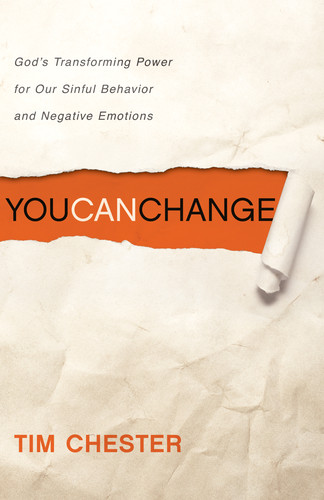
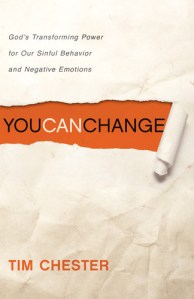
You Can Change
– Tim Chester. 
Chester gives a great overview of the Biblical principles related to growing in holiness, and then suggests practical ways to apply the principles to help you turn away from sin and toward the Lord. 


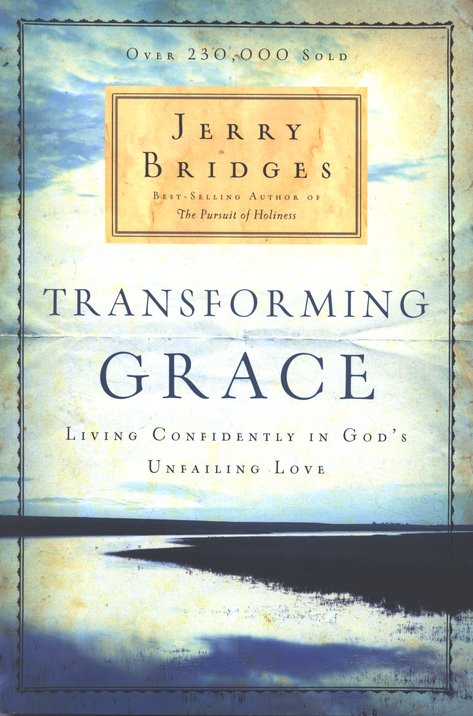
Transforming Grace– Jerry Bridges
Bridges takes you on a Biblical tour of God’s amazing grace that touches every part of our lives.  This was my third time through it – well worth it!


The Praying Life– Paul Miller
Miller shares not only Biblical principles but his personal struggles and growth with prayer.  It will challenge you to approach prayer in a whole new way.


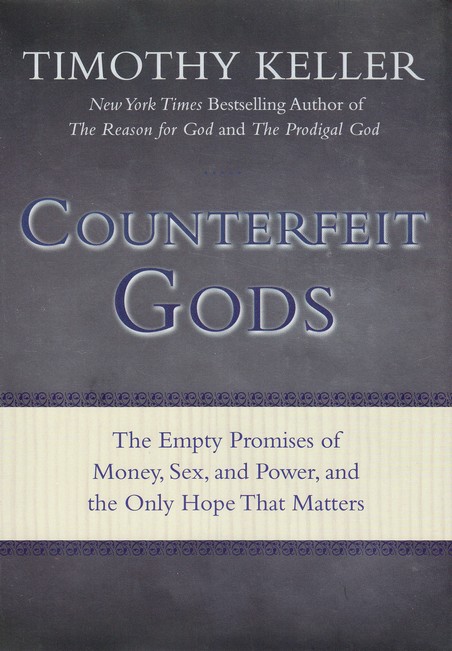
Counterfeit Gods– Timothy Keller
Idolatry wasn’t just something from long ago – it is alive and well today.  Keller helpfully explores the gods of love, money, success, and power, as well as helps us identify our own hidden gods.


This Momentary Marriage– John Piper
Piper helps us think Biblically about marriage, and how that should affect our own marriages.  Also includes chapters on singleness and parenting.

Resolution Principles

After evaluating the past year and considering how you would like to grow in the new year, it is time to write down your resolutions for the coming year.  The biggest problem with new years resolutions is that they often are never accomplished.  While I do this every year, my record is rather spotty on follow-through.  So let me share ten principles I am learning along the way when it comes to new years resolutions:

  1. Be specific.  “Growing in your walk with God” is a great desire, but how will you do it?  You need to write out exactly how you want to grow in the coming year.
  2. Be realistic.  If you have never had a quiet time with God, resolving to start spending two hours each day is probably not realistic.  Take small steps.
  3. Keep it short.  The longer your list, the harder it will be to carry through.  The shorter your list, the more you can focus on making each one happen.
  4. Be Biblical.  Make sure your requests agree with the Scriptures.  How has he challenged you to grow recently as you have been in his Word?
  5. Be prayerful.  Ask God how he wants you to grow.  Ask him to guide you as you evaluate and ponder.
  6. Be committed.  I just read in I Timothy 4 that we should train ourselves for godliness.  We make resolutions to guide this training.  But we must commit to carry through.  Training will require some real effort on our part.  Commit to work hard to do what you resolve to do.
  7. Be grace-dependent and grace-empowered.  While we must train ourselves, God is the one who changes people.  You need his help.  Seek his help regularly in prayer.  At the same time recognize that he will help you.  His grace will empower you.  We need not walk defeated.
  8. Be grace-filled.  Change is a struggle.  You will fail.  Remember the cross covers all your sins.
  9. Review regularly.  If you write your resolutions down and never come back to them, you have wasted your time.  You must regularly review them and recommit to fulfill them.
  10. Be flexible.  As you review your resolutions, be flexible enough to change strategies along the way that aren’t working.  If your life situation changes during the year, be ready to adjust your resolutions.  Perhaps God challenges you to add one or postpone one during the year.  Life changes – be ready to make changes to your resolutions as you go.

May God help us to grow and change for his glory this year!

Jonathan Edwards’ Resolutions

In the last two posts I have given some suggestions of questions to ask to evaluate our lives and ponder changes we might want to pursue for the coming year.  Another way to profitably evaluate ourselves and consider the coming year is to look at other people’s resolutions.  Perhaps some of their resolutions might suggest ways we want to live in the coming year.

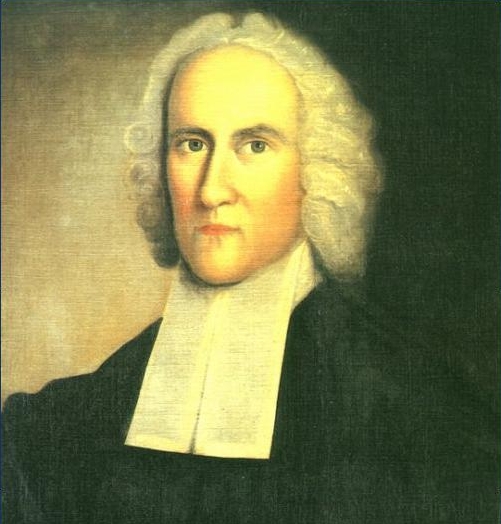
Jonathan Edwards recorded 70 resolutions not simply to guide one year but to guide his life.  Below are a sampling.  All 70 can be found here.

1. Resolved, that I will do whatsoever I think to be most to God’s glory, and my own good, profit and pleasure, in the whole of my duration, without any consideration of the time, whether now, or never so many myriads of ages hence. Resolved to do whatever I think to be my duty, and most for the good and advantage of mankind in general. Resolved to do this, whatever difficulties I meet with, how many and how great soever.

2. Resolved, to be continually endeavoring to find out some new invention and contrivance to promote the forementioned things.

3. Resolved, if ever I shall fall and grow dull, so as to neglect to keep any part of these Resolutions, to repent of all I can remember, when I come to myself again.

4. Resolved, never to do any manner of thing, whether in soul or body, less or more, but what tends to the glory of God; nor be, nor suffer it, if I can avoid it.

5. Resolved, never to lose one moment of time; but improve it the most profitable way I possibly can.

6. Resolved, to live with all my might, while I do live.

7. Resolved, never to do anything, which I should be afraid to do, if it were the last hour of my life.

8. Resolved, to act, in all respects, both speaking and doing, as if nobody had been so vile as I, and as if I had committed the same sins, or had the same infirmities or failings as others; and that I will let the knowledge of their failings promote nothing but shame in myself, and prove only an occasion of my confessing my own sins and misery to God.

9. Resolved, to think much on all occasions of my own dying, and of the common circumstances which attend death….

24. Resolved, whenever I do any conspicuously evil action, to trace it back, till I come to the original cause; and then both carefully endeavor to do so no more, and to fight and pray with all my might against the original of it.

25. Resolved, to examine carefully, and constantly, what that one thing in me is, which causes me in the least to doubt of the love of God; and to direct all my forces against it….

28. Resolved, to study the Scriptures so steadily, constantly and frequently, as that I may find, and plainly perceive myself to grow in the knowledge of the same….

More Questions For The New Year

In addition to the ten questions I suggested in my last post, I would encourage you to check out Donald Whitney’s questions to ask for the New Year.  Whitney asks some great questions to help you evaluate your life and ponder the coming year.  The first ten in particular are really helpful.  I have used these questions for the last few years, and also print them out as a bulletin insert for our church each year.

Questions For the New Year

Each year, I take this time to evaluate my life and consider changes/growth I would like to see.  Here are 10 questions related to the Three Passions idea that I am asking that you might find useful as well:

  1. How can I grow in my awareness and understanding of God’s love, mercy, and grace this year?
  2. How can I grow in my relationship with God this year?
  3. How can I grow in my relationship with my family this year?
  4. How can I grow in my relationship with my church family this year?
  5. How can I grow in my relationship with ___________ this year?
  6. In what ways do I need to treat God better this year?
  7. In what ways do I need to treat my spouse better this year?  My parents?  My children?  My siblings?
  8. In what ways do I need to treat my church family better this year?  My pastor?
  9. In what ways do I need to treat my neighbors better this year?  Friends?  Co-workers?  Classmates?
  10. In what ways do I need to treat _____________ better this year?

Book Look: You Can Change

You Can Change – Tim Chester

This was one of the best books I have read this year.  It gives a great overview of the Biblical principles of sanctification, and then helps the reader apply those principles in very practical ways.  It begins by reminding us of the goal of change – to be conformed into the image of Christ.  From there it looks at right motives and method.  The center of the book tackles the issue of idolatry – central to any change we will make.  It concludes with roadblocks that keep us from change, disciplines (including community) to help us change, and a final challenge to press on.  Each chapter ends with reflections, and a section designed to help the reader change in one area chosen by the reader.  So how do you want to change in the coming year?  This book would be a great resource to help and encourage you in the process.

Web Weekly – Christmas Edition

Here are some interesting posts as we think about Christmas:

Gospel – Matt B. Redmond reminds us that Christmas is for those who hate it.  Stephen Altrogge reminds us of how the gospel should change our Christmas expectations.  Tullian Tchividjian points out that Christmas is the beginning of our great hope.  Kevin DeYoung shows us why Jesus came.  Chris Brauns points out the problems with the Grinch.

Family – Chris Castaldo gives four practical suggestions for discussing the gospel at family get-togethers.

Carols – I’m not the only one sharing the history and lyrics of old Christmas carols.  Kevin DeYoung looks at Of the Father’s Love Begotten.

History – Kevin DeYoung tells us about the origins of Santa Claus in two parts – Part One and Part Two.

Xmas – R.C. Sproul shows why the X doesn’t take Christ out of Christmas.

Culture – Ross Douthat considers our celebration of Christmas in the context of how we as Christians should interact with our culture.

Humor – A great picture.  The Drummer Boy.  Some must have lawn ornaments.

Hope you all have a merry Christmas celebrating the birth of our Savior!  Next week – posts to help us evaluate our lives as a new year begins.

Hark the Herald Angels Sing

Charles Wesley wrote this hymn soon after he was saved in 1738, publishing it for the first time in 1739.  Interestingly it has gone through some adaptations to come to its present form today.  For instance, it was originally published as ten four-line stanzas instead of five eight line stanzas.  In 1753, George Whitefield, a contemporary and friend, changed the last line of the refrain from “Glory to the King of kings” to “Glory to the newborn king.”  For a full history see this article from Christianity Today.  Like most of Wesley’s hymns, there are more verses than we usually sing – note the final two verses below.  This hymn is quickly becoming a favorite of mine due to its rich theology.  It gives us a wonderful crash course on the incarnation and numerous aspects of our salvation.  To hear the music, see the music video which I stumbled across from my alma mater at the start of this blog. 

Hark! The herald angels sing,
“Glory to the newborn King;
Peace on earth, and mercy mild,
God and sinners reconciled!”
Joyful, all ye nations rise,
Join the triumph of the skies;
With th’angelic host proclaim,
“Christ is born in Bethlehem!”
Hark! the herald angels sing,
“Glory to the newborn King!”

Christ, by highest Heav’n adored;
Christ the everlasting Lord;
Late in time, behold Him come,
Offspring of a virgin’s womb.
Veiled in flesh the Godhead see;
Hail th’incarnate Deity,
Pleased with us in flesh to dwell,
Jesus our Emmanuel.
Hark! the herald angels sing,
“Glory to the newborn King!”

Hail the heav’nly Prince of Peace!
Hail the Sun of Righteousness!
Light and life to all He brings,
Ris’n with healing in His wings.
Mild He lays His glory by,
Born that man no more may die.
Born to raise the sons of earth,
Born to give them second birth.
Hark! the herald angels sing,
“Glory to the newborn King!”

Come, Desire of nations, come,
Fix in us Thy humble home;
Rise, the woman’s conqu’ring Seed,
Bruise in us the serpent’s head.
Now display Thy saving power,
Ruined nature now restore;
Now in mystic union join
Thine to ours, and ours to Thine.
Hark! the herald angels sing,
“Glory to the newborn King!”

Adam’s likeness, Lord, efface,
Stamp Thine image in its place:
Second Adam from above,
Reinstate us in Thy love.
Let us Thee, though lost, regain,
Thee, the Life, the inner man:
O, to all Thyself impart,
Formed in each believing heart.
Hark! the herald angels sing,
“Glory to the newborn King!”

The Lord Our Righteousness

Jeremiah 23:6, “The Lord our Righteousness”

Whoever is acquainted with the nature of mankind in general, or the propensity of his own heart in particular, must acknowledge, that self-righteousness is the last idol that is rooted out of the heart: being once born under a covenant of works, it is natural for us all to have recourse to a covenant of works, for our everlasting salvation. And we have contracted such devilish pride, by our fall from God, that we would, if not wholly, yet in part at least, glory in being the cause of our own salvation….

This is the sorest, though, alas! the most common evil that was ever yet seen under the sun. An evil, that in any age, especially in these dregs of time wherein we live, cannot sufficiently be inveighed against. For as it is with the people, so it is with the priests; and it is to be feared, even in those places, where once the truth as it is in Jesus was eminently preached, many ministers are so sadly degenerated from their pious ancestors, that the doctrines of grace, especially the personal, ALL-SUFFICIENT RIGHTEOUSNESS of Jesus, is but too seldom, too slightly mentioned. Hence the love of many waxeth cold; and I have often thought, was it possible, that this single consideration would be sufficient to raise our venerable forefathers again from their graves; who would thunder in their ears their fatal error….

Can you say, the Lord our righteousness? I say, the Lord OUR righteousness. For entertaining this doctrine in your heads, without receiving the Lord Jesus Christ savingly by a lively faith into your hearts, will but increase your damnation. As I have often told you, so I tell you again, an unapplied Christ is no Christ at all. Can you then, with believing Thomas, cry out, “My Lord and my God?” Is Christ your sanctification, as well as your outward righteousness? For the word righteousness, in the text, not only implies Christ’s personal righteousness imputed to us, but also holiness wrought in us. These two, God has joined together. He never did, he never does, he never will put them asunder. If you are justified by the blood, you are also sanctified by the Spirit of our Lord. Can you then in this sense say, The Lord our righteousness? Were you ever made to abhor yourselves for your actual and original sins, and to loathe your own righteousness; for, as the prophet beautifully expresses it, “your righteousness is as filthy rags? Were you ever made to see and admire the all-sufficiency of Christ’s righteousness, and excited by the Spirit of God to hunger and thirst after it? Could you ever say, my soul is athirst for Christ, yea, even for the righteousness of Christ? O when shall I come to appear before the presence of my God in the righteousness of Christ! Nothing but Christ! Nothing but Christ! Give me Christ, O God, and I am satisfied! My soul shall praise thee for ever.

Was this ever the language of your hearts? And, after these inward conflicts, were you ever enabled to reach out the arm of faith, and embrace the blessed Jesus in your souls, so that you could say, “my beloved is mine, and I am his?” If so, fear not, whoever you are. Hail, all hail, you happy souls! The Lord, the Lord Christ, the everlasting God, is your righteousness. Christ has justified you, who is he that condemneth you? Christ has died for you, nay rather is risen again, and ever liveth to make intercession for you. Being now justified by his grace, you have peace with God, and shall, ere long, be with Jesus in glory, reaping everlasting and unspeakable fruits both in body and soul. For there is no condemnation to those that are really in Christ Jesus.

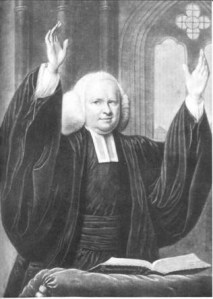
– George Whitefield, excerpts from his sermon:  The Lord Our Righteousness

Come Thou Long Expected Jesus

Charles Wesley was saved in 1738 and wrote his first hymn that very day.  In the seven years that followed, he wrote 18 Christmas hymns which were published in 1745 as Hymns for the Nativity of our Lord.  You can find the lyrics to these hymns here.  The most familiar of them is Come Thou Long Expected Jesus.   Unlike many of Charles Wesley’s long hymns, this one is only two stanzas.  Interestingly though, the hymn that follows in this collection has the same metre, and I have to wonder if there is some relation.  Speculation aside, Come Thou Long Expected Jesus is a hymn expressing Israel’s hope of the coming Messiah, and our hope in his return.  Christ is further proclaimed as our King who should rule our hearts, and our Savior in whose merit we find salvation.  For further thoughts on the theology of this hymn, see an article by Probe Ministries here.  For the music, listen to the music video at the beginning of this post. 

Come, thou long-expected Jesus,
Born to set thy people free,
From our fears and sins relieve us,
Let us find our rest in thee:
Israel’s strength and consolation,
Hope of all the earth thou art,
Dear desire of every nation,
Joy of every longing heart.

Born thy people to deliver,
Born a child and yet a King,
Born to reign in us for ever,
Now thy gracious kingdom bring;
By thine own eternal Spirit,
Rule in all our hearts alone,
By thine all-sufficient merit
Raise us to thy glorious throne.