
Don’t Just Give Thanks

It is Thanksgiving in a few days – that time of year when we think about all our blessings, and presumably give thanks to God.  Of course giving thanks to the Lord should be a daily habit, but that isn’t the point of this post.  What I want to suggest here is that true gratitude goes further than simply giving thanks.  Gratitude leads us to give our lives.

For eleven chapters, Paul shares with the Romans the greatest blessing God has ever given.  He explores the ins and outs of our great salvation that Christ purchased for us through the cross and enpty tomb.  Then he begins chapter 12: “I appeal to you therefore, brothers, by the mercies of God….”  In other words, in light of God’s great mercy found in this great salvation, you should….  You should what?  Give thanks?  No, much more – “present your bodies as a living sacrifice….”  In response to the greatest blessing of all, Paul tells us to give our lives.  Sacrifice ourselves for God. 

How do we sacrifice ourselves for God?  By sacrificially giving of ourselves for his kingdom.  By sacrificially giving of ourselves for others made in God’s image.  We sacrifice our time to share the gospel, listen, encourage, help, serve.  We sacrifice our reputation by helping someone undesirable in the world’s eyes or telling others about Christ even if we are labeled as religious nuts.  We sacrifice our finances as we give to someone with a need, give to our local church to advance its ministry for Christ, give to missionaries seeking to take the gospel around the world.

Or in Jesus’ words – we deny ourselves, take up our cross, and follow him.  We stop living for ourselves.  We are willing to suffer for his sake.  We are willing to follow him wherever he leads to do whatever he calls us to do.

All of this, not to try to pay God back for his blessings.  Not to try to earn his favor.  But simply because we are blown away by his incredible blessings, and so out of gratitude and love we give of ourselves. 

This Thanksgiving as we reflect on God’s blessings, let us by all means give thanks to God, but let us also give our lives to the one who has blessed us so richly.
Walking All Over Your Idols

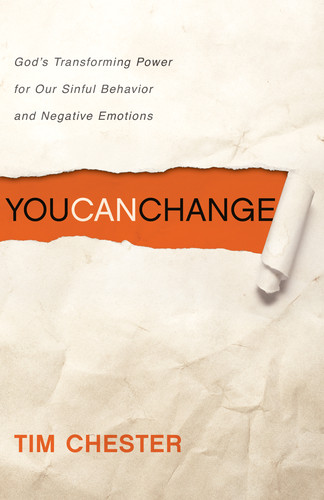
In Ephesians 4:31, Paul tells us:  “Let all bitterness and wrath and anger and clamor and slander be put away from you, along with all malice.”  Tim Chester in his book, You Can Change, makes these illuminating comments on this verse:

These behaviors all have two things in common.  First, they all involve other people.  Second, they’re all symptoms of thwarted and threatened sinful desires.  Often we can’t spot sinful desires.  But when they’re threatened or thwarted by other people, we respond with bitterness, rage, anger, brawling, slander, and malice.  One of the great things about living as part of a community is that in community people walk all over your idols.  People press your buttons.  That’s when we respond with bitterness, rage, and so on.  And that gives us opportunities to spot our idolatrous desires.  God is using the different people, the contrasting personalities, in your church to change your heart. 

These are important words for the church today where many Christians whose idols are walked over simply find another church or leave church altogether.  But God placed us in the church to help reveal our idols, to change us, to draw us nearer to him.  So next time someone irritates you, consider why.  What idol are they walking all over?  What sinful desire in your heart is your response to their actions revealing?  That other person isn’t the problem.  The idols in our hearts are the problem.  Together we can identify our idols, and with God’s help turn away from our idols to serve more and more the one true God.

The Giver and the Gifts

I have been reading You Can Change by Tim Chester.  It is a very helpful and practical book on Christian growth, which I highly recommend.  I am even planning to use it in a Sunday School class this winter in our church.  In the book, one of the issues he addreses is idolatry.  I want to share over the next few days a few quotes to ponder.  The first goes right along with Thanksgiving:

The world is full of good things given by God.  We can, and indeed should, enjoy them.  But they’re meant as bridges to joy in God.  We delight in the gift and the Giver.  We do this by receiving them with thanksgiving.  “For everything created by God is good, and nothing is to be rejected if it is received with thanksgiving, for it is made holy by the Word of God and prayer” (I Timothy 4:4-5).  But a good thing can become a “god-thing” if it eclipses God, if the gift matters more to us than the Giver….  God isn’t the key to the good life (however I choose to define it).  He defines the good life.  He is the good life.  God must be desired for his own sake, not as the purveyor of worldly success.

Where Shall My Wondering Soul Begin?

Today, we begin my plan (which I mentioned a few posts ago) to regularly feature a great hymn of the faith.  We begin with what was probably Charles Wesley’s first hymn.  It was written on the same day of his conversion – May 21, 1738.  I personally don’t remember ever singing it, but as we are going to look at several Charles Wesley hymns in the next few weeks, it seems a good place to start.  Wesley’s journal for that day reads:

At nine, I be­gan an hymn up­on my con­ver­sion, but I was per­suad­ed to break off for fear of pride. Mr. Bray, com­ing en­cour­aged me to pro­ceed in spite of Sa­tan. I prayed Christ to stand by me, and fin­ished the hymn. Upon my af­ter­wards show­ing it to Mr. Bray, the de­vil threw in a fiery dart, sug­gest­ing that it was wrong, and I had dis­pleased God. My heart sunk with­in me; when, cast­ing my eye up­on a Pray­er-book, I met with an an­swer for him. “Why boast­est thou thy­self, thou ty­rant, that thou canst do mis­chief?”  Up­on this, I clear­ly dis­cerned it was a de­vice of the en­e­my to keep back glo­ry from God.

As you read the hymn, notice in the third and fourth verses how he seems to wrestle with Satan on whether he should continue with the hymn.  Notice also how he begins with amazement that God should save him, and ends with a plea for sinners of every kind to come and find this great salvation that he has just experienced.  Oh that we too would be amazed at God’s salvation and desire to tell others!  If you want the music, you can link here for an organ version of the first verse.

Where shall my wondering soul begin?
How shall I all to heaven aspire?
A slave redeemed from death and sin,
A brand plucked from eternal fire,
How shall I equal triumphs raise,
Or sing my great Deliverer’s praise?

O how shall I the goodness tell,
Father, which Thou to me hast showed?
That I, a child of wrath and hell,
I should be called a child of God,
Should know, should feel my sins forgiven,
Blessed with this antepast of Heaven!

And shall I slight my Father’s love?
Or basely fear His gifts to own?
Unmindful of His favors prove?
Shall I, the hallowed cross to shun,
Refuse His righteousness to impart,
By hiding it within my heart?

No! though the ancient dragon rage,
And call forth all his host to war,
Though earth’s self-righteous sons engage
Them and their god alike I dare;
Jesus, the sinner’s friend, proclaim;
Jesus, to sinners still the same.

Outcasts of men, to you I call,
Harlots, and publicans, and thieves!
He spreads His arms to embrace you all;
Sinners alone His grace receives;
No need of Him the righteous have;
He came the lost to seek and save.

Come, O my guilty brethren, come,
Groaning beneath your load of sin,
His bleeding heart shall make you room,
His open side shall take you in;
He calls you now, invites you home;
Come, O my guilty brethren, come!

For you the purple current flowed
In pardons from His wounded side,
Languished for you the eternal God,
For you the Prince of glory died:
Believe, and all your sin’s forgiven;
Only believe, and yours is Heaven!

A Passion for Missions

We had four people from Partners in Evangelism International at our church yesterday.  Two serve the mission here in America and two are pastors in the Ukraine.  It was a great day.  As we listened to the Ukrainian pastors through an interpreter, I was struck with their passion for missions.  Their great desire was to reach the people in their country who had no gospel witness.  There was an intensity expressed that I have not seen in awhile.  And the challenge for me was clear:  Do I have a passion for missions?

A passion for missions goes right along with the theme of this blog.  Jesus had a passion to reach us, and came to die for us that we might be reconciled to God.  If I have a passion for God, I will want to share the good news so more people will know and honor God, so God will be glorified by more and more people.  If I have compassion for people, I will want to share with them how they can be forgiven of their sins, have a new life with God, and the hope of the resurrection.

To live by the three passions, I must have a passion for missions.  So do I have a passion for missions?  I confess my passion had waned, but yesterday’s challenge awakened it.  By God’s grace it will continue and grow.  But how to live out this passion?  Three ideas:

Give: My wife on our way home last night was asking what we might cut out so that we might be able to give more to missions.  We have so much compared to much of the world.  We need to re-evaluate our priorities.  How might we sacrifice for the sake of the gospel? 

Go: What might we do to share the gospel in our own neighborhood, in our own community?  And might God send us on a short term trip sometime?

Pray: Those who go out need our prayers.  We need to get more serious about praying regularly for missionaries our church supports and other missionaries we know, as well as praying for the outreach of our own church and sister churches.

Father, grant us a greater passion for missions that plays out in our daily lives.

What Ever Happened To The Hymns?

I have been teaching a class on the Great Awakening for some teens from Christian families in our area.  This last week, we looked at Charles Wesley.  I gave them a list of some of his hymns and asked how many they were familiar with.  Even after exploring some of the titles, the most any of them recognized was four.  Four!  Here are some of the titles from the list:

A Charge to Keep I Have
And Can It Be that I Should Gain
Christ the Lord Is Risen Today
Come, Holy Ghost, Our Hearts Inspire
Come, Thou Long-Expected Jesus
Depth of Mercy
Hail The Day That Sees Him Rise
Hark! the Herald Angels Sing
Jesus, Lover of My Soul
Lo, He Comes with Clouds Descending
Love Divine, All Loves Excelling
O For a Heart to Praise My God
O For a Thousand Tongues to Sing
Rejoice, the Lord Is King

Most were not familiar with And Can It Be or For A Thousand Tongues To Sing.  I suppose I shouldn’t be surprised.  I know many churches no longer sing hymns.  And yet, I found their ignorance of even the most well-known hymns incredibly depressing.  We are losing our Christian heritage.  The church I grew up in really never taught about the history of the church, but at least I had the great hymns.  Many of the next generation don’t even have that anymore.

I’m not here to knock new choruses and hymns.  There are some great new songs worth learning and singing for the rest of our lives. But there is a place for the old hymns too, for at least the following reasons:

1. The hymns connect us to our heritage, reminding us that we are part of something bigger than just today.  The church didn’t start in my generation; it has been here for 2000 years, and the hymns help us connect with the wisdom of those who have gone before us.

2. Many hymns have incredible theological depth.  In an age of theological shallowness and downright ignorance in the church, we  need all the help we can get to teach the doctrines of the faith.

3. Many of the hymns have incredible experiental depth.  They are not passionless theological treatises, but passionate responses to who God is, what he has done, and what he has yet to do.  Many of the hymn writers had an experiential walk with God that puts ours to shame.  We need to be reminded that our lukewarm state is not normal.

4. Over time, the best hymns have been passed on, while most of the chaff has fallen away.  Wesley wrote 9000 hymns, yet we only sing a fraction of what he wrote. (I’ve read some of the hymns that rightly didn’t make the cut!)  Perhaps there are some jems that over time were overlooked and lost.  Undoubtedly there are some inferior songs that have somehow been passed on.  But overall the old hymns in our hymnals today are the best of the best.  Undoubtedly there are some new songs that will likewise stand the test of time and be sung down through the ages, but many will fall away like chaff.

5. We need to sing the same songs year after year so that we might memorize them.  As we learn them, they can over time form us.  Even more they can encourage us in times of trouble.  And should our memories start to go in old age, those hymns we learned as children and sang all of our lives have incredible staying power.  I distinctly remember my grandpa advanced with Alzheimer’s disease unable to remember much of anything but yet able to sing many of the old hymns from memory.  And many have told me of similar experiences in older folks that they have known.  What about the next generation that never sang a song more than two months before the moving on to the next great hit?

With all of the above in mind, I want to do my part to encourage the continued use of the old hymns.  That means, among other things, that I am starting a new feature on this blog.  I want to regularly feature a great hymn of the faith.  Each feature will include the words, a link to the music, some commentary, and when possible some history behind the hymn.  Stay tuned!

Blind Blind Blind

In Charles Dicken’s David Copperfield, David becomes friends with Agnes.  David sees their friendship as a brother and sister type relationship.  Agnes has other thoughts, but keeps quiet.  Meanwhile, David’s aunt sees Agnes as a perfect match for David even while he pursues and eventually marries another girl.  From time to time, his aunt watching her nephew is prone to say: “Blind, blind, blind.”

Blind, blind, blind.  We are all more blind than we like to think – especially as it relates to our sin.  Like David’s aunt, others may see what is incredibly clear to everyone but us.  That is one reason we need the church.  We need others to help us see our blind spots, to see the sins that we are blind to.  Even as we read the Scriptures, our blindness can keep us from seeing obvious applications to our own lives.  This is another reason we need the church – especially the preaching.  The pastor may bring applications from the Word that we would have never made, even though they may be the applications we most need.  Above all, we need to join the Psalmist in crying out to God – “Search me, O God, and know my heart!  Try me and know my thoughts!  And see if there be any grievous way in me, and lead me in the way everlasting.”  We need to seek God’s help to reveal the sins we are blind to – but again he may do it through the ministry of the church.

John Newton writes in his hymn, Amazing Grace, “I once was blind, but now I see.”  Yes, now we see, but not yet perfectly.  We still need each other and our Lord to help us see the depths of our sin.

Gain and Loss In Prayer

What do I lose when I have a praying life?  Control.  Independence. 
What do I gain?  Friendship with God.  A quiet heart. 
The living work of God in the hearts of those I love. 
The ability to roll back the tide of evil. 
Essentially, I lose my kingdom and get his. 
I move from being an independent player to a dependent lover. 
I move from being an orphan to a child of God.

– Paul Miller in A Praying Life

May You Be Strengthened

May you be strengthened with all power, according to his glorious might, for all endurance and patience with joy, giving thanks to the Father, who has qualified you to share in the inheritance of the saints in light.  – Colossians 1:11-12 (ESV)

I came across these verses about a month ago, and it has become my prayer for many people I know who are facing trials and struggles.  I believe it might be a helpful model for you too in your prayers for the hurting and weary – maybe even yourself.

Strength – Our strength is small.  And so we pray that God would strengthen us with his power and might each day as we walk through our trials. 

Endurance – Sometimes it is easy to give up, to despair.   And so we pray that God would give us strength to endure, to press on, to persevere, to hold onto him.

Patience – Sometimes it is easy to become impatient with trials that continue on and on, with the things that slow us down or hold us back.  It is easy to get frustrated.  Ando so we pray that God would give us strength to be patient in the midst of our trials. 

Joy and thanksgiving – It can be incredibly hard to be joyful and thankful in the midst of trials.  But Paul points us beyond our circumstances to a glorious truth that will never change.  The Father has granted us salvation.  This is reason to rejoice and give thanks.  And so we pray that God would give us strength to remember our great salvation, and find joy and gratitude in it always.

Inheritance – Life can be hard now, but a glorious day is coming when there will be no more trials, no more tears, no more sickness, no more pain.  We will dwell with our Lord forever.  And so we pray that God would give us strength to remember our glorious hope.

Father, there are so many who are hurting and weary, ourselves included.  Strengthen us with your mighty power so that we may endure with patience, joyfully give thanks for your great salvation, and cling to our glorious hope.  Amen.