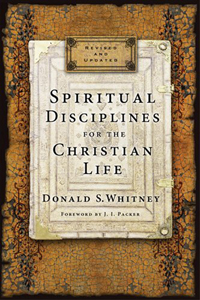
 Some wag remarked that the worst dust storm in history would happen if all church members who were neglecting their Bibles dusted them off simultaneously.
– Donald Whitney
in Spiritual Disciplines for the Christian Life

Some wag remarked that the worst dust storm in history would happen if all church members who were neglecting their Bibles dusted them off simultaneously.
– Donald Whitney
in Spiritual Disciplines for the Christian Life
Come, everyone who thirsts,
come to the waters;
and he who has no money,
come, buy and eat!
Come, buy wine and milk
without money and without price.
Why do you spend your money for that which is not bread,
and your labor for that which does not satisfy?
Listen diligently to me, and eat what is good,
and delight yourselves in rich food.
Incline your ear, and come to me;
hear, that your soul may live….
Jesus said to them, “I am the bread of life;
whoever comes to me shall not hunger,
and whoever believes in me shall never thirst….
The Spirit and the Bride say, “Come.”
And let the one who hears say, “Come.”
And let the one who is thirsty come;
let the one who desires take the water of life without price.
– Isaiah 55:1-3a, John 6:35, Revelation 22:17 (ESV)
 The fact that Paul singles out homosexual relations as a conspicuous example of the human heart suppressing the truth and turning from God suggests that we must not soft-pedal as no big deal what the Bible underlines as particularly egregious rebellion. And it means we must face squarely the serious indictment God’s Word levies against the individuals and churches that “give approval to those who practice them” (v. 32). It is no little mistake in God’s eyes to encourage and support what harms our fellow creatures and dishonors our Creator.
– Kevin DeYoung on Romans 1 in What Does The Bible Really Teach About Homosexuality
Kevin DeYoung’s new book What The Bible Really Teaches About Homosexuality is a short, yet incredibly helpful, book written for Christians to better understand the Bible’s teaching on homosexuality. In a world opposing, ridiculing, and often attacking the Scripture’s teachings, this book is a much needed resource for the church.
Part One looks at many of the most relevant verses related to homosexuality. He happily begins with Genesis 1-2 which is foundational for the Biblical understanding of homosexuality as it defines how God designed humanity, sexuality, and marriage (chapter 1).
He then goes on to look at Genesis 19 (chapter 2), Leviticus 18 and 20 (chapter 3), Romans 1 (chapter 4), and I Corinthians 6 and I Timothy 4 (chapter 5). Each chapter addresses the basic issues and shows how the text supports the traditional interpretation. I particularly found his connection of the words used in I Corinthians 6 and I Timothy 4 with the words found in Leviticus 18 and 20 to be quite helpful and conclusive.
Certainly more could be said for each passage, but overall DeYoung does an admirable job summarizing the main points in an accessible way for the every-day Christian. The chapters taken together provide a good case for the traditional Biblical understanding.
Part Two addresses common objections to the Biblical understanding of homosexuality. In chapter 6, he shows that the Bible really does take homosexuality, and indeed all sexual sin, very seriously (this is not an irrelevant issue). Chapter 7 points to the widespread homosexual activity in the Greek and Roman world that counters the often heard argument that Paul wasn’t talking about the same homosexual behavior we see today. In reading this chapter and the earlier one on Romans 1, I was reminded that we are quickly returning to the religious climate of the early church, and that we shouldn’t be surprised by the rise of homosexuality as our nation veers further and further from God.
Other chapters helpfully address the necessity of repentance for the Christian and the church, and the folly of the “wrong side of history” argument. I thought he drifted a bit in chapter 8 as he dissected the sin of gluttony, and again in chapter 12 as he discussed the church at Thyatira in Revelation 2, but perhaps these have been important points in experiences he has had on this issue.
Meanwhile, chapter 11 was spot on as it addressed the objection that the Bible’s position on homosexuality just isn’t fair. He treats the struggle of having homosexual desires, the necessity of celibacy in connection to those desires, and the misery many feel because of the struggle. Here DeYoung moves from scholar to pastor, and addresses these real feelings with both grace and truth. This chapter alone is worth the price of the book for any Christian with friends or family members who identify themselves as homosexual.
All in all, the book makes an excellent resource for any Christian who wants to better understand the Bible’s teaching on this important issue. As a pastor I can see myself recommending it to people in my church and using it as a resource in my own teaching.
Disclaimer: I received a complimentary copy of this book in exchange for my honest review.
Morning by morning he awakens;
he awakens my ear
to hear as those who are taught.
– Isaiah 50:4b
This verse is found in the third Servant Song speaking of the coming Servant of the Lord, our Lord Jesus Christ. And morning by morning he listened to God. It was a regular habit – a daily habit – listening to God.
Now the verse gives us a description of the Servant. It is not a command. And yet it is a good example for us to follow, even more so because it is the example of our Lord whom we follow. Morning by morning, he listened to God.
I love to read Christians biographies of men who were close to God and did great things in the kingdom. And the recurring testimony of these men is that they spent time with God morning by morning. If we want to be close to God and be used by God in his kingdom, we ought to consider their testimony and follow their example.
Morning by morning – listen to God.
The new year is a great time to commit to start reading through the Bible. There are many plans out there, and Tim Challies gives us a good list of options.
The one I tend to use can be found in the menu bar above. It gives you one chapter from the New Testament for 5 days each week, and one Psalm and 2-3 chapter from the Old Testament for 6 days each week. That gives you one day each week to catch up or review what you learned during the week.
Another approach is to focus on a specific book of the Bible for an extended time by reading it over and over again until you really know the book. Joe Carter explains this approach here.
Whatever you do, I hope that the coming year will be a year of growth for you in knowing and living out the Word of our Lord!
Here are some good posts for your weekend reading:
Don’t Waste Your Beach Vacation – Steve Dewitt (Via Trevin Wax)
Three Tips for Better Bible Reading – Andy Naselli (DG)
5 Insights Into Idolatry – J. D. Greear
8 Ways to Beat Temptation – Mark Altrogge
Hope you have a great Lord’s Day worshiping our glorious and gracious God with your local church!
Here are some good posts for your weekend reading:
How to Grow Spiritually – William Boekestein (Ligonier)
Participating in preaching, baptism, the Lord’s Supper, and prayer must regulate the routine of any healthy Christian.
When We Best Learn the Bible – Jen Wilkin (DG)
But sound Bible study is rooted in a celebration of delayed gratification. Gaining Bible literacy requires allowing our study to have a cumulative effect — across weeks, months, years — so that the interrelation of one part of Scripture to another reveals itself slowly and gracefully, like a dust cloth slipping inch by inch from the face of a masterpiece.
What Is Your Mud Pie? – Tim Challies
It is one of C.S. Lewis’ most powerful and most enduring illustrations: An ignorant child who wants to go on making mud pies in a slum because he cannot imagine what is meant by the offer of a holiday at the sea. It is a vivid illustration and one that is simple enough to see in the lives of other people—those people who settle for lesser pleasures when the greatest of all pleasures awaits. But I, at least, find it far more difficult to see in my own life. You may find it just as difficult. It is worth asking: What is your mud pie?
Success is Dangerous – Jared Wilson
We all prefer success to failure but, really, success is more dangerous. In failure, we know we rely totally on God’s approval and sustaining arm. In success, it is easy to begin looking around, surveying all the territories claimed, all the peoples gathered, all the ministry renown redounding, and we think, “Well, lookee here. Look what has been built with my talents, my gifts, my skills, my strategies, my visions, my sweat, my sacrifice.”
Hope you have a great Lord’s Day with your local church worshiping our great God!
Here are some good posts on preaching and the public reading of God’s Word:
Be More Specific Than “Points” or “Things” – Andy Naselli
McDill lists 265 words that communicate more clearly that the ambiguous words “points” and “things” – Good practical stuff here!
4 Reasons Why Pastors Should Talk Regularly About Money – Dave Anderson (Generis)
It is understandable why pastors are uncomfortable to talk about money. But, it’s not all right to let that discomfort become an excuse for failing to disciple people in this area.
A Cost of All This Preaching? – Tim Challies
So here’s the question: Do you commit yourself to the public reading of Scripture?
The Lord’s Passion For Us
He has delivered us from the domain of darkness
and transferred us to the kingdom of his beloved Son,
in whom we have redemption, the forgiveness of sins.
– Colossians 1:13-14 (ESV)
 Brian J. Mikul