Reflections on II Chronicles 1-4

Solomon becomes king, seeks wisdom, and begins work on the temple.  Observe:

  • Heart for Wisdom – When God told Solomon to make a request, Solomon asked for wisdom. His heart desired wisdom to do the work God had called him to do – to lead God’s people.  Does your heart desire wisdom to do the work God has called you to do?  Will you ask God for wisdom?
  • Great God – Solomon writes to the king of Tyre about his plans to build a temple for God. He describes God as greater than all other gods.  The heavens cannot contain him, let alone a house.  But Solomon is building a house to offer sacrifices to God.  Ponder the greatness of God in Solomon’s descriptions.  As God’s temple today (see I Corinthians 6:19-20), what offerings will you to make to this God?

Reflections on I Chronicles 27-29

David leaves a charge for Israel and Solomon, and prays to the Lord.  Consider:

  • Heart – Solomon is to serve God with a whole heart. The people give to the temple with a whole heart.  God searches and tests the heart – what does he see when he looks at your heart?  Are you serving and giving to the Lord with a whole heart?  Join David in asking God to direct your heart more to him.
  • Prayer of Praise – David praises God for his many glorious attributes. Reflect on the attributes of God in 29:10-13, and then offer up your own prayer of praise to God.

Reflections on I Chronicles 22-26

David prepares for building the temple and organizes the Levites.  Note:

  • Seek the Lord – As part of his instructions to the leaders of Israel, he tells them to set their minds and hearts to seek the Lord. Have you set your mind to seek the Lord?  What would that look like?  Have you set your heart to seek the Lord?  What would that look like?
  • Praise – David assigns some of the Levites to sing and play instruments in praise to the Lord. They were to praise and thank God every morning and evening.  What does your “praise life” look like?

Reformation Collection

RefWall

Here are some good posts about the lasting importance of the Reformation:

What We Can Learn from the Reformation 500 Years Later – Stephen Nichols (Crossway)

What is Sola Scriptura Protecting Us Against? More Than You Think – Michael Kruger

Ten Lasting Fruits of the Reformation – Joel Beeke

The Luther Family and the Reformation of Marriage – Jeff Robinson (TGC)

The Reformation’s Evangelistic Impact – Gregg Allison (Crossway)

Reflections on I Chronicles 19-21

David continues to subdue his enemies, but then sins.

  • Trust – In II Samuel, Joab was known for his vengeful actions. Here we see him in a different light.  In battle, he trusts God to do whatever seems good to the Lord (19:13).  Do you have that kind of trust in the Lord?
  • Obedience – In chapter 21, David tells Joab to count the people – something David was not to do. Joab resists, finding the David’s sinful command to be abhorrent. Joab finally does grudgingly do it – an act of disobedience to God, but he still stands above David in this matter.  Do you find sin abhorrent to you?  Do you seek to obey God no matter who tells you otherwise?

Reflections on I Chronicles 17-18

God makes a covenant with David.  Consider:

  • God Is Great – David acknowledges the greatness of God. There are none like God; indeed he is the only God.  According to his greatness, God has made promises to David, and called Israel to be his people.  Ponder God’s greatness, and his greatness to you!
  • God’s Promises – In 17:9-10, God promises to subdue their enemies that Israel might dwell in peace. In chapter 18, God fulfills his promise, giving David victory over his enemies (v6, 13).  We can trust his promises; he will not fail.  What promises of God do you need to cling to today?

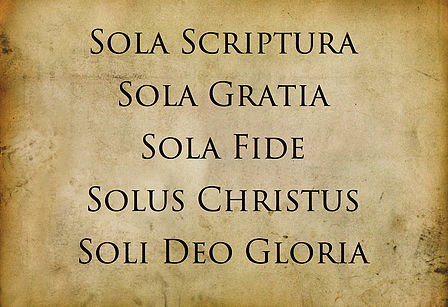
Reflecting on the Five Solas

fivesolas

Sola Scriptura – Scripture Alone

But as for you, continue in what you have learned and have firmly believed, knowing from whom you learned it and how from childhood you have been acquainted with the sacred writings, which are able to make you wise for salvation through faith in Christ Jesus. All Scripture is breathed out by God and profitable for teaching, for reproof, for correction, and for training in righteousness, that the man of God may be complete, equipped or every good work. – II Timothy 3:17-17 (ESV)

Your word is a lamp to my feet and a light to my path. – Psalm 119:105 (ESV)

Questions for Reflection
Where do we learn about salvation?
What should be our guide?
Are you committed to reading God’s Word?
Does God’s Word govern your life?
What other authorities are you tempted to follow instead of God’s Word?

Reformation Collection

RefWall

Here are some good more posts related to the Reformation:

Where Did the Reformation Really Begin? – David Mathis (DG)

What Sola Scriptura Really Means – Mark Thompson (Crossway)

Where the Bible Teaches We Are Saved by Christ Alone – Stephen Nichols (Crossway)

The American Priest who Proved the Reformation is Not Over – Jordan Standridge (the Cripplegate)

6 Ways to Celebrate Reformation 500 This Sunday – Jason Helopoulos (TGC)

Reflections on I Chronicles 14-16

David finishes moving the ark to Jerusalem – this time moving it the proper way.

  • Praise – As they moved the ark, David and the people were rejoicing before the Lord. Many of the Levites were assigned to sing praises and thanks to God.  David gives them a song of praise to sing.  How can David’s song help you praise God today?
  • Seek the Lord – Part of David’s song calls us to seek the Lord (16:10-11). We are to seek him from our hearts.  We are to seek his strength and his presence.  Are you seeking the Lord like this?