Acts Articles – Jesus 03B

In Acts 3:15, Peter portrays Jesus as the Author of Life.  He is the source of life.  Again we have this indication that Jesus is God, for of course God is the source of life.  He gives physical life, as he gave physical healing to the lame man earlier in Acts 3.  He also gives spiritual life; we can find spiritual healing in him.  Let’s apply this truth to ourselves today.

Jesus gives us life.  He gives us spiritual life, abundant life, eternal life.  As Jesus makes clear in John 17:3, eternal life is knowing the Father and His Son.  Eternal life is to have a relationship with God.  This is what makes us different from the rest of the world.  We have a real relationship with our Creator.  The rest of the world is spiritually dead – separated from God.  But Jesus gives us spiritual life, a relationship with himself. 

What a privilege!  The more we grasp this truth, the more we ought to cultivate this relationship.  We should want to grow in this relationship.  God has given us a book to know him better.  And we can speak to him at any time.  Jesus has given us life – a relationship with him.  Are we cultivating this relationship or squandering it?

Quotes To Ponder

The most important question we can ask about any habit or action or behavior:
Does it contradict the gospel?
– John Piper

An idle life and a holy heart is a contradiction. 
– Thomas Brooks

Patience!  Patience!  You are always in a hurry, but God is not.
– C.H. Spurgeon

He who often thinks of God will have a larger mind
than the man who simply plods around this narrow globe.
– J. I. Packer

Acts Articles – Jesus 03A

In Acts 3:14, Peter portrays Jesus as the Holy and Righteous One. 

He is the Righteous One:  Once again we find an echo from Isaiah 53, this time verse 11, where the suffering servant is referred to as the righteous one.  Other echoes come from Isaiah 32:1, Jeremiah 23:5, and Zechariah 9:9 which all predict that the coming Messiah King will be characterized by righteousness. 

He is the Holy One: That Jesus is the holy one suggests that Jesus is to be understood as God, for we see such references to God in Isaiah 40:25, 43:15. 

He is the Holy and Righteous One: The title in general speaks of his perfection – he is holy and righteous.  This again echoes from Isaiah 53, where verse 9 speaks of the suffering servant having done no violence and having no deceit in his mouth.  Peter later will echo Isaiah 53 in I Peter 2:22 where he says Jesus committed no sin, nor was their deceit in his mouth.

So Jesus is the Messianic King.  Jesus is God.  Jesus is without sin.  Two applications for today:

First, Jesus is our King and God to whom we owe our total allegiance and worship.  We are to obey him in all things.  It doesn’t matter if we feel like it.  It doesn’t matter if we want to obey.  It doesn’t matter if we think Jesus is right or not.  Regardless of our feelings, wants, and thoughts, we must obey.  We must submit.  And we must worship.  Worship includes submission, but then goes further to include praise and honor.  We must offer up our praises to our great God.  We must live for his glory.

Second, Jesus is our righteousness.  He lived a perfect life.  We don’t.  We fail to give Jesus our total allegiance and worship.  But the good news is that his perfect life is attributed or accounted to us.  II Corinthians 5:21 speaks of this miraculous exchange where the Suffering Servant bore our sins, and we now bear the righteousness of the Holy and Righteous One.  In Christ, we change clothes.  He takes my filthy dirty rags upon himself, and he gives me his pure white robe to wear.  So now when God looks at us, he doesn’t see our sin, he sees only the perfection of Christ.  He sees us righteous.  What a glorious truth!

Passion Points

Here are some good posts for your weekend reading:

Thirsty – Julie Van Meter
Our physical needs are great.  We need water to rain down on our thirsty land.  But more than that, we need to go to the well to visit Jesus, where we can drink deeply of the “living water”, and we will never be thirsty again.

Help Me Love What I Ought – Thomas A Kempis (via Trevin Wax)
Grant me, O Lord, to know what I ought to know, To love what I ought to love, To praise what delights you most, To value what is precious in your sight, To hate what is offensive to you.

Worth Weeping For – Kevin DeYoung
If we truly want our hearts to break for things that break the heart of God, we will weep to see the word so badly handled and so boldly broken in our day.

Puddleglum’s Lesson – Chris Brauns
Christians should obey God even when it looks as though obeying him will make our lives more difficult.  We must trust God’s word, rather than how we think things will turn out.

Seven Proven Weapons in the Fight for Holiness – John Piper
We all need to have a small arsenal of general promises ready to use whenever fear or craving threaten to lead us astray.  Here are a few of my most proven weapons….

Killing Sin Through Personal Prayer – J. I. Packer (via Desiring God)
As blooms of sin break surface and I recognize them, I am called to — indeed deep down in my heart I want to — go into action with this prayer procedure for draining the life out of them. And I think this is a discipline every Christian has to wake up to right at the beginning of the Christian life and continue with as long as we are in this world.

Hope you have a great Lord’s Day worshipping the Lord together with your local church!

Acts Articles – Jesus 03

In Acts 3:13-18, Peter portrays Jesus as the Rejected and Suffering Servant with clear echoes of Isaiah 52-53.  He begins in v13 by saying that God glorified his servant Jesus, an echo of Isaiah 52:13 where the servant will be high and lifted up and exalted.  Peter goes on to show how Jesus is the rejected servant delivered over to Pilate and denied by the people of Jerusalem, as Isaiah 53:3 depicts Jesus as the rejected servant who is despised and rejected.  Peter shows Jesus as the suffering servant in v18, and Isaiah 53:4-8 depicts the suffering of the servant as he stricken, wounded, crushed, oppressed, and afflicted.  And so Jesus is the rejected and suffering servant from Isaiah 52-53.  Two thoughts for us today:

First, Jesus can identify with our suffering:

Have you been despised?  So was Jesus. 

Have you been rejected?  So was Jesus.

Have you known sorrow and grief?  So did Jesus.

Have you been afflicted?  So was Jesus.

Have you been wounded?  So was Jesus.

Have you been crushed?  So was Jesus.

Have you been oppressed?  So was Jesus

Have you been stricken?  So was Jesus.

Have you suffered?  So did Jesus.

Have you known pain?  So did Jesus?

And when you face death.  Jesus faced it too.

He is not distant, untouched by our infirmities. 
He has been there.  He knows.  He cares. 
He endured it all for you.  And so now we endure it all for Him.

Second, Jesus bore our sins in our place:

He is the suffering servant who was wounded for our transgressions and crushed for iniquities.  The Lord laid on him the iniquities of us all.  He died for our sins.  The big sins that make us cringe.  The small sins we deem insignificant and yet are disgusting in God’s eyes.  He bore all of our sins on the cross to remove our guilt so we could go free.

Passion News

It has been awhile since I posted the first Passion News, but there seems to be a lot in the news as of late that should interest or concern those who love God and people.  Here are some helpful posts to consider:

Colorado Movie Theatre Shooting:

The True Knight Is Risen – Collin Hansen (via The Gospel Coalition)
Jesus had no illusions about why the nations rage. They rage in their sin, against their God, going so far as to put God in human flesh to death. But such evil plots in vain, because the ascended Jesus promises to return in justice. He will hold his and the Aurora movie theater’s murderers to account. And he will usher in the safety and security of the new heavens and new earth for all who believe in him.

Homosexual Boycott on Chick-fil-A:

Chick-fil-A and the Irony of the Tolerance Police – Denny Burk
Apparently, Christian business owners are no longer allowed to express religious opinions in Boston if they run crosswise with the Mayor’s views on marriage. If that doesn’t send a chill down your spine, I don’t know what will.

Two Lies about Chick-fil-A Perpetuated in the Press – Denny Burk
The President of the company, Dan Cathy, simply expressed his point of view on the issue of marriage—a point of view rooted in his Christian beliefs. And now at least two mayors of America’s two leading cities are saying that they will use their power to punish Chick-fil-a for those views. This is a moral outrage and a violation of the first Amendment to the Constitution. Every American—no matter what your view of gay marriage—should stand against this kind of tyranny.

The Same-Sex Marriage Debate:

Gay Is Not the Next Black – Voddie Baucham (via The Gospel Coalition)
It should be noted that the right to marry is one of the most frequently denied rights we have. People who are already married, 12-year-olds, and people who are too closely related are just a few categories of people routinely and/or categorically denied the right to marry. Hence, the charge that it is wrong to deny any person a “fundamental right” rings hollow. There has always been, and, by necessity, will always be discrimination in marriage laws.

Our Culture’s Moral Reasoning:

The Currency of Conviction – Kevin DeYoung
It’s been remarkable to see the relativists head for the hills in light of the Penn State sex abuse scandal. The moral outrage has been loud and immense (and justified). I’ve heard no one appeal to diversity, multiculturalism, situational histories, or different ways of being…. Which has me wondering why some sins are so obviously scandalous in our culture and others are not. The difference, as best as I can figure it, has to do with victimization.

Religious Organizations and Health Care Coverage:

Co-Belligerency and the First Freedom – Jennifer A. Marshall (via The Gospel Coalition)
Last week Wheaton College joined a lawsuit opposing the Health and Human Services (HHS) Preventative Services mandate, which forces the evangelical school to violate its religious convictions by covering abortion-causing drugs in its employee health plan. Equally noteworthy is the story’s subhead: Wheaton joined the lawsuit with the Catholic University of America (CUA).

Quotes To Ponder

Selfishness seeks its own private happiness at the expense of others.
Love seeks its happiness in the happiness of the beloved.
– John Piper

Self is the most treacherous enemy, and the most insinuating deceiver in the world.
Of all other vices, it is both the hardest to find out, and the hardest to cure. 
– Richard Baxter

Men have dreamed of finding the fairy pleasure in the dark forest of sin. 
Carnal joys have danced before their eyes as temptingly as the mirage in the desert,
and they have pursued the phantom forms to their misery in this world,
and to their eternal ruin in the next.
– Charles Spurgeon

Acts Articles – Witnes 02-3

Throughout the book of Acts, we see the early church proclaiming the gospel.  But what is the gospel?  One probable reason for the many evangelistic sermons recorded in Acts is to help us better understand the gospel and so better share the gospel.  John Stott in his commentary on Acts gives four categories of the content of the evangelistic messages, and so four categories we must include when sharing the gospel.  His four categories are: gospel events, gospel witnesses, gospel promises, and gospel conditions.  Here I want to apply his categories to the messages in Acts 2 and 3, and then to the message we share:

  • Gospel Events:  We must tell others about what Jesus has done that our salvation is based on.  In Acts 2, Peter speaks of Jesus’ life, death, resurrection, and ascension.  In Acts 3, Peter focuses on Jesus’ death, resurrection, and ascension.  We too must tell others what Jesus has done to save us – especially his death and resurrection.
  • Gospel Witnesses: In both Acts 2 and 3, Peter gives two witnesses to what Jesus has done.  First, he appeals to Scripture, quoting numerous Old Testament passages that point to Jesus doing exactly what he did.  Second, he appeals to his own witness of Jesus’ resurrection.  This was an essential part of being an apostle – that they had seen the risen Christ.  And the apostles have recorded their witness for us in the New Testament.  So when we share the gospel, we should use the Bible.  The prophecies and eye-witness accounts point to the truth of our message.
  • Gospel Promises: In Acts 2, Peter focuses on forgiveness of sins and the gift of the Spirit.  In Acts 3, Peter rewords them as the blotting out of sin and times of refreshing (a reference to the Holy Spirit?), and then adds another: the return of Jesus for the restoration of all things.  And of course there are many more gospel promises we could mention: reconciliation, justification, new life, adoption, sanctification, and on the list goes.  When we share the gospel, we should include some of the gospel promises that would attract that person or group of people to Jesus.
  • Gospel Conditions: Finally, we need to tell people how they can receive these gospel promises made possible by the gospel events as given to us by the gospel witnesses.  In Acts 2 and 3, Peter calls the people to repent, to turn from their rejection of Jesus, and as such to believe in Jesus as their Messiah and Savior and King.  We too must call people to turn from their sin to Jesus, to repent and believe.

Gospel events, witnesses, promises, and conditions.  This is the gospel presented in Acts that we present to others.

Conversion Does Not Stand Alone

Conversion does not stand alone; it is the beginning of a lifelong journey of growing in Christ and being conformed to his image.  Discipleship must follow on conversion as living and breathing follow on birth.

The goal of conversion is nothing less than loving God with all one’s will, emotions, and thinking, whereas previously all of these faculties were engaged in self-love.

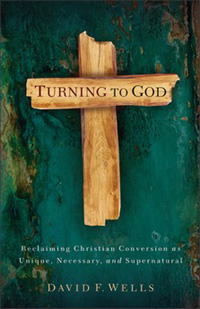
– David Wells in Turning to God

Acts Articles – Service 03

In Acts 3, Peter and John come across a lame man whom they serve by healing in Jesus’ name.  The result is praise to God and an opportunity to share the gospel.  Their example suggests several principles for us as we seek to serve others:

  • We should serve others using the opportunities God gives us.  Peter and John were on their way to a prayer meeting.  They could have been too pre-occupied to notice the lame man.  They could have been tired and not felt like helping.  But they stopped.  They used the opportunity God gave them.  Are we watchful for opportunities to serve?  Or are we too pre-occupied with our own agendas?  Are we too tied to our feelings?
  • We should serve others using what God has given to us.  Peter and John tell the man they have no money to give him.  But God has given them the power to heal the man, and so they do.  They used what God gave them.  We may not have money to help someone.  We probably can’t heal anyone.  But we shouldn’t worry about what we can’t do.  Rather we should focus on what we can do, serving in the ways God enables us.
  • We should serve others as representatives of Jesus.  Peter heals the man in Jesus’ name – according to his power and authority.  Peter is just a representative of Jesus.  As the crowds gather, Peter asks the crowds why they stare at him as if he had made the man well.  Instead, he points the crowds to Jesus.  Here is an important point.  In serving others we point to Jesus not ourselves.  This means our actions require explanation.  Without explanation, the crowds would have been impressed with Peter, so Peter points them to Jesus.  In serving others, it is possible for people to become impressed with us, and so we need to point them to Jesus.  Our service is not about us, but about Jesus working through us, so we must point to Jesus.  Lifestyle evangelism requires words to explain our good deeds, or we witness simply to our own goodness.
  • We should serve others so that God may be praised.  The lame man who is healed begins leaping and praising God.  The crowds too begin to praise God (4:21).  Certainly one goal in our serving others is to help them – because we love them.  But our ultimate goal should be that God would be praised – because we love him.  People are to see our good works and glorify God.  But if we don’t point them to Jesus, who gets the glory?  Often we do.  People praise us.  They are impressed with us.  And we rob God of his glory.  This is a serious matter.  We need to be careful when we serve that we point people to Jesus so they praise God and not us.
  • We should serve others with the hope of sharing the good news of Jesus.  Peter’s service led to an opportunity to share the gospel.  That should be our hope – that our service would open doors to share the gospel.  Their greatest need is Jesus, so our greatest service is to tell them about Jesus.  May our service bring many such opportunities.