Acts Articles – Prayer 01A

Yesterday I suggested two applications from the example of 120 disciples who devoted themselves to praying in one accord for the Spirit to empower them as witnesses.  But are we supposed to follow their example?  Is this recorded for us to imitate or is it recorded simply to tell us what happened?

Alan Thompson in his book, The Acts of the Risen Lord Jesus, suggests one helpful way forward.  He suggests that something mentioned once is probably to be taken as merely descriptive.  But if Luke mentions something repeatedly, that it is probably to be taken as prescriptive; that is, it is a pattern in the early church that should be a pattern for the church today (see p25-27).

So then, the 120 disciples were devoted to praying together for 10 days.  Do we need to devote ourselves to praying together for 10 days?  Probably not since this is the only occasion that we read of a 10 day period.  And indeed this ten day period between the Ascension and Pentecost (these two great works in salvation history) is unrepeatable.  That is not to say, we couldn’t commit to pray together for 10 days – it may be a great thing to do.  But it is not prescribed for us to do it.

But what about devoting ourselves to praying together apart from the 10 day length?  Is devoting ourselves to praying together merely descriptive, or should we take it as prescriptive.  Three patterns suggest that we should take this as prescriptive.

First, there is a pattern throughout Acts of Christians devoting themselves to prayer together.  It is clearly a regular practice for them.  Why would we think it shouldn’t be a regular practice for us?  And remember that Acts does not give us an exhaustive view of the early church.  Luke merely hits some of the highlights, and apparently Luke thought praying together was important enough to highlight, probably at least in part because he thought we should imitate their devotion to praying together.

Second, if you compare the gospels, the Gospel of Luke has the greatest emphasis on prayer.  Luke clearly wanted his readers to be instructed in prayer, and so it is reasonable that he would continue that instruction into his second volume – the Book of Acts.  Luke is instructing us in how we are to pray by recording for us the practice and teaching of Jesus and the practice of the early church.

Third, there is a perceptible pattern in Acts of the people praying together, the Spirit powerfully working, and the word going forth.  We see it in Acts 1-2 as the 120 pray, the Spirit comes in power, and the word is preached with 3000 people getting saved.  We see it again in Acts 4, as the church prays, the Spirit comes in power, and the people boldly proclaim the gospel.  In Acts 13, the church is praying, the Spirit calls Paul and Barnabas, and thousands will be saved through his missionary work. 

Perhaps we see few people saved today in many of our churches, because we aren’t devoting ourselves to praying together for the Spirit to powerfully work.  Not that we can force the Spirit’s hand, as if he has to act if we pray.  But if we don’t care enough to ask, why would we expect him to act?  If we try to do the ministry on our own without prayer, why would we expect God to bless our ministries?

These three patterns in Luke-Acts makes clear that devoting ourselves to praying together is prescriptive for us.  We are to follow the early church’s example.  What are we waiting for?

Birthed in a Prayer Meeting

What does it say about our churches today
that God birthed the church in a prayer meeting,
and prayer meetings today are almost extinct?
– Jim Cymbala

The apostles had this instinct:  When in trouble, pray. 
When intimidated, pray.  When challenged, pray. 
When persecuted, pray.
– Jim Cymbala

From Fresh Wind, Fresh Fire

Acts Articles – Prayer 01

After seeing Jesus ascend into heaven, the disciples return to Jerusalem to wait for the coming of the Spirit (Acts 1:12-14).  They wait with the women who had supported Jesus and visited his tomb.  They wait with Mary, the mother of Jesus.  And they wait with Jesus’ brothers who did not believe during Jesus’ life, but have come to believe since the resurrection.  In all there are around 120 people waiting. 

Jesus ascended 40 days after the resurrection.  We know the Spirit will come on Pentecost – 50 days after the resurrection.  So what do these 120 followers of Christ do while they wait for 10 days?  They have an extended prayer meeting!

All these with one accord were devoting themselves to prayer. – Acts 1:14a

Notice their example:

  • They prayed with one accord.  They were united in prayer.  They were of one mind, joined together in crying out to God.
  • They were devoted to prayer.  They continued in it.  They were persistent, persevering, constant, busy in prayer.

And what were they praying for?  The context suggests they were praying for the coming of the Holy Spirit.  Jesus had promised that the Spirit would come.  And indeed they are waiting in Jerusalem for the Spirit to come.  Certainly the Spirit was on their minds. 

All of this suggests two applications for us today:

  • As they were devoted to praying together in one accord, so we should be devoted to praying together in one accord.  Each church should unite together in devoted prayer.  Our prayer services should be highly attended, and whenever we gather we should be quick to pray together.
  • As they prayed for the Spirit to come to empower them to be Jesus’ witnesses, so we should pray for the Spirit (who has already come) to empower us to be Jesus’ witnesses.  How might our churches (and communities) change if this became our united prayer?

Acts Articles – Jesus 01A

In Acts 1:9-11, Jesus ascends into heaven.  He returns to the Father to reign at his right hand.  We must understand this as a real event.  The disciples really saw this happen.  Indeed, Luke seems to go out of his way to make this clear as he fills the narrative with “seeing: words: looking, sight, gazing, looking (again), and saw. 

And this departure brings about a real change.  For 40 days, Jesus has been appearing and disappearing before the disciples, but this time is different.  As the angels make clear, they won’t see Jesus again until he returns to usher in the fulfillment of the kingdom.  And so today we live in expectation of his return.

As we struggle through the hardships of this life, we have this expectation, this hope that Jesus is coming again.  And when he comes, life will change.  There is coming a day when sin and death and suffering and pain and tears will be no more.  We can endure today because of the hope of what is yet to come.

And yet this expectation also reminds us of our responsibility.  When your employer gives you a task and says he or she will be back later, you had better work on that task.  In the same way, Jesus has given us a task and he is coming back.  Until he does, we need to busy with that task. We need to be busy living as his witnesses, longing to hear the words, “Well done, good and faithful servant.”

All About Christ Or Me?

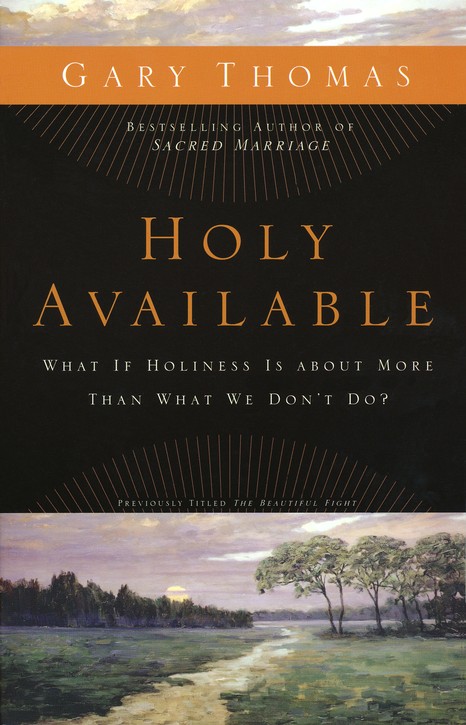
One of the biggest threats to incarnational living is pride.  Instead of manifesting Christ’s presence, we want to showcase our own presence; instead of dispensing Christ’s wisdom, we want to spotlight our own insights; instead of speaking Christ’s truth, we want to spout our own opinions; instead of adopting Christ’s agenda, we want to accomplish our own five- or ten-year plans; instead of building Christ’s kingdom, we want to spread our own “ministry.”
– Gary Thomas in Holy Available

Acts Articles – Spirit 01

But you will receive power when the Holy Spirit has come upon you, and you will be my witnesses in Jerusalem and in all Judea and Samaria, and to the end of the earth.
– Acts 1:8

In the last Acts Articles, we discussed Jesus’ call to be his witnesses.  But we can’t be his witnesses on our own.  Nor are we meant to be.  The disciples were to wait for the coming of the Spirit who would empower them to be witnesses for Jesus.  As the Spirit came upon Jesus at his baptism to empower him for ministry, so the Spirit came upon the disciples to empower them for ministry.  And still today, the Spirit dwells in his people to empower them for ministry – to be witnesses of Jesus, to be Jesus’ hands and tongue.

When your employer gives you a task, he or she enables you to do the task.  Your employer gives you the necessary materials to do the job.  In the same way, Jesus has given us a task to be his witnesses, and he has given us what we need to accomplish it – the Holy Spirit.

The Spirit empowers us to be the witnesses Jesus called us to be.  The Spirit empowers us to serve and speak as witnesses.  The Spirit leads and guides us as Jesus’ witnesses.  The Spirit helps us to use even our trials as opportunities to be witnesses.  The Spirit strengthens us in persecution that comes from being witnesses.  And it is the Spirit who enables people to believe in response to our witness.  It is the Spirit who changes people’s lives. 

May we have a growing awareness of the Spirit in our lives.  May we live in the power of the Spirit to be witnesses for Jesus Christ.

Passion Points

Here are some good reads for your weekend:

Heart Check: Are You Working For God’s Glory or Your Own? – Crossway
Unfortunately, it easy to grow in our own abilities and skills while neglecting growth in humility, self-control, or other Christ-like qualities. As Christians, there are things we can do to maintain our humility and make sure we are working for God’s glory…

7 Evils of a Grumbling Spirit – B.J. Stockman
But don’t be deceived: a murmuring mouth is particularly grieving to God because it reveals discontent in God.

Grace All The Way – Justin Holcomb (via Gospel Coalition)
Above all else and before any discussion of what we should do, we must understand deeply in our bones who we are: the workmanship of God. You are his project.

In the Wrong Place Emotionally – Chris Brauns
If you need to be moved from one place emotionally to another: (1) Identify a Psalm that relates to your experience.  (2) Systematically memorize it over a period of time.  (3) As you do so, experience the movement of the Psalm and be transported by the Spirit in conjunction with the Word.

Discipleship 101: How to Disciple a New Believer – Justin Buzzard (via Crossway)
Discipleship involves a lot, but one of the most important things you can do with a new believer is read the Bible with them–teaching them how to read, understand, respond to, and apply God’s Word.

Hope you have a great Lord’s Day celebrating our great Lord with His people!

Christ Working Through Us

We serve the ascended and reigning Christ.  The world may mock our King.  We may disdain his rule by our own sinful rebellion – but the fact is, he reigns.  And we can participate in the spread of his kingdom not simply by imitating how he lived while on earth but by making ourselves “holy available” to his dynamic, life-transforming presence within us, by letting him change the way we see, think, feel hear, speak, and serve.  It’s the life of Christ in us, continuing his work, exercising his reign, manifesting his presence. 
– Gary Thomas in Holy Available

Acts Articles – Witness 01

You will be my witnesses in Jerusalem, and in all Judea and Samaria,
and to the end of the earth. – Acts 1:8b

Jesus spoke these words to the 11 apostles (identified as his listeners back in v2).  They were given the special task of being witnesses to the life, death, resurrection, and ascension of Jesus, and especially to the reality that Jesus rose from the dead (see v21-22).  From their witness, thousands were saved who then themselves became witnesses to the apostles’ testimony about Jesus and their own testimony of what Jesus had done in their lives. 

And so it is for us today.  We are witnesses of the apostles’ testimony found in the Word of God.  We are witnesses of what Christ has done in our lives.  We must share the good news with others.

Jesus called the 11 apostles to be his witnesses starting in Jerusalem, then moving out to Judea and Samaria, and then to the end of the earth.  This is exactly what happened, and it makes a good summary of the book of Acts.  Chapter 1-7 are centered in Jerusalem.  Chapters 8-12 find the gospel moving out to Judea and Samaria.  Chapters 13-28 show the gospel beginning to go out to the end of the earth.

This pattern is good for us as well.  We should begin in our own Jerusalem, the people we know, our own community.  There are many without Christ.  Our local churches need to be missions posts from which we go out to a very real mission field. 

From there we go out to our Judea and Samaria– perhaps our state and country.  I found statistics showing that 50% of Americans have no religious affiliation at all.  Of those who do, it takes little consideration to realize many of them are also without the gospel.  We have a mission field right here in our own country.  What can we do to reach our Judea and Samaria?  Our churches can send out missionaries and church planters who will minister in our own country.  Larger churches might partner with smaller churches struggling to reach their small communities.  We can raise our own children to be witnesses, many of whom will eventually live in another city or state – our Judea and Samaria– as witnesses.

And then we are to go to the end of the earth.  And so our churches send missionaries around the world.  Perhaps in light of Jesus’ call, we need to increase our commitment to world-wide missions, with a focus on reaching people with no gospel witness, training pastors around the world in the Word, and helping churches in other countries with the many resources we have been blessed with.  Perhaps God would call some of us to go.

When an employer gives us a task, we are expected to do it.  Our Lord has given us a task.  Let’s be his faithful witnesses to a world that needs Jesus.

Acts Articles – Jesus 01

According to Acts 1:1, the gospel of Luke told what Jesus began to do and teach.  That word “began” is emphatic.  The clear implication we are to draw is that the book of Acts is about what Jesus continued to do and teach.  In other words, Jesus did not ascend into heaven to twiddle his thumbs until his return.  He is still acting and teaching…through us.

If you have a job, your employer undoubtedly has certain goals that he or she wants to accomplish.  Your job, and the tasks that make up that job, fit within those goals.  We might say that your employer is working through you to accomplish his goals.  In the same way, Jesus is working through us to accomplish his goals, his mission, his purpose.  He acts and teaches today through his church.  He is the head, and we are his body.

As such, we must live as his hands and his tongue.  We must do his work.  We must speak his words.  We must allow ourselves to be used by Jesus to care for the hurting and serve his people and encourage the weary and teach his church and witness to the lost.  What a privilege!  What a responsibility!  We must allow ourselves to be guided by his Word, prayer, and the Holy Spirit so that we live as his hands and tongue to accomplish his purpose for his glory.  May God’s grace help us to live like this!