
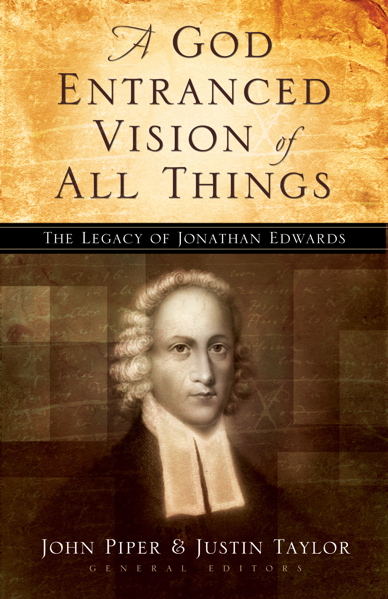
 As I continue to read about Jonathan Edwards, I enjoyed the collection of essays found in the book, A God Entranced Vision of All Things edited by John Piper and Justin Taylor. The essays are based on several addresses from a conference focused on the contributions of Jonathan Edwards. The book begins with three chapters addressing his legacy, his life, and his wife’s life. Part Two shares lessons we can learn from his life and teachings on revival, spiritual disciple, and church life. The final chapter in part two addresses the issue of Edwards owning slaves. Part Three explores some of his most important works on sin, the will, and religious affections. All in all, the book makes a good introduction to his life and teachings, and provides plenty of challenges for our lives today.
Tag: Christianity
RHMA Take-Home Thoughts Part 2
Another main speaker at the RHMA conference was Duane Litfin. A few reflections from his two main sessions:
- How do you picture Jesus? He is no longer a simple carpenter or a tortured sacrifice on a cross. He is the risen and ascended Lord and King. When John sees him in Revelation 1, he falls down at his feet as though dead. As we picture him in all his glory, it should have positive affects on our worship, our obedience, and our confidence.
- In Matthew 21, Jesus chose a humble donkey to ride into Jerusalem. Jesus has a habit of choosing to use the humble – people like us. God chooses us not because we are wonderful, but because he is.
- The disciples untied the donkey and brought it to Jesus. Jesus used the donkey because it was available. Are we available? How do we use our time, our money, our hands, our tongues, our minds, our hearts? Are we available or are we tied up with other things?
RHMA Take-Home Thoughts, Part 1
Over a week ago I promised to share some highlights from the RHMA conference I attended. The conference is for pastors/wives of small town and country churches. One of the main speakers this year was D. A. Carson. A few thoughts from his two main sessions for reflection:
- Jesus was not held to the cross by the nails but because he desired to do God’s will. Likewise, we must not sin because we desire to do God’s will.
- Jesus cried out, “My God, my God, why have you forsaken me?” so we would never have to make that cry. He was forsaken in our place.
- Though least in the kingdom, we are greater than John because we can better point others to Jesus, especially to his death and resurrection that brings salvation. In other words, the Christian criteria for greatness are radically tied to proclamation and witness. What makes us great is that we can point others to Jesus.
Book Look: Humility and Humility
I have been sharing quotes from two books on humility for the last few weeks. Both are excellent books that I want to commend to you.
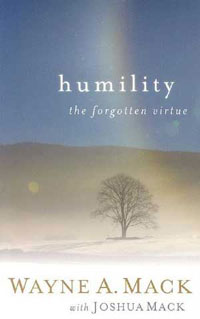 Humility: The Forgotten Virtue is by Wayne A. Mack (with Joshua Mack). The Macks explore our humility before God based on both God’s superiority to us and God’s purity compared to our sin. They then explore humility toward each other, and the follies of sin. They close with two chapters on how to grow in humility. As I was reading, I thought perhaps I was reading Jerry Bridges – which is to say that the entire book is a wonderful exploration of the Biblical passages that deal with the issue, organized as I have outlined above. As such, the book could be used as a rich Bible study. Indeed, each chapter ends with application and discussion exercises.
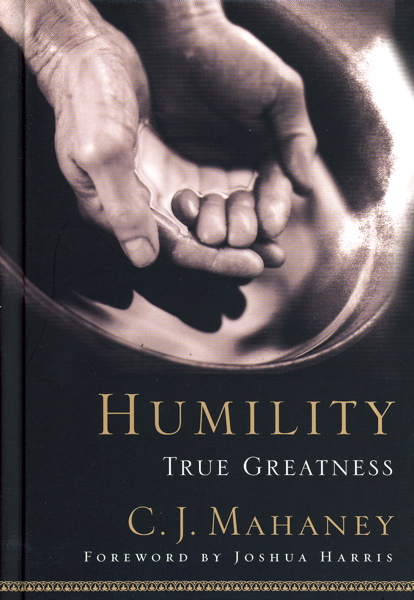 Humility: True Greatness by C. J. Mahaney explores humility in three parts. First, he defines humility and pride. Mahaney focuses on our humility before God based on God’s purity compared to our sin. Second, he looks at Jesus, who humbles himself to save us from our sins. Third, he takes well over half of the book to suggest practical ways to grow in humility. This section alone is worth the price of the book.
I would recommend both books together. Read the Macks as they dig deep into a Biblical exploration of humility, and then turn to Mahaney for the practical applications. Both books deal with both issues, but the Macks just dig deeper and Mahaney applies further.
Humility vs pride is an issue for all of us. And so these are two excellent books that I would recommend be read by all of us that we might grow in our passion for God and compassion for people.
Be Hearers Not Doers?
In the last Passion Points I recommended a post on irritability. As I was first reading the post, I was irritable. It had been a long day. My family wanted to go for a walk. I wanted to crash. I was irritable. As I read, I recognized the obvious immediate application, but resisted. I was being a hearer and not a doer.
Of course, James calls us to “be doers of the word, and not hearers only” (James 1:22). Hearing or reading is not enough. We must respond. We must apply. We must obey. We must do what the Word says.
As we spend personal time in the Word, we must seek to respond to what God is saying to us. As we hear a sermon, we must strive to apply the message to our lives. But what about when we read blogs?
The danger it seems to me is that we can surf through numerous posts at one sitting, taking in the Biblical teaching but never responding to any of it. That is what happened as I read the post on irritability. And I have caught myself surfing blogs looking for posts to feature in Passion Points but never grappling with the manifold teachings myself.
The nature of a blog is that posts tend to be short (or no one will read them). And the nature of the web is that people tend to surf. Rapidly taking in numerous posts simply doesn’t encourage response. There is simply too much information to really process. And so we read but never apply; we hear but never do.
And this may be a deeper problem than just reading blogs. I wonder if the way we read blogs affects the way we read Scripture and hear sermons. Are we learning from our blog reading not to respond, and then taking that learned failure to our Bible reading and sermon listening?
These are serious issues. We dare not ignore God when he speaks to us. So I encourage you to examine yourself. Do you surf blogs without ever grappling with and applying the Biblical teachings? If you are like me, what might we do? Two suggestions that I want to apply to my life:
- As we read numerous posts, let’s look for one post that we can wrestle with and seek to apply to our lives.
- If we come to a post in which God seems to be really speaking to us, let’s just stop surfing (even if you haven’t come to my blog yet!) and just camp on that post – pondering and responding as God would lead.
Let’s strive to not only be hearers but doers also!
Passion Points
Here are some good posts focusing on specific sins which undoubtedly tempt many of us:
Do You Take Irritibility Seriously? – Phil Ryken (via Crossway)
A helpful exploration of a common sin. One quote: We should take our irritability much more seriously, because it is the very opposite of love.
The Lost Sin of Envy
How Envy Behaves
What Envy Wants
This is a challenging three part series by Tim Challies. One quote: When you are proud you compare yourself with another person and there are only two possible outcomes: If you believe you come out on top, you feel even more pride; if you believe you come out on the bottom, you feel envy. Envy comes when Pride is wounded.
Pride and Humility – Tim Challies
It appears I’m not the only one focusing on pride and humility. Challies surveys the definitions of pride and humility from Mack, Mahaney, and several others, and then gives a helpful summary.
Finally, let me share a quote from John Piper in A God Entranced Vision of All Things:
The power of sin comes from its promise of pleasure and is meant to be defeated by the superior promise of pleasure in God.
Hope you have a great Lord’s Day with God’s people enjoying the superior pleasure found in our Lord!
Pride and Honor
How often do we expect to be treated in a certain way
because of our position, our age, or our knowledge?
How we respond when we are not given the honor that we expect
is a good indication of how much pride we have in our hearts.
– Wayne A. Mack (with Joshua Mack) in Humility
Pride and Worry
I have to remember that whenever I feel buried under care,
the real issue is pride and my self-sufficiency.
I must deliberately and specifically cast my cares upon Him
and thereby humble myself.
Don’t be mistaken. God hasn’t gone anywhere.
He’s just as sovereign, just as good, just as faithful.…
The issue isn’t God. It’s my pride that resists trusting in Him through dependence upon Him.
– C. J. Mahaney in Humility
Pride and Grumbling
Those who grumble and complain about the circumstances of their lives are manifesting a spirit of pride. A person who complains about his circumstances does so because he thinks he deserves better.
A humble person, on the other hand, willingly accepts whatever God ordains. He says with Paul, “I have learned to be content in whatever circumstances I am” (Phil. 4:11).
– Wayne A. Mack (with Joshua Mack) in Humility
Definitions of Pride
Pride is when sinful human beings
aspire to the status and position of God and
refuse to acknowledge their dependence upon him.
– C. J. Mahaney in Humility
Pride consists in attributing to ourselves
and demanding for ourselves the honor,
privileges, prerogatives, rights, and power
that are due to God alone.
– Wayne A. Mack (with Joshua Mack) in Humility

