Ministry Moments

Recently White Horse Inn and The Gospel Coalition ran a series of posts on youth ministry which are well worth your consideration:

Generation Me and Youth Ministry Today: Part One – White Horse Inn
And so it has become increasingly easy for one to go from the nursery to children’s church to youth group and on to college ministry without having actually belonged to the local church. Young people may still drive with their family to the church campus, but from the parking lot they scatter to their own target-marketed groups. For many, the church is more a cafeteria of ministry offerings than a communion of saints.

Generation Me and Youth Ministry Today: Part Two – White Horse Inn
What we believe, why believe it, and why it matters for our lives: these are always the coordinates that we have to keep in mind together especially as people enter emerging adulthood.

A Brief History of Youth Ministry – Dave Wright (via The Gospel Coalition)
To get an idea of where we have come from, let’s turn back the clock more than a half century. Space here only allows the broadest overview….

MTD: Not Just a Problem with Youth Ministry – Brian Cosby (via The Gospel Coalition)
That a youth ministry “teaches the Bible” does not necessarily mean it teaches the gospel. Many mistake the gospel with moralism—being a good person, reading your Bible, or opening the door for the elderly in order to earn God’s favor. But the gospel is altogether different.

Youth Ministry’s Tendency Toward Legalism – Cameron Cole (via The Gospel Coalition)
Based on my experience in youth ministry, if I had to identify the greatest theological problem in the field, it would be the absence of the gospel in teaching on sanctification.

Youth Need the Church, and the Church Needs Youth – Mark Howard (via The Gospel Coalition) My prayer is that as we minister to a generation starving for meaning, we won’t lose sight of the reality that what these youth need is Jesus, and that he is most fully offered within the community of the church, of which they are a vital part.

Why We Need Youth Ministry – Paul Martin (via The Gospel Coalition)
Jesus modeled one of the best practices for the church. His discipleship did not depend on the latest book, the newest game, or the best icebreaker. Instead, his model relied on the spiritual health of the leader, and his willingness to spend time investing himself, his love, and his truth in them.

Two-Dimensional Youth Ministry – Dave Wright (via The Gospel Coalition)
Several years ago, in trying to simplify my teaching on youth ministry, I boiled it down to two dimensions: content and context.

Acts Articles – Prayer 01C

Yesterday we saw from Acts 1:15-26, that the 120 disciples sought direction from Jesus in prayer.  Our churches need to pray together for direction from Jesus too.  Three specific applications from the passage:

We need to pray together for direction in our witness.  The 12 apostles had a special role in being witnesses to the resurrection of Jesus, and so Judas’ replacement was important for their witness.  We too need to seek direction from Jesus as we seek to be witnesses in our communities, and beyond to the ends of the earth.

We need to pray for direction in our meetings.  As the disciples met together, they prayed.  It is entirely too easy for us to begin a church meeting with a quick perfunctory prayer and then rush into the business at hand.  But prayer is the most important business at hand as we seek to discern what Jesus wants us to do.  Every meeting should begin as a prayer meeting.  And when we come to an issue that we are unsure of or divided on, the meeting should return to a prayer meeting.  Because it is not what any of us want or think that is important.  It only matters what Jesus wants and thinks.  Our churches are not supposed to be country clubs with God tacked on.  They are churches of the Living God – and we must pray for his direction.

Finally, we need to pray for direction in leadership.  As an apostle, the man the 120 disciples chose would be a leader in the church.  And so they prayed to the Lord who knew the two men’s hearts for direction on which man should take this place of leadership.  The Word gives us certain requirements for leadership to guide us.  But we can’t see the hearts of men.  So we need to pray to the One who can see men’s hearts to guide us to whom he wants to serve as leaders in our churches.

May our churches grow in their commitment to praying together for Jesus’ direction in our witness, meetings, and leadership.

How To Encourage Your Pastor

R.C. Sproul, Jr. recently shared three simple ways to encourage your pastor.  As a pastor myself, I know how easy it is to become discouraged, and I thought his suggestions were right on:

First, pay attention to his labors. Though we do not have a duty to be at the church every time the doors are open, one thing that discourages pastors is our unwillingness to simply avail ourselves of his gifts. When the pastor labors in his study to prepare a Bible study lesson, or writes a blog post, and the sheep under his care pay no attention, it is discouraging….

Second, speak well of him to others. …if word comes back to him, and it will, that you have spoken well of him, to others in the church, or even to those in your community, he will have to take your good word to heart….

Third, pursue godliness. Because he loves you, what your pastor wants more than anything else is for you to grow in grace and wisdom, to become more like Jesus….

I encourage you to read the whole post here.

How Is Our Listening?

The conversation after church, from a biblical perspective, should go like this:

“How was your hearing today?”

“Pretty good.  I was attentive, and I’ve taken the truth to heart.  I want to hold on to it, so I’ve taken some notes, and I’m going to be praying about it this weekend.  I don’t want to lose what God has given me.”

The sad truth is, most of us would worry more about losing our wallets in church than we would about losing the truth that God laid out for us.

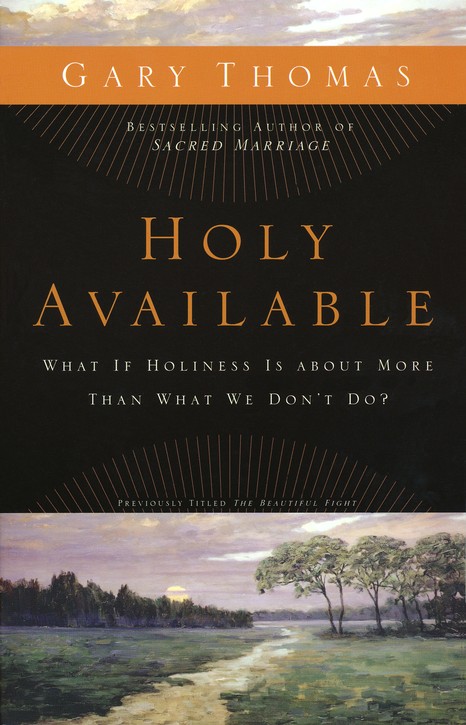
– Gary Thomas in Holy Available

Acts Articles – Prayer 01A

Yesterday I suggested two applications from the example of 120 disciples who devoted themselves to praying in one accord for the Spirit to empower them as witnesses.  But are we supposed to follow their example?  Is this recorded for us to imitate or is it recorded simply to tell us what happened?

Alan Thompson in his book, The Acts of the Risen Lord Jesus, suggests one helpful way forward.  He suggests that something mentioned once is probably to be taken as merely descriptive.  But if Luke mentions something repeatedly, that it is probably to be taken as prescriptive; that is, it is a pattern in the early church that should be a pattern for the church today (see p25-27).

So then, the 120 disciples were devoted to praying together for 10 days.  Do we need to devote ourselves to praying together for 10 days?  Probably not since this is the only occasion that we read of a 10 day period.  And indeed this ten day period between the Ascension and Pentecost (these two great works in salvation history) is unrepeatable.  That is not to say, we couldn’t commit to pray together for 10 days – it may be a great thing to do.  But it is not prescribed for us to do it.

But what about devoting ourselves to praying together apart from the 10 day length?  Is devoting ourselves to praying together merely descriptive, or should we take it as prescriptive.  Three patterns suggest that we should take this as prescriptive.

First, there is a pattern throughout Acts of Christians devoting themselves to prayer together.  It is clearly a regular practice for them.  Why would we think it shouldn’t be a regular practice for us?  And remember that Acts does not give us an exhaustive view of the early church.  Luke merely hits some of the highlights, and apparently Luke thought praying together was important enough to highlight, probably at least in part because he thought we should imitate their devotion to praying together.

Second, if you compare the gospels, the Gospel of Luke has the greatest emphasis on prayer.  Luke clearly wanted his readers to be instructed in prayer, and so it is reasonable that he would continue that instruction into his second volume – the Book of Acts.  Luke is instructing us in how we are to pray by recording for us the practice and teaching of Jesus and the practice of the early church.

Third, there is a perceptible pattern in Acts of the people praying together, the Spirit powerfully working, and the word going forth.  We see it in Acts 1-2 as the 120 pray, the Spirit comes in power, and the word is preached with 3000 people getting saved.  We see it again in Acts 4, as the church prays, the Spirit comes in power, and the people boldly proclaim the gospel.  In Acts 13, the church is praying, the Spirit calls Paul and Barnabas, and thousands will be saved through his missionary work. 

Perhaps we see few people saved today in many of our churches, because we aren’t devoting ourselves to praying together for the Spirit to powerfully work.  Not that we can force the Spirit’s hand, as if he has to act if we pray.  But if we don’t care enough to ask, why would we expect him to act?  If we try to do the ministry on our own without prayer, why would we expect God to bless our ministries?

These three patterns in Luke-Acts makes clear that devoting ourselves to praying together is prescriptive for us.  We are to follow the early church’s example.  What are we waiting for?

Acts Articles – Prayer 01

After seeing Jesus ascend into heaven, the disciples return to Jerusalem to wait for the coming of the Spirit (Acts 1:12-14).  They wait with the women who had supported Jesus and visited his tomb.  They wait with Mary, the mother of Jesus.  And they wait with Jesus’ brothers who did not believe during Jesus’ life, but have come to believe since the resurrection.  In all there are around 120 people waiting. 

Jesus ascended 40 days after the resurrection.  We know the Spirit will come on Pentecost – 50 days after the resurrection.  So what do these 120 followers of Christ do while they wait for 10 days?  They have an extended prayer meeting!

All these with one accord were devoting themselves to prayer. – Acts 1:14a

Notice their example:

  • They prayed with one accord.  They were united in prayer.  They were of one mind, joined together in crying out to God.
  • They were devoted to prayer.  They continued in it.  They were persistent, persevering, constant, busy in prayer.

And what were they praying for?  The context suggests they were praying for the coming of the Holy Spirit.  Jesus had promised that the Spirit would come.  And indeed they are waiting in Jerusalem for the Spirit to come.  Certainly the Spirit was on their minds. 

All of this suggests two applications for us today:

  • As they were devoted to praying together in one accord, so we should be devoted to praying together in one accord.  Each church should unite together in devoted prayer.  Our prayer services should be highly attended, and whenever we gather we should be quick to pray together.
  • As they prayed for the Spirit to come to empower them to be Jesus’ witnesses, so we should pray for the Spirit (who has already come) to empower us to be Jesus’ witnesses.  How might our churches (and communities) change if this became our united prayer?

Healthy Small Town Church

At the RHMA Small Town Pastors’ Conference, Ron Klassen suggested the following six key health indicators from Colossians for a healthy small town church:

1. Respected People’s Commendation (1:1-6) – Do other Christians look at our church with high regard?

2. Twin F’s: Faithfulness and Fruitfulness (1:2, 6) – Are we faithfully doing the right things so that we are fruitful; that is, so lives are being changed?

3. Healthy Relationships (1:4, 8) – Do the people love one another in the Spirit?

4. Faithful Leaders (1:7) – Are the leaders faithful in their service?  Marks of a faithful leader include: making the teaching of the Word a priority (1:6-7), being a servant (1:7, 4:12), being a prayer warrior (4:12), being a hard worker (4:13), and being committed to doctrinal purity (4:12).

5. Commitment to Discipleship (2:6-7) – Is the church committed to going, baptizing, and teaching?

6. Commitment to Progress (1:28) – Is there a desire for the church and its people to mature?

How well does your church meet these key health indicators?  In which indicator does your church particularly need to grow?  Of course no church is perfect, but is your church moving in the right direction?  Regardless, what steps might you take to help it move in the right direction?


Passion Points

Hope you had a good Thanksgiving giving thanks to God for our many blessings!  Here are a few good posts for your weekend reading:

Kevin DeYoung gives us four helpful principles for generous giving.

Bobby Jamieson asks what corporate worship is for (hint: it is more than worship).

Bill Clem argues that gospel community is all about imaging God to each other.

Hope you have a great Lord’s Day applying these three posts!

Restore Us, O God (Remix)

Restore us, O God; let your face shine, that we may be saved!
– Psalm 80:3

Enemies have invaded and ravaged the church collectively and each of us individually.  We need God to restore us, to turn us again to himself.  We need God’s face to shine upon us with grace upon grace.  We desperately need salvation from these enemies:

The Enemy of “Respectable Sins”

These are the “little” sins that we allow, excuse, and tolerate – anxiety, frustration, discontentment, unthankfulness, pride, selfishness, lack of self-control, impatience, irritability, anger, bitterness, unforgiveness, judgmentalism, envy, jealousy, gossip, slander, hurtful words, and worldliness.  Restore us, O God; let your face shine, that we may be saved.

The Enemy of Idolatry

Idols abound all around us in our culture and continually call us to bow down to them.  And too often we do.  We treasure money, shopping, possessions, beauty, dieting, food, people, family, reputation, popularity, sex, sports, TV, sleep, comfort, or ease more than we treasure Christ.  We trust in these idols to bring happiness, fulfillment, and security rather than trusting in Christ and finding in him the true joy he offers.  Restore us, O God; let your face shine, that we may be saved.

The Enemy of Misplaced Priorities

Our priorities too often don’t align with God’s priorities.  We are to seek first the kingdomof Godand his righteousness (Matthew 6:33).  We are to hold the gospel as of first importance (I Corinthians 15:3-4).  We are to live for Christ and for his glory (Philippians 1:21, I Corinthians 10:31).  And yet we continually center our lives on other less important things.  Restore us, O God; let your face shine, that we may be saved.

The Enemy of Busyness

We have filled our lives with trivial matters that mean nothing in light of eternity.  We are too busy to spend much time in the Word, much time in prayer, much time in worship, much time with God’s people, much time in evangelism, much time in service.  Restore us, O God; let your face shine, that we may be saved.

The Enemy of Moralism and Legalism

We have lost sight of the gospel, replacing it with goodness.  We seek to be good, not godly.  And by example and teaching, we seek to make our kids the same.  We have resorted to graceless keeping of Biblical commands mixed with man-made rules in hopes of earning God’s continued favor, rather than dwelling in the gospel that empowers and motivates a godly life.  Restore us, O God; let your face shine, that we may be saved.

The Enemy of Lacking Passion

We have lost our first love (Revelation 2:4).  We have become lukewarm (Revelation 3:16).  We do not earnestly seek God with our whole heart (Psalm 63:1, 119:2).  We do not delight in His Word (Psalm 119:16).  We do not hunger and thirst for righteousness (Matthew 5:6).  We go through the motions with little emotions.  Restore us, O God; let your face shine, that we may be saved.

Do any of these enemies ring true in your church?  In your life?  Then let us join together in repenting and looking to God.  Only he can restore.  Only he can save.  Only he can revive.  Let us long to have his face shine upon us.  Let us join together in crying out:

Restore us, O God; let your face shine, that we may be saved.