Prayer is the offering up of our desires to God in the name
of Christ, for such things as are agreeable to his will.
– Thomas Watson

– Thomas Watson
In Isaiah 31, Judah was trusting in Egypt because they were very strong. They had human strength. Still today we are tempted to put our hope in human strength.
We put our hope in political power. We think that if we just get the right people into office, we can fix our country. But what happens when they fail to accomplish what they promised? Human strength can fail. Are we trusting in political power or the one true God?
We put our hope in military power. We think that if we are strong enough, we will be safe. But what happens when terrorists fly planes into buildings? What happens when the strongest military in the world can’t stop fanatical rebel groups? Human strength can fail. Are we trusting in military power or the one true God?
We put our hope in our own effort to build the church. We think that if we can just work hard enough, make the right plans, have the right methods, adopt the latest strategy or program, that our church will really take off. But God is the one who draws people to Himself. God is the one who changes lives. God is the one who brings growth in the Christian life. Are we trusting in our own efforts or in the one true God?
We put our hope in our own strength, our own ability. But human strength will fail. We are often weak. And yet God’s strength is made perfect in our weakness (II Corinthians 12:9). Are we trusting in our own strength or in the one true God?
It is not that political power or military might or our effort or our ability are wrong, but they are the wrong place to put our hope. God calls us to put our hope in Him.
Are you trusting in human strength or in the one true God?
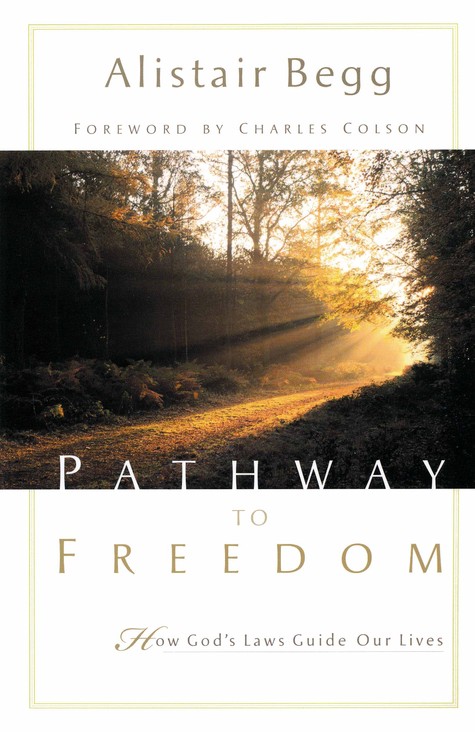 Imagination is a wonderful gift, but when we use it to conjure up our own image of God it leads us astray. It is quite common to hear people say, “I like to think of God as…” and then add whatever picture they have in mind. The problem is that our view of God is to be defined by His revelation of Himself in the Bible, and when we conceive of Him apart from that, it will be misleading at best. Anything we imagine will be inevitably less than God, and when that which is less than God is used to portray God, we are led quickly to blasphemy and idolatry.
– Alistair Begg in Pathway to Freedom
O God our hope – our Holy Lord
Of wisdom, power, and love
Whose judgment’s like a mighty sword
The Lord of Hosts above
O God our hope for each new day
Lord may we turn to you
For all of life, Lord let us pray
Our gaze set firm on you
– From a sermon on Isaiah 31
(To the tune of “O God Our Help In Ages Past”)
In Isaiah 31, Judah was trusting in Egypt because they had a large army. They had the numbers to maybe defeat the Assyrians. Still today we are tempted to put our hope in numbers.
We put our hope in polls. We want to be in the majority. But what happens when we find that we are in the minority? Christians quickly are becoming the minority when it comes to Biblical morality. Does that bother us? Are we trusting in numbers or in the one true God?
We put our hope in big numbers. Big churches are impressive. Small churches are, well, just small. And yet throughout the Bible and church history, God often does great things with just a few, or even one. Are we trusting in numbers or in the one true God?
We put our hope in the numbers in our bank account. If the number is big, there is a sense of security. If the number is small, there is a sense of anxiety. And yet God can take care of us regardless of what is in our bank accounts. Are we trusting in numbers or in the one true God?
We put our hope in the number of friends we have – both real and pretend (think Facebook). We can become obsessed with how popular we are. How many people are liking my post? And yet our significance has nothing to do with our popularity. Are we trusting in numbers or in the one true God?
It is not that being in the majority or having a big church or having lots of money or friends is a bad thing. There is nothing wrong with numbers; it is just the wrong place to put our hope. God calls us to find our hope in Him.
Are you trusting in numbers or in the one true God?
In the First Commandment (Exodus 20:3), God commands us to have no other gods before Him. Why? Here are six reasons not to have other gods:
First, God spoke this command (v1). God Himself commands it – and that should really be enough for us.
Second, God is our God (v2). He has entered into a relationship with us, and we are his people. We ought to show the same allegiance to God that he shows to us.
Third, God saved us (v3). As God saved Israel from slavery to Egypt, so God has saved us from slavery to sin. And we ought to respond with grateful allegiance.
Fourth, God is our Creator (Genesis 1-2). As such we owe our very existence to Him. And so he should be first in our lives.
Fifth, God is the only true God (Psalm 86:10). How foolish for us to exchange fake gods for the one true God. What a horrible slight to God to follow fake gods.
Sixth, God is greater than all the fake gods. He showed Himself greater than the Egyptian gods through the ten plagues. He showed Himself greater than Baal on the mountain in the contest between Elijah and Baal’s prophets. As the one true God he is greater than all fake gods. He can truly help us. He can truly satisfy us. He is greater.
Can you think of other reasons to have no other gods?
– Martin Luther
In Isaiah 30, Judah had turned away from God. They didn’t want to hear God’s instruction (v9). They didn’t want to be confronted with the Holy One of Israel (v11). They wanted to hear smooth things (v10).
Sounds much like today. People don’t want to hear about God’s commands. They don’t want to think about a Holy God to whom they are accountable. They want to hear smooth things, pleasant words. They want to hear about love. Not a holy love or a real love, but a fawning love, a doting love. They want to think that God is happy with them and just winks at their sin.
What about you? Is there a sin that you are excusing? That you don’t want to be confronted with, convicted of? Is there an area of your life where you have turned away from God? Given your allegiance to sin?
God calls us to return to him (v15). He calls us to repent of our sins and follow Him. He wants us to follow his direction (v21). He wants us to give our full allegiance to Him.
So where is your allegiance today?
 Anything that comes between God and us that compromises our walk with him is a god to us. We are saying, “You’re not really enough for this situation, Lord. You are not providing for me or protecting me or fulfilling me in the ways that I need, so I am bringing this other god into my life to close the gap between your inadequacy and my needs.”
– Jani Ortlund in His Loving Law, Our Lasting Legacy
Ouch!
Stay on the path – don’t walk away
Don’t trust in empty things
Don’t turn from God and disobey
Beware of all straying
Stay on the path of his great grace
Trust in Him and follow
He’ll stay with you throughout life’s race
Then heaven’s joys you’ll know
– From a sermon on Isaiah 30
(To the tune of “Amazing Grace”)
 Brian J. Mikul