Where Is Your Trust?

In Isaiah 30, Judah is trusting in Egypt to save them from the Assyrian army. But Egypt “cannot profit them” (v5). Egypt’s help is “worthless and empty” (v7).

Still today, people trust in empty things. Some trust in other gods. Many trust in their wealth, or their success, or their job, or their health, or their friends, or the government. And yet all of these can fail – prove empty like Egypt.

God called Judah, and he calls us, to trust in Him. He is the “LORD God” (v15) – the one true God. He is the “Holy One” (v15) – beyond us and greater – able to help us. He is the “Holy One of Israel” (v15) – he entered into a relationship with Israel. He cared about them and wanted to help them. And he has entered into a relationship with us and wants to help us.

And so he calls us to rest in Him, to be still before Him, and trust Him (v15). And in this trust we find strength in the midst of the trials and struggles of life (v15). We don’t need to freak out, but rest quietly in Him, looking to Him for what we need.

He calls us to wait expectantly for Him (v18). He calls us to cry out to Him with the assurance that he will answer, and that he will be with us (v19-20). He calls us to listen to Him for guidance through life (v21). He calls us to look to Him in all things – to trust Him.

We can trust in empty things or we can trust in our God. Where is your trust today?

Passion Points

Here are some good posts for your weekend reading:

Teaching Children the Ten Commandments – Michael Snow
Michael shares the Ten Commandments in rhyme from the McGuffey readers.  Looks like a good way to teach young children – maybe it could be put to music.

Gentleness Is Not an Option – Dane Ortlund (via Jared Wilson)
[G]entleness is essential to Christian living. It is not an add-on. It is . . . one of the few indisputable evidences of the Holy Spirit alive and well within someone.

Sobering Up: The Prerequisite to a Good Prayer Life – Darryl Dash
Sobering up means that we see reality as it really is; that we recognize that time is short; that we give up any thoughts of trying to live or serve apart from the enablement that only God can offer.

The Tone Deaf Singer – Tim Challies
We sing best when that gospel is dwelling richly within us. God is not looking at the quality of our tone or the perfection of our pitch. He is looking at the heart. 

Hope you have a great Lord’s Day praising our Lord from your heart with your local church!

What We Are Supposed To Look Like

RuleOfLoveThe Law [Ten Commandments] is not revealed to God’s people as the means by which they should earn their redemption. Rather, the Law is revealed to show them how they can be conformed to the image of their loving, covenant Lord…. Christ perfectly fulfilled the obligations of the Law. If we are to reflect the image of Christ, the Law will assist us by showing us what we are supposed to look like.

– J. V. Fesko in The Rule of Love

Consider Our Dependence Upon God

To grow in humility, we need to renew our minds with Biblical truth and train ourselves for godliness.

Nor is he served by human hands, as though he needed anything, since he himself gives to all mankind life and breath and everything. – Acts 17:25 (ESV)

We need to renew our minds by considering our dependence upon God. I am completely dependent upon him for my next breath, my health, and the length of my life. I am completely dependent upon him for success, provision, abilities, and blessings. I cannot exist or accomplish anything on my own.  I am completely dependent upon God. This is a truth that humbles us.

So let’s train ourselves in this truth by praying. As we cry out to God for help, we are acknowledging our dependence upon him. We are expressing our need of assistance from the One who is greater and higher than we are. This is a practice that can humble us.

Pray for God’s help and consider our dependence upon God – and so grow in humility.

Also in this Series

Growing in Humility

Consider Our Smallness Before God

Responding to God’s Words

In Sunday School, my church has started a study on the Ten Commandments. As a result, you will be seeing lots of quotes and thoughts on the Ten Commandments during the next several weeks. This past Sunday was an introduction.

HisLovingLawJani Ortlund has a wonderful book on how to pass on the Ten Commandments to our children. In it, she suggests three things we should do with the Ten Commandments:

The first thing we should do is listen to his words… Listening is communing with God. It is seeing reality from his perspective…

The second thing we should do is love his words… Open, eager cherishing of God’s words leads us into deeper intimacy with him. Loving his words is experiencing life in his presence…

The third thing we should do is leave his words. His words are for listening, for loving, and also for leaving a legacy to the children in our lives… Intentional, insightful teaching of God’s words brings our families into a sacred accountability with God. It is passing on a way of life that will last forever.

So how are we doing in our response to God’s words? Are we listening? Do we love them? Are we passing them on to the next generation?

Sermon Songs: Isaiah 29

The world is spirit’ly asleep
They’re deaf, ignore the Word
Cry out to God and for them weep
Proclaim ‘til all have heard

Our hearts grow cold to the gospel
To God draw near and look
Cry out to Him for revival
Open and read the Book

Our country lives in rebellion
God’s judgment’s drawing near
Fight temptation, flee from all sin
Speak Christ to all who’ll hear

From a sermon on Isaiah 29
(To the tune of “Amazing Grace”)

What Love Looks Like

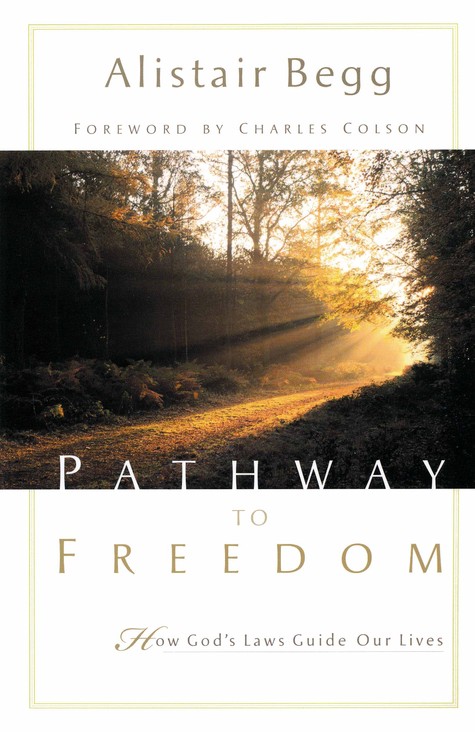
pathwaytofreedomThe Ten Commandments spell out what love for God and our neighbors looks like. The content of our love for God and neighbor is not for us to decide. We are too sinful, too selfish, and too foolish to make our own decisions about these matters.

– Charles Colson in the Forward to
Pathway to Freedom by Alistair Begg

Stir Up Your Heart

Yesterday we asked the question: where is your heart? Today we want to consider how we can stir up our heart for God. In Isaiah 29, God not only confronts the people with their heartless worship (v13), he goes on to tell them that he is going to a do a great wonder that will baffle the wisdom of men (v14). What is this great wonder? Isaiah never tells us. But Paul does.

In I Corinthians 1:18-19, Paul quotes this verse in reference to the cross. The cross is the great wonder that God would do that would baffle the wisdom of men. At the cross, God in the flesh dies for sinful humanity. At the cross, God’s mercy and judgment meet. At the cross, God shows the full extent of his love for us. And as we meditate on the cross, on his great love for us, our hearts are stirred up to love him in response. As we humbly kneel before the cross we “obtain fresh joy in the Lord” (Isaiah 29:19).

Verse 19 goes on to say that we will “exult in the Holy One of Israel.” He is holy, beyond us, glorious. As we meditate on his greatness, our fear of God transcends the mere command of men. Our fear of God becomes real; our worship becomes real. Our hearts are stirred up by his glory.

So let us draw near to God. Let us meditate on the cross and on his glory, and so stir up our hearts to beat for him.