Just discovered a new song written by D.A. Carson and Sandra McCracken that goes really well with the sermon I’m preaching this Sunday. You can listen to it below. Find out more and download the music and song sheet for free here.
Tag: Discipleship
Prayer Quote of the Week
 I commend to you the importance of watchfulness over your prayers. Prayer is that point in religion at which you must be most of all on your guard. Here it is that true religion begins; here it flourishes, and here it decays. Tell me what a man’s prayers are, and I will soon tell you the state of his soul. Prayer is the spiritual pulse. By this the spiritual health may be tested.
– J.C. Ryle
Reflections on Deuteronomy 27-30
Our passage today calls for a decision to serve the Lord.
- Joyful service – Their service was not to be grim and glum. Rather they were to serve the Lord with joy and gladness (28:47). What is your attitude toward serving the Lord?
- Choices and Consequences – Moses lays out in very clear terms their choice and the consequences of that choice. They can serve the Lord and be blessed beyond their wildest imaginations, or they can turn away from God and be punished beyond their worst nightmares. Their choice will have severe consequences. Our choices too have consequences. What choices are you making? What might be the consequences of those choices?
- Future Judgment/Restoration – Moses predicts Israel’s failure and the terrible results that will come. Tragically, history will prove these predictions true. Yet God will bring them back to the land when they return to the Lord. All of this is yet to come in our study of the Old Testament. God in his perfect knowledge foreshadows the future.
Deuteronomy 27-34: Two Paths
(27-32) Moses presents two paths to the people of Israel. One path is the road of disobedience. Describe the heart of the person who takes this path (29:4, 18-19; 30:17).
What would be the results according to 28:15-68? Be specific.
(27-32) The second path is the road of obedience. Describe the heart of the person who takes this path (28:47, 30:6, 14, 32:46).
How does a person get this kind of heart?
What would be the results according to 28:1-14? Be specific. Compare with the results of disobedience.
(29-31) What part does the Word play in in choosing the path of obedience (29:29, 30:11-14, 31:10-13, see Hebrews 2:1)?
How might we apply these principles to our lives today?
(31-32) Moses wrote a song to encourage the people to follow the path of obedience. What part have songs played in your life to encourage you to follow one of the two paths?
(31) The path of obedience places us on a path of conflict. Israel was going to follow God into the Promised Land. What instructions and assurances does God give the people (v1-8, 23)?
How do these instructions and assurances apply to our conflicts today (see also Matthew 28:19-20)?
(27) What happens when we fail to obey (v26)? How does Jesus address this need in our lives (Galatians 3:10-14)?
(34) The book closes by stating that there has never been another prophet like Moses. But we know another prophet is coming (18:15-19) who will be greater (Hebrews 3:1-5). In what ways? How must we respond?
Passion Points
Here are some good posts for your weekend reading:
17 Benefits to Reading the Entire Bible – Kristen Wetherell (FTC)
Recovering the Priority of Personal Holiness – Alistair Begg (Ligonier)
4 Essentials for Finishing Well – Jerry Bridges (Crossway)
3 Keys to Listening During Sermons – Dave Jenkins (GCD)
Slight and Superficial
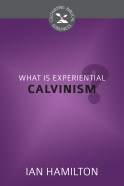 People have such slight and superficial views of sin because they have such slight and superficial views of God!
– Ian Hamilton in What Is Experiential Calvinism?
Reflections on Deuteronomy 23-26
Our passage today concludes the laws that the people of Israel were to obey.
- Clean Laws – Our passage begins with laws about who may assemble before the Lord and laws about keeping the camp pure. God is in the camp, so the camp must be holy. God dwells within us, so we must keep ourselves clean within – we are to be holy as God is holy. Are you striving for holiness?
- Poor Laws – Many laws show God’s concern for the poor – the sojourner, the widow, the orphan. While the approach may change, God wants us to care for those in need. How are you reflecting in your life God’s concern for the poor?
- Universal Laws – Many laws flow straight out of the 10 Commandments and so are binding on us. These include laws prohibiting prostitution (7th), breaking vows to the Lord (9th), kidnapping (8th), and dishonesty in buying and selling (8th).
- Giving Laws – Finally our passage ends with instructions for Israel to bring their first fruits and tithes to the Lord in gratitude for his provision and to care for the needy. This giving is to be a time of worship and rejoicing. What is your attitude when you give to the Lord?
Growing Up
 Every member should grow up and use a towel, not wear a bib. They should not be immature consumers but eager servants.
– Tony Merida in Exalting Jesus in Ephesians
Prayer Quote of the Week
 I commend to you the importance of fullness in prayer…. I am afraid the private devotions of many are most painfully scanty and limited; just enough to prove they are alive and no more. They really seem to want little from God.
– J. C. Ryle
Reflections on Deuteronomy 18-22
Our passage today announces another prophet and then presents numerous instructions for the people of Israel to follow as they enter the land.
- New Prophet – Moses predicts the coming of another great prophet. The New Testament clearly applies this prophecy to Jesus (Acts 3:22-23; 7:37). We must listen to him. Are you?
- Do not fear – When the people of Israel went into battle, they were instructed not to be afraid because the Lord would be with them to fight for them. What battles are you facing in your life? You need not fear for the Lord is with you to help you.
- Laws, Laws, Laws – What to do with all these laws? Laws that restate the 10 Commandments are universal laws we should apply to our lives. Many laws apply the 10 Commandments to life at that time, which may need to be reapplied for our day. Punishments are civil laws to govern the nation of Israel under the Mosaic Covenant, and are not binding on us today. Other laws that are not clearly universal laws belong to the Mosaic Covenant but may teach important principles for us to live by. What can you learn from the laws in our passage today?
- Cursed on a tree – A man who is hung on a tree is cursed by God (21:22-23). As we will see, a man who fails to keep God’s commands is also cursed (27:26). Since we are disobedient, we are under God’s curse. But Jesus took our curse upon himself by being hung on a tree that we might be saved (see Galatians 3:10-14).
 Brian J. Mikul