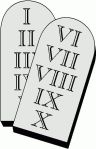
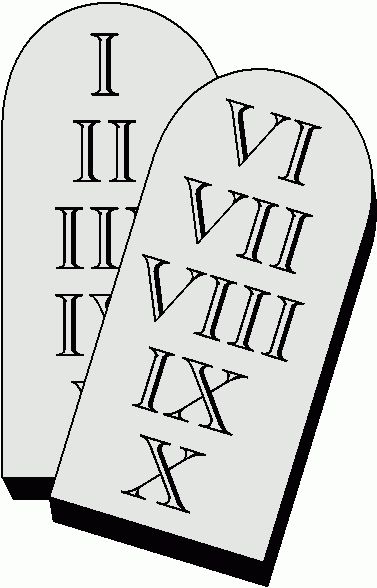
 In Exodus 20, the fourth commandment required Israel to take a Sabbath rest on the seventh day of each week. This pattern was established by God as he rested on the seventh day from his work of creation. And so while the command is indeed part of the Mosaic Covenant, it is also a pattern built into the very framework of creation.
In Deuteronomy 5, a different reason was given for keeping the Sabbath. God reminded them that they were slaves in Egypt, but God had saved them out of their slavery. And so everyone (even the animals!) ought to enjoy and celebrate this new freedom by resting on the Sabbath. Here was a great blessing for everyone to enjoy!
And yet, by Jesus’ day, the Sabbath had become a burden with a myriad of man-made rules attached to it. And so Jesus teaches us further about the Sabbath in Matthew 12:5-14. He makes clear that acts of ministry (like priests offering sacrifices) can be part of the Sabbath. He demonstrates that acts of mercy (like Jesus healing people) can be part of observing the Sabbath. And acts of necessity (like getting a sheep out of a pit) are also acceptable on the Sabbath. In other words, while it is a day of rest and worship, we can do good things for other people (and animals) on this day. Again it was to be a day of blessing!
Many Christians these day have lost sight of the Sabbath, and so have lost out on a great blessing. Some Christians argue that this command is only for Israel, and has no place today. Some claim that since this command is not repeated in the New Testament, that it is not applicable to us. But here in Matthew 12, and indeed scattered throughout the gospels, we find Jesus teaching about the Sabbath. Apparently the gospel writers believed Christians needed to be instructed on the Sabbath. If it does not apply to us, why include it in the gospels when there is so much Jesus must have said and did that we know nothing about?
And in Matthew 12, we are told that Jesus is the lord of the Sabbath. The Lord we follow is lord of the Sabbath, which strongly suggests we ought to follow him in keeping it. And in Mark 2:27, we are told that the Sabbath was made for man – again it is a blessing designed for people!
While the Sabbath command remains, its application changes under the New Covenant. Because Jesus rose from the dead on the first day of the week, the church quickly started meeting for worship on that day (Acts 20:7, I Corinthians 16:2) instead of the seventh day. Instead of remembering creation and salvation from Egypt, now we remember Jesus’ work of re-creation and salvation from sins through the cross and resurrection. And so the early church celebrated our salvation through the Lord’s Supper (Acts 20:7), did acts of ministry like teaching (Acts 20:7), and also acts of mercy like giving (I Corinthians 16:2) – all on the first day of the week.
My purpose here is not only to encourage you to rethink the fourth commandment’s application for today, but even more to encourage you to consider what a blessing it would be for all of us to follow it whether it is required or not.
- What a blessing to step out of the commercial rat race one day a week.
- What a blessing to rest from the busyness and constant running of the rest of the week.
- What a blessing to get a break from our jobs and school work once a week.
- What a blessing to have a day set aside for corporate and private worship.
- What a blessing to have a day to spend extra time in the Word and prayer, growing in our relationship with the Lord.
- What a blessing to spend time with God’s people doing ministry and acts of mercy.
- What a blessing to have time free to spend with family and friends.
The Sabbath is a command, but it is also a gift. A day of worship and rest. A day of delight and joy.
A day of blessing.

 One of American’s defining characteristics is its rugged individualism. Autonomous individuals often recoil at the thought of submitting to authority. Yet such individualism, or self-rule, is at odds with a prominent teaching of Scripture to submit to the authority of God and the authorities whom he appoints. Submitting to authority is the primary focus of the fifth commandment.

 Brian J. Mikul