Be Thou My Vision

For St Patrick’s Day, I thought I would explore another hymn, one of my favorites – Be Thou My Vision.  St Patrick was born in 373 in Scotland.  At 16 he was captured and taken to Ireland as a slave.  He eventually escaped and returned home.  But then God called him to return to Ireland as a missionary.  Though opposed by the druids, he preached and evangelized, ultimately planting 200 churches and baptizing thousands.  The new Irish church endured, and in the 8th century, Be Thou My Vision was written:

Rop tú mo baile, a Choimdiu cride:
ní ní nech aile acht Rí secht nime.
Rop tú mo scrútain i l-ló ‘s i n-aidche;
rop tú ad-chëar im chotlud caidche.

At least those are the first lines in Old Irish according to Wikipedia.  They were translated to English in 1905 by Mary Elizabeth Byrne to yield:

Be thou my vision O Lord of my heart
None other is aught but the King of the seven heavens.
Be thou my meditation by day and night.
May it be thou that I behold even in my sleep.

You can read the rest at the Wikipedia link above.  Later Eleanor Hull took Byrne’s translation and crafted it into the verses we are familiar with.  The tune is from a traditional Irish folk song from the area of Ireland where St. Patrick challenged the Druids with the gospel. 

The verses of the hymn are below.  Notice that the hymn is essentially a prayer that one’s mind and heart would be set completely on Christ.  In Sunday School we have been discussing lately the reality that our actions are based on what we desire in our hearts, and what we desire is based on what we believe in our minds.  So if our minds and hearts are completely set on Christ – what a difference that would make in our lives.  May Christ indeed be our Wisdom and Treasure!

As you look at the words below, notice also the middle verse missing from every hymnal I’ve ever seen.  You can listen to the hymn with the five verses in the video above.  For another devotional thought and more history, see this link.

Be thou my vision, O Lord of my heart,
naught be all else to me, save that thou art;
Thou my best thought by day or by night,
Waking or sleeping, thy presence my light.
Be thou my wisdom, thou my true word,
I ever with thee and thou with me Lord;
Thou my great Father, I thy true son;
Thou in me dwelling, and I with thee one.
Be thou my battle shield, sword for the fight;
Be thou my dignity, thou my delight;
Thou my soul’s shelter, thou my high tower:
Raise thou me heavenward, O Power of my power.
Riches I heed not, nor man’s empty praise:
Thou mine inheritance now and always;
Thou and thou only first in my heart;
High King of Heaven, my treasure thou art.
High King of heaven, my victory won,
May I reach heaven’s joys, O Bright Heaven’s sun!;
Heart of my own heart, whatever befall,
Still be my vision, O Ruler of all.

Book Look: Fresh Encounters

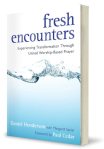
Fresh Encounters by Daniel Henderson is an articulate and passionate call for the church to come back to corporate prayer.  Henderson answers common misconceptions about corporate prayer and shows how corporate prayer is both the expectation of the New Testament and the example of the early church.  Yet his call is not to some boring long-winded prayer meeting for endless requests.  Rather, he maps out his vision for a more God-centered worship-based time of prayer.  And he shows church leaders how to move to a greater prayer emphasis in the church, complete with numerous corporate prayer plans and ideas.  Highly recommended.

Book Look: Redeeming Singleness

Redeeming Singleness – Barry Danylak

Redeeming Singleness by Barry Danylak is not your usual book on singleness.  It is not about dating, nor is it even focused on bringing out principles for living the single life.  Rather it offers a tour through the Bible’s teaching on singleness. 

Starting in Genesis, he shows how physical offspring, and hence marriage, were of highest importance in the Old Testament.  Physical offspring was a mark of God’s blessing, and necessary to preserve one’s inheritance and name.  Through physical offspring would come the Messiah.  You did not want to be single in the Old Testament. 

But everything changes in Jesus.  The Messiah has come.  Our eternal inheritance and name are found in Jesus.  The mark of blessing is not having offspring, but being adopted as God’s offspring.  And the focus has moved from physical offspring to spiritual offspring.  Now, it is okay to be single.  Indeed, following Jesus and Paul, it is good to be single.

These are the strands Danylak traces through the pages of Scripture.  He closes by exploring Paul’s sustained discussion of singleness in I Corinthians 6-7, and what that means for singles today. 

By connecting the dots of the Scripture’s teachings on singleness, new insights are gained.  Many books simply re-clothe familiar truths, but I found myself actually learning again and again.  I used his biblical study as the basis of a two week sermon series, and saw the same learning going on in the eyes of the congregation.  His study has become foundational in my thinking on singleness, and will influence directly and indirectly my future posts this week on singleness based on those sermons. Highly recommended for pastors, any who minister to single adults, and anyone who is single.

Book Look: A Praying Life

A Praying Life – Paul Miller

How does prayer and life intersect?  This book helps answer that question.  Miller takes Biblical principles and shows how they have intersected with his family life.  This dual approach anchors the book in truth while also making it practical and encouraging – a greater prayer life is not beyond our reach. 

He begins by helping us see that we are helpless – and hence must pray.  Our problem is that we think we can do life on our own – and so we don’t pray.  He then explores the need to trust God so that we will pray.  If I don’t trust God, I simply won’t bother with prayer (why would I pray if I can’t trust him?).  Both our helplessness and his trustworthiness were ideas I needed to wrestle with and grasp onto, and I suspect others would benefit from his exploration of these foundational topics as well.  He continues by considering our requests, and helping us to see how prayer and our daily life fits into God’s bigger story.  Finally, he suggests some practical ideas (like using prayer cards and a prayer journal) to help us grow in prayer.  Recommended.

Top Books From 2010

I am a reader.  I recognize not everyone is, but I am.  And I find that reading good Christian books is a great help to me as I seek to grow in my walk with Christ.  There are other ways to grow, but reading certainly can be a powerful method.  Each year I try to read some books that will challenge me and spur me on.  So here are five books I read in 2010 that challenged me, and that I would recommend for your consideration as you seek to grow in the Lord.


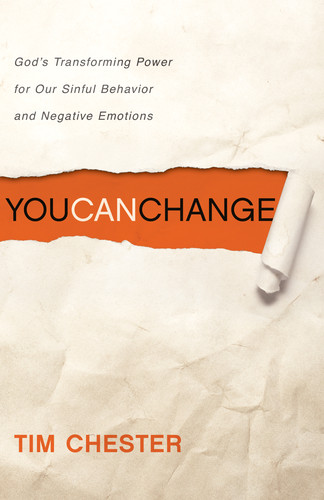
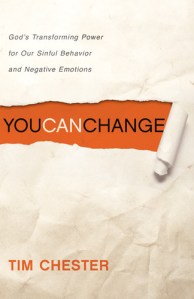
You Can Change
– Tim Chester. 
Chester gives a great overview of the Biblical principles related to growing in holiness, and then suggests practical ways to apply the principles to help you turn away from sin and toward the Lord. 


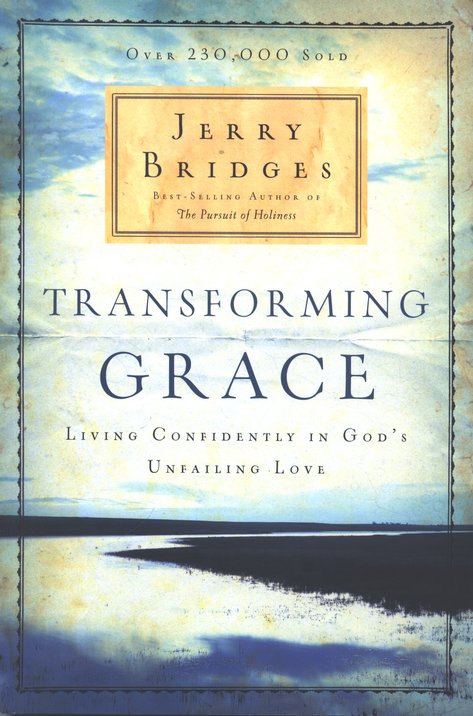
Transforming Grace– Jerry Bridges
Bridges takes you on a Biblical tour of God’s amazing grace that touches every part of our lives.  This was my third time through it – well worth it!


The Praying Life– Paul Miller
Miller shares not only Biblical principles but his personal struggles and growth with prayer.  It will challenge you to approach prayer in a whole new way.


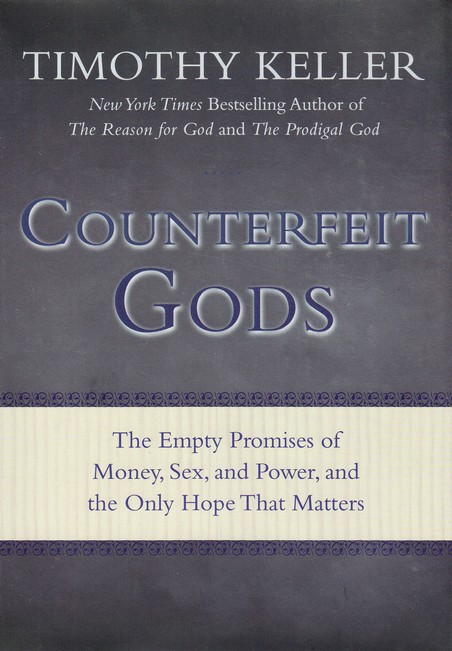
Counterfeit Gods– Timothy Keller
Idolatry wasn’t just something from long ago – it is alive and well today.  Keller helpfully explores the gods of love, money, success, and power, as well as helps us identify our own hidden gods.


This Momentary Marriage– John Piper
Piper helps us think Biblically about marriage, and how that should affect our own marriages.  Also includes chapters on singleness and parenting.

Resolution Principles

After evaluating the past year and considering how you would like to grow in the new year, it is time to write down your resolutions for the coming year.  The biggest problem with new years resolutions is that they often are never accomplished.  While I do this every year, my record is rather spotty on follow-through.  So let me share ten principles I am learning along the way when it comes to new years resolutions:

  1. Be specific.  “Growing in your walk with God” is a great desire, but how will you do it?  You need to write out exactly how you want to grow in the coming year.
  2. Be realistic.  If you have never had a quiet time with God, resolving to start spending two hours each day is probably not realistic.  Take small steps.
  3. Keep it short.  The longer your list, the harder it will be to carry through.  The shorter your list, the more you can focus on making each one happen.
  4. Be Biblical.  Make sure your requests agree with the Scriptures.  How has he challenged you to grow recently as you have been in his Word?
  5. Be prayerful.  Ask God how he wants you to grow.  Ask him to guide you as you evaluate and ponder.
  6. Be committed.  I just read in I Timothy 4 that we should train ourselves for godliness.  We make resolutions to guide this training.  But we must commit to carry through.  Training will require some real effort on our part.  Commit to work hard to do what you resolve to do.
  7. Be grace-dependent and grace-empowered.  While we must train ourselves, God is the one who changes people.  You need his help.  Seek his help regularly in prayer.  At the same time recognize that he will help you.  His grace will empower you.  We need not walk defeated.
  8. Be grace-filled.  Change is a struggle.  You will fail.  Remember the cross covers all your sins.
  9. Review regularly.  If you write your resolutions down and never come back to them, you have wasted your time.  You must regularly review them and recommit to fulfill them.
  10. Be flexible.  As you review your resolutions, be flexible enough to change strategies along the way that aren’t working.  If your life situation changes during the year, be ready to adjust your resolutions.  Perhaps God challenges you to add one or postpone one during the year.  Life changes – be ready to make changes to your resolutions as you go.

May God help us to grow and change for his glory this year!

Jonathan Edwards’ Resolutions

In the last two posts I have given some suggestions of questions to ask to evaluate our lives and ponder changes we might want to pursue for the coming year.  Another way to profitably evaluate ourselves and consider the coming year is to look at other people’s resolutions.  Perhaps some of their resolutions might suggest ways we want to live in the coming year.

Jonathan Edwards recorded 70 resolutions not simply to guide one year but to guide his life.  Below are a sampling.  All 70 can be found here.

1. Resolved, that I will do whatsoever I think to be most to God’s glory, and my own good, profit and pleasure, in the whole of my duration, without any consideration of the time, whether now, or never so many myriads of ages hence. Resolved to do whatever I think to be my duty, and most for the good and advantage of mankind in general. Resolved to do this, whatever difficulties I meet with, how many and how great soever.

2. Resolved, to be continually endeavoring to find out some new invention and contrivance to promote the forementioned things.

3. Resolved, if ever I shall fall and grow dull, so as to neglect to keep any part of these Resolutions, to repent of all I can remember, when I come to myself again.

4. Resolved, never to do any manner of thing, whether in soul or body, less or more, but what tends to the glory of God; nor be, nor suffer it, if I can avoid it.

5. Resolved, never to lose one moment of time; but improve it the most profitable way I possibly can.

6. Resolved, to live with all my might, while I do live.

7. Resolved, never to do anything, which I should be afraid to do, if it were the last hour of my life.

8. Resolved, to act, in all respects, both speaking and doing, as if nobody had been so vile as I, and as if I had committed the same sins, or had the same infirmities or failings as others; and that I will let the knowledge of their failings promote nothing but shame in myself, and prove only an occasion of my confessing my own sins and misery to God.

9. Resolved, to think much on all occasions of my own dying, and of the common circumstances which attend death….

24. Resolved, whenever I do any conspicuously evil action, to trace it back, till I come to the original cause; and then both carefully endeavor to do so no more, and to fight and pray with all my might against the original of it.

25. Resolved, to examine carefully, and constantly, what that one thing in me is, which causes me in the least to doubt of the love of God; and to direct all my forces against it….

28. Resolved, to study the Scriptures so steadily, constantly and frequently, as that I may find, and plainly perceive myself to grow in the knowledge of the same….

More Questions For The New Year

In addition to the ten questions I suggested in my last post, I would encourage you to check out Donald Whitney’s questions to ask for the New Year.  Whitney asks some great questions to help you evaluate your life and ponder the coming year.  The first ten in particular are really helpful.  I have used these questions for the last few years, and also print them out as a bulletin insert for our church each year.

Questions For the New Year

Each year, I take this time to evaluate my life and consider changes/growth I would like to see.  Here are 10 questions related to the Three Passions idea that I am asking that you might find useful as well:

  1. How can I grow in my awareness and understanding of God’s love, mercy, and grace this year?
  2. How can I grow in my relationship with God this year?
  3. How can I grow in my relationship with my family this year?
  4. How can I grow in my relationship with my church family this year?
  5. How can I grow in my relationship with ___________ this year?
  6. In what ways do I need to treat God better this year?
  7. In what ways do I need to treat my spouse better this year?  My parents?  My children?  My siblings?
  8. In what ways do I need to treat my church family better this year?  My pastor?
  9. In what ways do I need to treat my neighbors better this year?  Friends?  Co-workers?  Classmates?
  10. In what ways do I need to treat _____________ better this year?

Book Look: You Can Change

You Can Change – Tim Chester

This was one of the best books I have read this year.  It gives a great overview of the Biblical principles of sanctification, and then helps the reader apply those principles in very practical ways.  It begins by reminding us of the goal of change – to be conformed into the image of Christ.  From there it looks at right motives and method.  The center of the book tackles the issue of idolatry – central to any change we will make.  It concludes with roadblocks that keep us from change, disciplines (including community) to help us change, and a final challenge to press on.  Each chapter ends with reflections, and a section designed to help the reader change in one area chosen by the reader.  So how do you want to change in the coming year?  This book would be a great resource to help and encourage you in the process.