O For A Thousand Tongues To Sing

A year after Charles Wesley was saved, he penned the hymn, O For A Thousand Tongues To Sing.  In this hymn he wants to express his praise to God for his salvation.  Notice his joy that salvation has been applied to him in this stanza:

I felt my Lord’s atoning blood
Close to my soul applied;
Me, me He loved, the Son of God,
For me, for me He died!

Notice also that you have probably never seen this stanza as most hymnals only have four or five verses.  But Wesley wrote many more as you can see below.  Notice how he moves from praise in the beginning stanzas to a plea to other sinners to find the salvation that he has found in the later verses.  For an organ version of one verse click here or listen to the music video at the beginning of this post for a simple rendition of the most familiar verses.

O for a thousand tongues to sing
My great Redeemer’s praise,
The glories of my God and King,
The triumphs of His grace!

 My gracious Master and my God,
Assist me to proclaim,
To spread through all the earth abroad
The honors of Thy name.

Jesus! the name that charms our fears,
That bids our sorrows cease;
’Tis music in the sinner’s ears,
’Tis life, and health, and peace.

He breaks the power of canceled sin,
He sets the prisoner free;
His blood can make the foulest clean,
His blood availed for me.

He speaks, and, listening to His voice,
New life the dead receive,
The mournful, broken hearts rejoice,
The humble poor believe.

Hear Him, ye deaf; His praise, ye dumb,
Your loosened tongues employ;
Ye blind, behold your Savior come,
And leap, ye lame, for joy.

In Christ your Head, you then shall know,
Shall feel your sins forgiven;
Anticipate your heaven below,
And own that love is heaven.
Glory to God, and praise and love
Be ever, ever given,
By saints below and saints above,
The church in earth and heaven.

On this glad day the glorious Sun
Of Righteousness arose;
On my benighted soul He shone
And filled it with repose.

Sudden expired the legal strife,
’Twas then I ceased to grieve;
My second, real, living life
I then began to live.

Then with my heart I first believed,
Believed with faith divine,
Power with the Holy Ghost received
To call the Savior mine.

I felt my Lord’s atoning blood
Close to my soul applied;
Me, me He loved, the Son of God,
For me, for me He died!

I found and owned His promise true,
Ascertained of my part,
My pardon passed in heaven I knew
When written on my heart.

Look unto Him, ye nations, own
Your God, ye fallen race;
Look, and be saved through faith alone,
Be justified by grace.

See all your sins on Jesus laid:
The Lamb of God was slain,
His soul was once an offering made
For every soul of man.

Awake from guilty nature’s sleep,
And Christ shall give you light,
Cast all your sins into the deep,
And wash the Æthiop white.

Harlots and publicans and thieves
In holy triumph join!
Saved is the sinner that believes
From crimes as great as mine.

Murderers and all ye hellish crew
In holy triumph join!
Believe the Savior died for you;
For me the Savior died.

With me, your chief, ye then shall know,
Shall feel your sins forgiven;
Anticipate your heaven below,
And own that love is heaven.

And Can It Be

On the day of Charles Wesley’s conversion, he penned the hymn Where Shall My Wondering Soul Begin which we looked at in a past post.  Soon after, he penned a much more familiar hymn with much the same message – And Can It Be.  Like his first hymn, he expresses his amazement that God would save him – notice expecially his use of the phrase “for me” in the first verse.   Notice his excitement at his forgiveness, the quenching of God’s wrath, and the reality that in Christ he will face no condemnation.   By the way, also notice that he wrote more than the four verses in our typical hymnals.  I particularly like the fifth verse.  The entire hymn is one of my favorites, and I especially like verse four.  I confess though that I have a doctrinal difference with one line in verse three.  “Emptied himself of all but love” I suspect attempts to address Philippians 2, but I would disagree that the Son gave up his other attributes to become a man.  If you want the music, you can link here for an organ version of the first verse or try a beautiful rendition of the four most common verses in the music video at the beginning of this post. 

And can it be that I should gain
An interest in the Savior’s blood?
Died He for me, who caused His pain—
For me, who Him to death pursued?
Amazing love! How can it be,
That Thou, my God, shouldst die for me?
Amazing love! How can it be,
That Thou, my God, shouldst die for me?

’Tis mystery all: th’Immortal dies:
Who can explore His strange design?
In vain the firstborn seraph tries
To sound the depths of love divine.
’Tis mercy all! Let earth adore,
Let angel minds inquire no more.
’Tis mercy all! Let earth adore;
Let angel minds inquire no more.

He left His Father’s throne above
So free, so infinite His grace—
Emptied Himself of all but love,
And bled for Adam’s helpless race:
’Tis mercy all, immense and free,
For O my God, it found out me!
’Tis mercy all, immense and free,
For O my God, it found out me!

Long my imprisoned spirit lay,
Fast bound in sin and nature’s night;
Thine eye diffused a quickening ray—
I woke, the dungeon flamed with light;
My chains fell off, my heart was free,
I rose, went forth, and followed Thee.
My chains fell off, my heart was free,
I rose, went forth, and followed Thee.

Still the small inward voice I hear,
That whispers all my sins forgiven;
Still the atoning blood is near,
That quenched the wrath of hostile Heaven.
I feel the life His wounds impart;
I feel the Savior in my heart.
I feel the life His wounds impart;
I feel the Savior in my heart.

No condemnation now I dread;
Jesus, and all in Him, is mine;
Alive in Him, my living Head,
And clothed in righteousness divine,
Bold I approach th’eternal throne,
And claim the crown, through Christ my own.
Bold I approach th’eternal throne,
And claim the crown, through Christ my own.

Don’t Just Give Thanks

It is Thanksgiving in a few days – that time of year when we think about all our blessings, and presumably give thanks to God.  Of course giving thanks to the Lord should be a daily habit, but that isn’t the point of this post.  What I want to suggest here is that true gratitude goes further than simply giving thanks.  Gratitude leads us to give our lives.

For eleven chapters, Paul shares with the Romans the greatest blessing God has ever given.  He explores the ins and outs of our great salvation that Christ purchased for us through the cross and enpty tomb.  Then he begins chapter 12: “I appeal to you therefore, brothers, by the mercies of God….”  In other words, in light of God’s great mercy found in this great salvation, you should….  You should what?  Give thanks?  No, much more – “present your bodies as a living sacrifice….”  In response to the greatest blessing of all, Paul tells us to give our lives.  Sacrifice ourselves for God. 

How do we sacrifice ourselves for God?  By sacrificially giving of ourselves for his kingdom.  By sacrificially giving of ourselves for others made in God’s image.  We sacrifice our time to share the gospel, listen, encourage, help, serve.  We sacrifice our reputation by helping someone undesirable in the world’s eyes or telling others about Christ even if we are labeled as religious nuts.  We sacrifice our finances as we give to someone with a need, give to our local church to advance its ministry for Christ, give to missionaries seeking to take the gospel around the world.

Or in Jesus’ words – we deny ourselves, take up our cross, and follow him.  We stop living for ourselves.  We are willing to suffer for his sake.  We are willing to follow him wherever he leads to do whatever he calls us to do.

All of this, not to try to pay God back for his blessings.  Not to try to earn his favor.  But simply because we are blown away by his incredible blessings, and so out of gratitude and love we give of ourselves. 

This Thanksgiving as we reflect on God’s blessings, let us by all means give thanks to God, but let us also give our lives to the one who has blessed us so richly.

Where Shall My Wondering Soul Begin?

Today, we begin my plan (which I mentioned a few posts ago) to regularly feature a great hymn of the faith.  We begin with what was probably Charles Wesley’s first hymn.  It was written on the same day of his conversion – May 21, 1738.  I personally don’t remember ever singing it, but as we are going to look at several Charles Wesley hymns in the next few weeks, it seems a good place to start.  Wesley’s journal for that day reads:

At nine, I be­gan an hymn up­on my con­ver­sion, but I was per­suad­ed to break off for fear of pride. Mr. Bray, com­ing en­cour­aged me to pro­ceed in spite of Sa­tan. I prayed Christ to stand by me, and fin­ished the hymn. Upon my af­ter­wards show­ing it to Mr. Bray, the de­vil threw in a fiery dart, sug­gest­ing that it was wrong, and I had dis­pleased God. My heart sunk with­in me; when, cast­ing my eye up­on a Pray­er-book, I met with an an­swer for him. “Why boast­est thou thy­self, thou ty­rant, that thou canst do mis­chief?”  Up­on this, I clear­ly dis­cerned it was a de­vice of the en­e­my to keep back glo­ry from God.

As you read the hymn, notice in the third and fourth verses how he seems to wrestle with Satan on whether he should continue with the hymn.  Notice also how he begins with amazement that God should save him, and ends with a plea for sinners of every kind to come and find this great salvation that he has just experienced.  Oh that we too would be amazed at God’s salvation and desire to tell others!  If you want the music, you can link here for an organ version of the first verse.

Where shall my wondering soul begin?
How shall I all to heaven aspire?
A slave redeemed from death and sin,
A brand plucked from eternal fire,
How shall I equal triumphs raise,
Or sing my great Deliverer’s praise?

O how shall I the goodness tell,
Father, which Thou to me hast showed?
That I, a child of wrath and hell,
I should be called a child of God,
Should know, should feel my sins forgiven,
Blessed with this antepast of Heaven!

And shall I slight my Father’s love?
Or basely fear His gifts to own?
Unmindful of His favors prove?
Shall I, the hallowed cross to shun,
Refuse His righteousness to impart,
By hiding it within my heart?

No! though the ancient dragon rage,
And call forth all his host to war,
Though earth’s self-righteous sons engage
Them and their god alike I dare;
Jesus, the sinner’s friend, proclaim;
Jesus, to sinners still the same.

Outcasts of men, to you I call,
Harlots, and publicans, and thieves!
He spreads His arms to embrace you all;
Sinners alone His grace receives;
No need of Him the righteous have;
He came the lost to seek and save.

Come, O my guilty brethren, come,
Groaning beneath your load of sin,
His bleeding heart shall make you room,
His open side shall take you in;
He calls you now, invites you home;
Come, O my guilty brethren, come!

For you the purple current flowed
In pardons from His wounded side,
Languished for you the eternal God,
For you the Prince of glory died:
Believe, and all your sin’s forgiven;
Only believe, and yours is Heaven!

What Ever Happened To The Hymns?

I have been teaching a class on the Great Awakening for some teens from Christian families in our area.  This last week, we looked at Charles Wesley.  I gave them a list of some of his hymns and asked how many they were familiar with.  Even after exploring some of the titles, the most any of them recognized was four.  Four!  Here are some of the titles from the list:

A Charge to Keep I Have
And Can It Be that I Should Gain
Christ the Lord Is Risen Today
Come, Holy Ghost, Our Hearts Inspire
Come, Thou Long-Expected Jesus
Depth of Mercy
Hail The Day That Sees Him Rise
Hark! the Herald Angels Sing
Jesus, Lover of My Soul
Lo, He Comes with Clouds Descending
Love Divine, All Loves Excelling
O For a Heart to Praise My God
O For a Thousand Tongues to Sing
Rejoice, the Lord Is King

Most were not familiar with And Can It Be or For A Thousand Tongues To Sing.  I suppose I shouldn’t be surprised.  I know many churches no longer sing hymns.  And yet, I found their ignorance of even the most well-known hymns incredibly depressing.  We are losing our Christian heritage.  The church I grew up in really never taught about the history of the church, but at least I had the great hymns.  Many of the next generation don’t even have that anymore.

I’m not here to knock new choruses and hymns.  There are some great new songs worth learning and singing for the rest of our lives. But there is a place for the old hymns too, for at least the following reasons:

1. The hymns connect us to our heritage, reminding us that we are part of something bigger than just today.  The church didn’t start in my generation; it has been here for 2000 years, and the hymns help us connect with the wisdom of those who have gone before us.

2. Many hymns have incredible theological depth.  In an age of theological shallowness and downright ignorance in the church, we  need all the help we can get to teach the doctrines of the faith.

3. Many of the hymns have incredible experiental depth.  They are not passionless theological treatises, but passionate responses to who God is, what he has done, and what he has yet to do.  Many of the hymn writers had an experiential walk with God that puts ours to shame.  We need to be reminded that our lukewarm state is not normal.

4. Over time, the best hymns have been passed on, while most of the chaff has fallen away.  Wesley wrote 9000 hymns, yet we only sing a fraction of what he wrote. (I’ve read some of the hymns that rightly didn’t make the cut!)  Perhaps there are some jems that over time were overlooked and lost.  Undoubtedly there are some inferior songs that have somehow been passed on.  But overall the old hymns in our hymnals today are the best of the best.  Undoubtedly there are some new songs that will likewise stand the test of time and be sung down through the ages, but many will fall away like chaff.

5. We need to sing the same songs year after year so that we might memorize them.  As we learn them, they can over time form us.  Even more they can encourage us in times of trouble.  And should our memories start to go in old age, those hymns we learned as children and sang all of our lives have incredible staying power.  I distinctly remember my grandpa advanced with Alzheimer’s disease unable to remember much of anything but yet able to sing many of the old hymns from memory.  And many have told me of similar experiences in older folks that they have known.  What about the next generation that never sang a song more than two months before the moving on to the next great hit?

With all of the above in mind, I want to do my part to encourage the continued use of the old hymns.  That means, among other things, that I am starting a new feature on this blog.  I want to regularly feature a great hymn of the faith.  Each feature will include the words, a link to the music, some commentary, and when possible some history behind the hymn.  Stay tuned!

Resolutions

I am teaching a class on the Great Awakening.  Today we are looking at Jonathan Edwards.  As part of the class we are going to look at his Resolutions, or at least the first 10 of his 70 (time constraints!).  They are well worth reading.  I have included the first 10 to challenge us with a few observations following:

Excerpt from Jonathan Edward’s Resolutions

Being sensible that I am unable to do anything without God’s help, I do humbly entreat him by his grace to enable me to keep these Resolutions, so far as they are agreeable to his will, for Christ’s sake.

Remember to read over these Resolutions once a week.

1. Resolved, that I will do whatsoever I think to be most to God’s glory, and my own good, profit and pleasure, in the whole of my duration, without any consideration of the time, whether now, or never so many myriads of ages hence. Resolved to do whatever I think to be my duty, and most for the good and advantage of mankind in general. Resolved to do this, whatever difficulties I meet with, how many and how great so ever.

 2. Resolved, to be continually endeavoring to find out some new invention and contrivance to promote the fore-mentioned things.

 3. Resolved, if ever I shall fall and grow dull, so as to neglect to keep any part of these Resolutions, to repent of all I can remember, when I come to myself again.

 4. Resolved, never to do any manner of thing, whether in soul or body, less or more, but what tends to the glory of God; nor be, nor suffer it, if I can avoid it.

 5. Resolved, never to lose one moment of time; but improve it the most profitable way I possibly can.

 6. Resolved, to live with all my might, while I do live.

 7. Resolved, never to do anything, which I should be afraid to do, if it were the last hour of my life.

 8. Resolved, to act, in all respects, both speaking and doing, as if nobody had been so vile as I, and as if I had committed the same sins, or had the same infirmities or failings as others; and that I will let the knowledge of their failings promote nothing but shame in myself, and prove only an occasion of my confessing my own sins and misery to God.

9. Resolved, to think much on all occasions of my own dying, and of the common circumstances which attend death.

10. Resolved, when I feel pain, to think of the pains of martyrdom, and of hell.

Three Observations

First, his focus.  He has a clear focus, a purpose in life.  He isn’t just coasting along.  And his focus is summed up in his first resolution: to live for God’s glory, his own profit and pleasure, and the good of mankind.  One may wonder how the middle one relates to the others, but in Edward’s mind his profit and pleasure were found in God.  So living for God and his own pleasure were the same thing.  And of course, living for the good of others is part of living for God.  The question for us then is:  Are we living focussed lives, and if so, what is our focus? 

Second, his sense of time.  He wants to remember that this life is brief.  Death is certain (#9), and so he wants to live each moment as if it were his last (#7).  He wants to live with all of his might (#6), not wasting a single hour (#5).  His desired intensity is incredible.  Meanwhile we talk about wasting time here and killing time there.  Life is short – are we living it well? 

Third, his humility.  He recognizes how feeble he is.  In his introduction, he recognizes his need of God’s help and grace to keep these resolutions – he can’t do them in his own power.  He further sees the possibility of failure, and recognizes the need to repent and start again (#3).  Finally, rather than condemning the failures of others, he wants the failures of others to remind him of his own failings (#8).  Essentially he wants to remember that he is a sinner saved by grace.  What about us?  Do we recognize our own sins and see our daily need for grace?

Maybe with God’s help we need to make some of our own resolutions for life….

Book Look: Transforming Grace

Transforming Grace – Jerry Bridges

I have recently finished reading this book again.  It was my third time through.  Some authors write their own ideas and attach a few Bible verses.  Others start with Bible verses and move to their own ideas.  Few write immersed in Scripture like Bridges does.  In this book, Bridges gives us an in-depth Bible study on God’s grace.  He covers God’s grace in saving us from our sins, his grace that makes us holy, his grace that enables us to serve, and his grace in the midst of trials.  In the context of this blog, it is God’s grace that both enables and motivates us for three passion living.  So grace is an important reality for us to know more and live in more. If you haven’t read this book, pick it up!  If you have have, you might find it useful like I did to read it again.

Book Look: Jonathan Edwards

Jonathan Edwards – Iain H. Murray

Each year I like to read some biographies.  This year my focus is Jonathan Edwards.  Murray gives a mostly readable look at Edward’s life.  He includes interaction with many of Edwards writings published during his life (which slows the pace a bit, but helps you better understand the man and his times).  Murray concludes by considering his legacy.  At 500 pages, it requires some dedication, but is worth the effort.

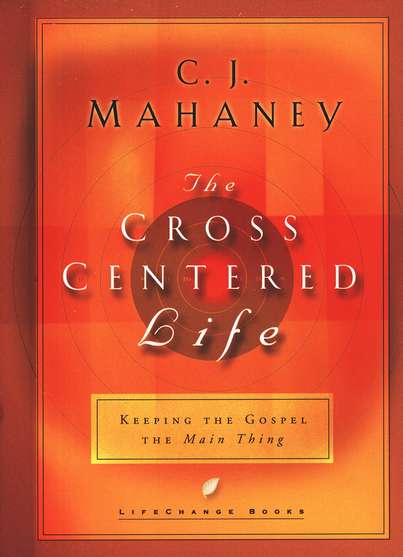
Book Look: The Cross Centered Life

The Cross-Centered Life – C. J. Mahaney 

I recently reread this book, and have included a few quotes in some past posts.  It is a short book, but it has an important message.  We simply can’t lose sight of the cross, or even more – it must be central to our lives.  He shows how the cross destroys legalism and removes guilt.  And he gives practical suggestions for living with the cross at the center of our lives.  Much worth reading…and rereading.

The Holy Spirit Humbles Us

Continuing our thoughts on humility, consider these words from Charles Spurgeon:

“One way in which the Holy Spirit glorifies Christ is this – He gives us more and more debasing views of our own selves.  There are two Gods, as it were – one the true, the other the false.  Self first mounts the throne in our hearts; the higher the throne of self is exalted, the lower must Christ go.  Much of self, little of the Savior.  With exalted views of self, self-power, or self-righteousness, then there are sure to be low views of Christ, but when self goes down, then Christ at once rises.  It may be said of self, as John the Baptist once said of Christ and himself, “He must increase, but I must decrease” (John 3:30).

“If you have had shallow views of your own natural depravity, then you have had very shallow thoughts of Christ.  If you think sin to be delightful, if Gethsemane and Golgotha and Calvary seem to you to be names without weight or meaning, if you have never groaned under your sin, I do not wonder that you think little of Christ’s groans and griefs and bloody sweat.

“But when you come to know yourself as verily lost and undone, then you will prize your Deliverer.  When the dread word lost has seemed to fall like a death knell upon your ear, then the tidings that the Son of Man came to seek and to save that which was lost will be sweet to you as the Christmas carol of the angels when they sang, “Glory to God in the highest, and on earth peace, good will toward men” (Luke 2:14).  If you feel the disease, you will value the Physician; if you know your own emptiness, you will prize Christ’s fullness. But if you reject the teaching of the Holy Spirit, which shows you your utter helplessness and worthlessness, in so doing you have rejected Christ and put far from you that Savior who alone came to save sinners.

“It is, then, a most precious thing when we begin to sink lower and lower in our own estimation.  At the commencement of spiritual life, we believe that we are nothing; as we advance, we find that we are less than nothing.  May the Holy Spirit so work in you!”

(From his sermon, The Spirit’s Office Toward Disciples)